The Adoption of Cash-basis IPSAS: A Conceptual Framework for Enhancing Decision-Useful Financial Reporting
- Department of Local Government and Development Studies, Ahmadu Bello University, Zaria
- Tunku Puteri Intan Safinaz School of Accountancy, College of Business, Universiti Utara Malaysia, Sintok, Kedah
Journal of Business Management and Accounting 7(1) (2017) · https://doi.org/10.32890/jbma2017.7.1.8825
Abstract
Reforms in the public sector, the world over, has taken a global dimension towards harmonization and convergence of international and national accounting systems for the promotion of useful and standardized financial reporting practices. At the centre of this change is the adoption and application of the international public sector accounting standards (IPSAS) by public sector entities. The cash-basis IPSAS is one of the IPSAS which supports the presentation of the general purpose financial statement (GPFS) for new adopters that intend to migrate to full accrual-based IPSAS. However, despite its essence as a de facto standard mostly adopted by developing countries, limited studies have considered the consideration for its decision-usefulness for financial reporting. The objective of this paper is to propose a conceptual framework that explains the factors of how financial reporting, based on the cash-basis IPSAS, would assist decision usefulness of financial reports to diverse user groups. In addition, the paper identifies potential organizational factors that may strengthen the elaboration of useful financial reporting statement. Based on the literature survey methodology, this paper argues that, identification of usable format that increases understandability of the financial statements for different user groups and an increased support for accounting staff competency, are veritable considerations in the framework for decision useful financial reporting statement in the application of the cash-basis IPSAS.
Keywords: Decision usefulness, accounting bases, staff competence
1.0Introduction
Traditionally, accounting system in the public sector has been characterised with cash basis accounting system. A system whereby expenditure is recognised as incurred only when actual cash transfer is made and revenue is recorded only when actual cash is received (IFAC, 2009a; Oulasvirta, 2014). This form of accounting system has received wide criticisms by observers - researchers,
52 Journal of Business Management and Accounting, 7 (1) 2017: 51-68
practitioners, as it limits comprehensive      and adequate financial disclosure about
an economic entity, regarding its assets,      liabilities and debts. This consequently,
impede the usefulness of the financial         statement to different groups of users
(Benito, Brusca, & Montesinos, 2007;           Brusca, Montesinos, & Chow, 2013).
However, in the recent decades, calls for accounting reforms in the public sector, the world over, has taken a global turn towards harmonization and convergence of international and national accounting system (standards) for enhancing the quality and standardization of financial reporting practices (Benito et al., 2007; Iuliana, 2010; Legenzova, 2016; Muller & Berger, 2009; Wang, 2011). The outcome of this calls result in the introduction of International Public Sector Accounting Standards (IPSAS) issued by the International Public Sector Accounting Standard Board (IPSASB), an independent board established by the International Federation of Accountants (IFAC) (Muller & Berger, 2009). Moreover, the introduction of IPSAS as a financial reporting guide for the public sector, is fundamentally a shift from the traditional cash basis to accrual basis accounting system which is aligned with the practice in the private sector (Brusca & Martınez, 2015).
Thus, the alignment of the IPSAS with the standard used in the private sector (e.g. International Financial Reporting Standard-IFRS) has been largely criticized (Anessi- Pessina, Nasi, & Steccolini, 2008; Broadbent & Guthrie, 2008; Carlin, 2005; Toudas, Poutos, & Balios, 2013) on grounds of the fundamental differences between the public and private sectors. Therefore, in recognition of this contention, the IFAC in 2002 promulgated specific standards to address public-sector accounting issues. The outcome of which leads to the introduction of a standard based on comprehensive cash basis accounting, named as cash-basis IPSAS (IASB, Draft, & Entity, 2010; IFAC, 2009b; IPSASB, 2010).
Compliance with the requirements of cash-basis IPSAS is indicated to enhance comprehensive and transparent financial reporting practices by governments, particularly in the areas of cash receipts, cash payments and cash balances. Thus, it is expected that the new public accounting reform will infuse, in the governmental reporting system, a more comprehensive mode and higher quality financial reporting system beyond the cash based system as formerly used. Again, due to its standardized framework, cash-basis IPSAS surpassed the traditional cash basis and the modified- cash basis accounting system, which lacks a standardized mode as a general accepted accounting system. Moreover, the adoption of the standard among nations has been reported to vary according to levels of government. Examples of central governments applying the cash-basis IPSAS are Burkina Faso, Fiji, Liberia, Mauritius, Seychelles, Sierra Leone, Solomon Island, and Timor-Leste, while countries that have adopted across its level of government including the local governments, includes Nigeria, Ghana, Pakistan etc.
However, a plethora of studies have noted the significance of application of the cash- basis IPSAS in improving financial reporting quality in the public sector (Adhikari &
Mellemvik, 2010b; Chan, 2008) particularly among developing countries. Chan (2006) has emphatically argued that cash-basis IPSAS would likely become de facto IPSAS and preferred reporting style for developing countries in the future, due to its similarity with the traditional cash basis accounting and its lesser cost implication. Notwithstanding this prospect, little is known on the usefulness of the financial reports produced by the application of the cash-basis IPSAS among countries that have commenced adoption of the new reform. Rather, most studies have been restricted to describing the institutional factors relating to cost and benefits of adoption of the standard.
Furthermore, accounting system adopted for public administration at all levels, national and international as well as between different government levels within each country, differs considerably (Christiaens, Vanhee, Manes-Rossi, Aversano, & Cauwenberge, 2014; Upping & Oliver, 2011), due to differences in regulation, practice and context (Benito et al., 2007; Christiaens et al., 2014; Ryan, 2008; Zeff, 2013). These factors however, restrict and impede the realization of harmonization and the possibility of common criteria. In view of this, the development of a framework for the determination of decision useful financial reporting practice under the dispensation of the cash- basis IPSAS accounting reform, which may enhance comparability among different constituencies and context, becomes necessary.
Therefore, the main objective of this paper is to propose a conceptual framework that would explains the factors for consideration in the analysis of the usefulness of financial reporting statements produced by constituencies that adopts and applies the cash- basis IPSAS for accounting reporting. Thus, the essence of the proposed framework would provide significant benefit to the literature on vital considerations to promote accounting reporting convergence and harmonization in the application of international accounting standards.
The remaining sections of this paper are therefore presented as follows: Section two presents previous studies on the conceptualization of the determinants of usefulness of the financial statements, focusing on the usability and user specificity concepts. Section three relates to the effect of accounting bases on decision usefulness of financial reporting practice. Essence of organizational factor as having stimulating effect on the usefulness of the financial statement was addressed in section four. The paper was concluded in section five.
2.0Conceptualizing Decision-Usefulness of Financial Statements
The analysis of financial reports and its usefulness involves the determination of the extent to which the financial statements provides useful information to support users’ 54 Journal of Business Management and Accounting, 7 (1) 2017: 51-68 economic decision making (Jonas & Blanchet, 2000). There is huge body of literature on the determination of the usefulness of financial reports in the accounting literature. Many of these literature are divided between studies that adopts normative approach (Anessi- Pessina et al., 2008; Herawaty & Hoque, 2007; Mahmoud, Abbas, & Abdullah, 2012; Renkas, Goncharenko, & Lukianets, 2016; Salakji & Phapruke, 2011; Thinggaard & Damkier, 2008) and empirical research approach (Alijarde, 1997; Cohen, Kaimenakis, & Venieris, 2013; Gaffney, 1986; Larcker & Lessig, 1980; Mande, 2015). But it is observed that, studies on public sector focused more on empirical research (Alijarde, 1997; Braam & Van Beest, 2013; Cohen & Karatzimas, 2013; Daniels & Daniels, 1991; Gaffney, 1986). Nonetheless, there are limited studies, whether normative or empirical, that have examined the concept of usefulness of financial reports produced under the cash-basis IPSAS. Consequently, the paucity of studies in this area limits the development of literature on the subject. Secondly, clear understanding of the viability of the standard for accounting reporting would be missed, particularly by potential adopters. Thus, the current paper conceptually adds to literature on the subject.
Therefore, to achieve the above objective, early works by Gallagher (1974), Larcker and Lessig (1980), Pankoff & Virgil (1970) Swanson (1974), Zmud (1978) serve as important reference for this paper. Pankoff and Virgil (1970) described the perceived usefulness of accounting information as the extent to which financial information facilitates decision making. Swanson (1974), developed items to evaluate the usefulness of information system using scale measuring: timeliness, relevance, accuracy, instructiveness, conciseness, readability. While Gallagher (1974) provides measurement that determines the perceived value of information reporting statement using scale relating to whether or not the information is: informative, helpful, desirable, meaningful, good, relevant, important, valuable, applicability, necessary, material, responsive, effective and successful.
Further, Larcker and Lessig (1980) examines the usefulness of financial reports using a survey research with developed items measuring extent of difficulty, complexity, sufficiency, correctness of form, interpretability, instrumentality of the financial statement. According to them there are two dimensions of perceived information usefulness, namely, perceived importance and perceived usability. Perceived importance refers to “the quality that causes a particular information set to acquire relevance to the decision maker”, while perceived usableness refers to “the information quality that allows a decision maker to utilize the set as an input for problem solving”.
The significance of users of financial reporting in the public sector has been emphasized by Cohen and Karatzimas (2013) recently. Karatzimas (2013) argued that public sector accounting has to satisfy the needs of a large number of different users. Based on this, Gaffney (1986) identified two prerequisites, first, identifying the users and their needs and second, matching the information needs of users with the information provided by the statements. The second consideration is important, as Lüder (1992) concludes that different user groups have different information needs and their view and discretion counts on how they evaluate information for their respective needs.
For instance, Daniels and Daniels (1991) conducted a study to determine similarities and differences among user groups in their information needs and decision accuracy. The study based on three user groups – citizens, municipal investor/creditors, and legislative/oversight officials, finds that legislative/oversight officials depends more on the comparison of budget statement to actual budget execution to judge performance and cost of service. The other user groups (citizens, municipal investor/creditors) rely more on revenue and expenditure statements and changes in fund balances for information on performance and cost of service. Again, using a sample of local governments Finance Directors and Public Auditors in a Spanish municipality, Alijarde (1997) reveals that the Finance Directors value budgetary report more useful. While the public auditors on other hand, considers the cash flow statement and statement of debts as significantly useful.
Further, budgetary statements and statements of cash flow are seen as having greater significant usage in the management and assessment of government financial dealings. This, particularly, as shown by Daniels and Daniels (1991) and Nogueira et al. (2013), indicates that accounting users mostly adopt the usage of cash-based budgetary statements as information for decision making over other statements of reporting. Again, Lopez Hernandez and Caba Perez (2004) reveal, in their study on assessment of the relevance of Spanish local financial reporting, that most commonly used statements are those that are purely budgetary, or connected with the budget, including those related to liquidity (cash flow statements). They add that, not only their greater use being obvious, but also their greater utility.
Furthermore, the conventional classification of user groups between the internal and external accounting users and the imperatives of their respective needs for financial reports for decision making varies significantly. Based on pronouncements/statements by professional bodies, Walker (2009) compiled eight groups of government financial report users and their respective use of the statement: 1) the public, for assessment of accountability of political office holders and what has been spent on provision of goods and services 2) members of legislative and governing bodies, uses the financial report to assess the financial position, condition and extent of stewardship on allocated resources including compliance issues 3) Public (taxpayers), media, other commentators, scrutinizes governments’ fiscal policies; efficiency, effectiveness and economy for which government services were provided and asset management etc. 4) investors/creditors, assess government ability to repay debts 5) external users, for assessing compliance with budget and trends in financial performance 6) governments, international agencies and resource providers, useful for performance information regarding projects, debt repayment capacity and compliance with terms of agreements 56 Journal of Business Management and Accounting, 7 (1) 2017: 51-68
7) government planners and managers, demand accounting report to support the conduct and monitoring of fiscal policies 8) senior management, use analysis at a more disaggregated level for decision making necessary for management and governance.
However, the usableness of the financial report as pointed by Larcker and Lessig (1980), is a critical consideration for the decision usefulness of the financial statement. Accordingly, under the paradigm for empirical approach to the conceptualization of decision usefulness, the perceived usableness of the financial statement refers to the format or presentation mode for which the financial statement is produced. Here, the understandability attribute of the financial statement is critical for the usability which has implication for the diverse groups of users. That is, for the financial statement to be useful for effective decision making, different class of users must be able to understand and deduce from the content, information that will lead to informed decisions. Thus, Alijarde (1997) argued that the decision usefulness of the financial statements reveals a necessity to introduce changes that allow information content of the financial reports to be more understandable and adequate for potential users.
Therefore, understandability involves the quality of information content of the annual reports, that allows users to comprehend the meaning of the accounting reports (IASB, 2008). According to Rudzioniene and Juozapaviciute (2013), understandability leads to easy understanding and convenient use of information. Moreover, it is indicative that user context determines greatly the level of understandability that may be made of the financial statement. Overtime, in defining understandability, the term “communication” has been used consistently, and has focused on (1)“who” or “what” was the focus in attaining understandability and (2) in what form should financial information be reported – technical or non-technical accounting terms (Cheung, Evans, & Wright, 2010). In providing insight into the two questions, Cheung et al. (2010) posits that there is general support for plain, simple language when preparing financial reports, and preparers should communicate the intent of their massage to “identified” users that will be relevant for decision making of the users.
By this, it could be wrong to assume that a single format will achieve a general attribute of an understandable financial accounting report to diverse groups of users. This is so, due to users context differences (Alijarde, 1997; Braam & Van Beest, 2013; Cohen & Karatzimas, 2013). However, insight from the literature suggests that a reporting format that may increase users understandability should support readability (Smith & Taffler, 1992). Faithful representation (truthfulness) and simplicity in presentation (relative avoidance of technical terms) of accounting reports may increase the essence of understandability of accounting reports (Adelberg, 1979; Joiner, Leveson, & Langfield-Smith, 2002).
Based on the above, the proposed conceptualization of the “decision usefulness” phenomena in terms of its importance and usableness can be represented by the relationship as shown in Figure 1:
Decision Usefulness of the financial stament (Value Importance)
Usableness of the Financial Staement User Groups (understandability)
Figure Considerations 1: 1: Figure Considerationsfor for determination ofdecision determination of decisionusefulness usefulness in financial reporti in financial reporting Source Source (Authors’) (Authors’)
Figure 1 reveals the interwoven relationship in the conceptualization of decision usefulness phenomenon. The figure depicts a process and self-supporting relationship Figure 1 reveals holding the interwoven other things constant. Therelationship relationship in the conceptualization is such of decision that, the determination of the usefu usefulness of the financial statement involves consideration of specific users’ context. That is, each class phenomenon. of usersdepicts The figure has a specific need for a process andtheself-supporting financial statement for purpose relationship holding of decision making and thus, must be considered in the presentation of the financial statement. things Again,The constant. the relationship format (usableness) is suchin which the financial that, the report isofpresented determination is the usefulness o also critical, to allow for adequate understandability and comprehension of the content of the financial statement. Moreover, this relationship describes the significance of each financial statement involves consideration of specific users’ context. That is, each cl stage as a vital consideration in the analysis of decision usefulness of the financial statement of an economic entity. users has a specific need for the financial statement for purpose of decision making and Consequently, the bases of accounting system for which an accounting transaction is must be considered processed in the as has been identified presentation an importantofinstitutional the financial factorstatement. Again, that influences the the f usefulness of the information to a large extent (Braam & Beest, 2013). The next section (usableness) elaborates oninthe which the financial determination report of useful is presented accounting is also information critical, within to allow for ade the framework of accounting standards and bases. understandability and comprehension of the content of the financial statement. Moreove
3.0Bases of Accounting System and Decision Usefulness of Financial Report
relationship describes the significance of each stage as a vital consideration in the analy Development in accounting practice over time has been characterised by the use of different accounting bases. Bergmann (2012), argued that the usefulness of accounting decision usefulness of the financial statement of an economic entity. reports is a function of the accounting basis under which it is reported. Pollitt (2007) describes the chronological pattern that exists in the use of the accounting bases over time, starting with the traditional cash-basis at the beginning and at the end of the
Consequently, the bases of accounting system for which an accounting transacti 58 Journal of Business Management and Accounting, 7 (1) 2017: 51-68 continuum is the full accrual accounting system. In between the two extremes is the modified cash basis and modified accrual basis, constituting the interim steps in the transitional process.
However, the current global reform in accounting system of the public sector to a more business-like accounting system, specifies that, the traditional cash basis accounting system should be replaced with the accrual system (Braam & Van Beest, 2013; Christensen, Lee, Walker, & Zeng, 2015; Pina, Torres, & Yetano, 2009). This over time has resulted in a debate on whether accrual accounting is indeed the solution to the public sector accounting challenge (Carlin, 2005; Cohen, 2012). The benefits of the accrual accounting system have been well documented as encompassing a more accurate measurement and communication of an entity’s financial position and performance, as well as improved accountability and transparency over the cash-based system which is considered as inadequate to meet the changing financial management needs (Cohen & Karatzimas, 2013; Kober, Lee, & Ng, 2010; Navarro Galera & Rodríguez Bolívar, 2011; Pollitt, 2007). Notwithstanding, it is still contentious, according to other studies, whether the accrual accounting systems holds an overriding benefits more than the cash basis system (Ellwood & Newberry, 2012; Guthrie, Olson, & Humphrey, 1999).
Nonetheless, the global convergence and harmonization of national accounting practices with the international standards is gaining increased acceptability among nations and constituencies. Consideration for securing legitimacy and relevance among international comity of adopters serves as motivation for countries to subscribe to the adoption and utilization of IPSAS in their public financial reporting practice (Georgiou & Jack, 2011; Goddard, Assad, Issa, Malagila, & Mkasiwa, 2015; Lande, 2005; Sinclair & Bolt, 2013). In essence, the issuance of IPSAS in the public sector has facilitate the introduction of sets of high quality accounting standards which guides the reporting practices of public entities within their respective financial dealings and transactions (Benito et al., 2007; Brusca & Montesinos, 2009; Navarro Galera & Rodríguez Bolívar, 2011), and consequently, it is expected to enhance improved quality and useful financial reporting to diverse users and stakeholders.
In view of the conceptual consideration for decision usefulness as indicated above, the usableness of the financial statement lies in its ability to inform diverse user groups, relevant financial information of an entity in the most understandable and comprehensive manner that supports decision making. This perspective implies that, accounting information must be communicated through a reporting medium that elaborate the needed information to users for purpose of making deductive decision making. Based on this, the IPSAS has as one of its standard, the cash-basis IPSAS, which seek to prescribe the manner in which general purpose financial statements (GPFS) should be presented under the cash basis of accounting (Adhikari & Mellemvik, 2010a; IFAC, 2009a; Parry & Wynne, 2009). The GPFS are prepared to meet the information needs of users who are not able to demand for financial statement prepared to meet their specific information needs.
Moreover, the cash-basis IPSAS is seen as a preparatory and initial step necessary for the adoption of the full accrual-basis IPSAS. Studies have indicated the prominence of its use by the developing countries (Chan, 2008). It presents information concerning the cash position of an entity involving cash receipts, cash payments and cash balances. Again, it sets out two parts requirements concerning mandatory and optional financial reporting procedures, by which entities designated as complying with cash-basis IPSAS are to adopt for their reporting practices. The documented report by the IFAC (2006) describes the structure of the financial reporting under the cash-basis IPSAS as follows:
“Part 1 is mandatory. It sets out the requirements which are applicable to all entities preparing general purpose financial statements under the cash basis of accounting. It defines the cash basis of accounting, establishes requirements for the disclosure of information in the financial statements and supporting notes, and deals with several specific reporting issues”
The document also indicates that the requirements in the part one of the Standard must be complied with by entities which claim to be reporting in accordance with the cash- basis IPSAS. While the part 2 which is non-mandatory also involves:
“Additional accounting policies and disclosures that an entity is encouraged to adopt to enhance its financial accountability and the transparency of its financial statements. It includes explanations of alternative methods of presenting certain information”
The first part represents the mandatory requirements which must be complied with. The second part refers to the optional/non-mandatory provisions that stipulates additional accounting policies and disclosure an entity is encouraged to adopt in order to enhance its financial accountability and transparency.
Holding to its standardized framework, cash-basis IPSAS surpassed the traditional cash basis and the modified-cash basis accounting system, which lacks standardized defined mode as a generally accepted accounting system. By this, Chan (2006) emphatically argued that cash-basis IPSAS is likely to remained as de facto IPSAS and preferred reporting style for developing countries due to its similarity with the traditional accounting principle and lesser cost implication. Therefore, irrespective of the bases of accounting system adopted for the explanation of accounting reports of an entity, the determination of usefulness of the financial statement is a function of the presentation of the financial reports in a clear and understandable form necessary for proper comprehension by different groups of users. Without prejudice to the contention expressed by previous studies regarding the confounding results in conceptualization and classification of users of accounting reports and the uses they make of it (Alijarde, 1997; Cohen & Karatzimas, 2013; Gaffney, 1986; Jones, Scott, Ingram, & Kimbro, 1985; Kober et al., 2010; Walker, 2009), this paper extends the literature on the subject, by arguing that improvement in the presentation mode that promotes clarity, simplicity 60 Journal of Business Management and Accounting, 7 (1) 2017: 51-68 and comprehensiveness of the financial reporting statement, to a large extent increases the motivation for its readability and subsequently leads to improved usefulness of the financial statement by users.
Consistent with the above, Gaffney (1986) argues that, the mode in which financial statement is presented account for it level of understandability and subsequent usefulness. He adds that, one factor which inhibits users’ understandability of the annual reports lies in the difficulties and complexities in the mode of presentation of information. Thus, the IFAC (2009) adds that, the quality of information provided in general purpose financial statements determines the usefulness of that statement to users. Accordingly, the pronouncement issued by the IFAC (2009) in Paragraph 1.3.32 requires the development of accounting policies to ensure that the financial statements provide information that meets several qualitative characteristics of timely, relevance, reliability and maintenance of complete and accurate accounting records to produce the general purpose financial statement.
4.0Organizational Factor and Usefulness of the Financial Statement
The impact analysis of IPSAS adoption in the global context on modernization of governmental accounting and achievement of accounting comparability among nations have attracted wide range of topical discussion in the accounting literature. Examination of issues within the literature describes the underlying factors that affects financial reporting performance following the adoption of accounting standards among governmental organizations. This, to a large extent, has implication on the quality and usefulness of financial reporting outcomes among different constituencies (Brusca & Martınez, 2015).
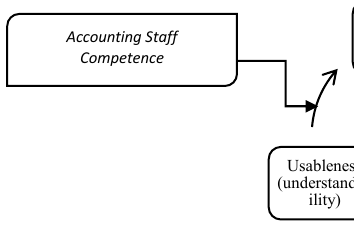
The section of the literature on accounting standards indicates that, the application of accounting standards alone does not ultimately guarantee quality/useful financial reporting outcomes. Incentives and other institutional factors have equally been observed to plays a significant role in shaping reporting outcomes (Ball, Robin, & Wu, 2003; Holthausen, 2009). Thus, organizational factors such as staff competency has been identified as a contingent factor that has significant influence on accounting performance (Darwanis, Saputra, & Kartini, 2016; Iskandar & Setiyawati, 2015; Ismail & Abidin, 2010; Makayi, 2009; Xu, Nord, Nord, & Lin, 2003). That is, increased support and development in staff competency (i.e. improved account preparers’ capacity) in terms of knowledge, skills and ability (KSA) have been emphasised (Abbott, Daugherty, Parker, & Peters, 2016; COF Council, 1994; Darwanis et al., 2016; Indriasih, 2014; Kak, Burkhalter, & Cooper, 2001). In pursuance of learning activities for the KSA competency attributes, the Chief Financial Officers Council (CFO Council, 1994) highlights competency attributes of an accountants to include Knowledge of…, Skills in using… and Ability to use…: (1) general accounting principles (2) federal/governmental accounting operations (3) planning/budgeting and accountability policies (4) basic techniques of financial management analysis and opined in this paper to enhance and improve the competency of preparers of account presentation of useful financial accounting reports including the presentation 61 of prescribed for use in the public sector. control (5) information technology and (6) leadership skills. Accordingly, these KSA competency attributes are opined in this paper to enhance and improve the competency of Figure 2, represent preparers of accountsthe inclusion towards of the linking presentation effect of useful of staff financial competence accounting in the co reports including the presentation of GPFS as prescribed for use in the public sector. frame of the decision usefulness of the financial reports as earlier shown (see Figure1
5.0Conclusion
The objective of this paper is to come up with a conceptual and analytical framework for determining usefulness of the financial reporting statements under the adoption and application of international accounting standards (cash-basis IPSAS) and what organizational factors could strengthen same. Based on literature review approach, the paper established that, identifying usable format that increases understandability of the financial report under different user contexts, and improvement in the competency of accounting staff (preparers) in requisite knowledge, skills and abilities to implement the requirement of international accounting standards (e.g. GPFS) will strengthen the elaboration of financial reporting quality and usefulness.
However, notwithstanding that the current paper is limited by absence of empirical facts (data) to test the proposed framework, it will be useful in improving public sector financial statements. Hopefully, the proposed framework may serve as a basis for future empirical research on accounting reporting literature. By this, additional insight may be gained by practitioners into necessary factors to consider in the presentation of useful accounting reporting for effective user decision making. Overall, the significant benefit of the research outcome would not be limited to public-sector entities, but could also serve as a useful consideration for private sector entities as well. 62 Journal of Business Management and Accounting, 7 (1) 2017: 51-68
References
- Abbott, L. J., Daugherty, B., Parker, S., & Peters, G. F. (2016). Internal audit quality and financial reporting quality: The joint importance of independence and competence. Journal of Accounting Research, 54(1), 3–40.
- Adelberg, H. A. (1979). A methodology for measuring the understandability of financial report messages. Journal of Accounting Research, 17(2), 565–592.
- Adhikari, P., & Mellemvik, F. (2010a). IPSASs in developing countries: A case of Nepalese central government. International Journal on Governmental Financial Management, X(2), 36–48.
- Adhikari, P., & Mellemvik, F. (2010b). The adoption of IPSASs in South Asia : A comparative study of seven countries. Research in Accounting in Emerging Economies, 10(1), 169–199.
- Alijarde, M. I. B. (1997). The usefulness of financial reporting in Spanish local governments. Financial Accountability & Management, 13(1), 17–34.
- Anessi-Pessina, E., Nasi, G., & Steccolini, I. (2008). Accounting reforms: Determinants of local governments’ choices. Financial Accountability & Management, 24(3), 0267–4424.
- Ball, R., Robin, A., & Wu, J. S. (2003). Incentives versus standards: Properties of accounting income in four East Asian countries. Journal of Accounting and Economics, 36(1–3 SPEC. ISS.), 235–270.
- Benito, B., Brusca, I., & Montesinos, V. (2007). The harmonization of government financial information systems: The role of the IPSASs. International Review of Administrative Sciences, 73(2), 293–317.
- Bergmann, A. (2012). The influence of the nature of government accounting and reporting in decision-making: Evidence from Switzerland. Public Money & Management, 32(1), 15–20. http://doi.org/10.1080/09540962.2012.643050
- Braam, G., & Van Beest, F. (2013). Conceptually-based financial reporting quality assessment an empirical analysis on quality differences between UK annual reports and US 10-K reports.
- Broadbent, J., & Guthrie, J. (2008). Public sector to public services: 20 years of “contextual” accounting research. Accounting, Auditing & Accountability Journal, 21(2), 129–169.
- Brusca, I., & Martınez, J. C. (2015). Adopting international public sector accounting standards : A challenge for modernizing and harmonizing public sector accounting. International Review of Administrative Sciences International, 0(0), 1–21.
- Brusca, I., & Montesinos, V. (2009). International experiences in whole of government financial reporting: Lesson-drawing for Spain. Public Money & Management, 29(4), 243–250. http://doi.org/10.1080/09540960903035023
- Brusca, I., Montesinos, V., & Chow, D. S. L. (2013). Legitimating international public sector accounting standards (IPSAS): The case of Spain. Public Money & Management, 33(6), 437–444. http://doi.org/10.1080/09540962.2013.836006
- Carlin, T. M. (2005). Debating the impact of accrual accounting and reporting in the public sector. Financial Accountability & Management, 21(3), 0267–4424.
- Chan, J. L. (2006). IPSAS and government accounting reform in developing countries: Accounting reform in the public sector mimicry, fad or necessity. International Journal of Public Sector Performance Management, 2(1), 31–42.
- Chan, J. L. (2008). International public sector accounting standards: Conceptual and institutional issues. The Harmonization of Government, 21, 1–15.
- Cheung, E., Evans, E., & Wright, S. (2010). An historical review of quality in financial reporting in Australia Esther. Pacific Accounting Review, 22(2), 147–169.
- Christensen, H. B., Lee, E., Walker, M., & Zeng, C. (2015). Incentives or standards: What determines accounting quality changes around IFRS adoption? European Accounting Review, 24(1), 31–61.
- Christiaens, J., Vanhee, C., Manes-Rossi, F., Aversano, N., & Cauwenberge, P. Van. (2014). The effect of IPSAS on reforming governmental financial reporting: An international comparison. International Review of Administrative Sciences, 81(1), 158–177.
- COF, C. (1994). Accountant ( GS-510 ) Competency Model. 1-21.
- Cohen, S. (2012). Cash versus accrual accounting measures in Greek municipalities : Proxies or not for decision-making ? Int. Journal Accounting, Auditing and Performance Evaluation, 8(3), 203-222.
- Cohen, S., Kaimenakis, N., & Venieris, G. (2013). Reaping the benefits of two world: An explanatory study of cash accrual information roles in local governments. Journal of Applied Accounting Research, 14(2), 165–179. 64 Journal of Business Management and Accounting, 7 (1) 2017: 51-
- Cohen, S., & Karatzimas, S. (2013). Evaluating the accounting information quality and decision-usefulness of governmental financial reporting when becoming more accrual like: Evidence of a change from Cash to Modified Cash. In Spring XII PSG Workshop in Salerno, Italy, 16-17 May, 2013 and the 35th EGPA Annual Conference in Edinburgh, Scotland, 11-13 September, 2013. pp. 11–13.
- Daniels, J. D., & Daniels, C. E. (1991). Municipal financial reports: What users want. Journal of Accounting and Public Policy, 10(1), 15–38.
- Darwanis, D., Saputra, M., & Kartini, K. (2016). Effect of professionalism, competence, knowledge of financial management, and intensity guidance apparatus inspectorate for quality of financial statements (study on inspectorate regencies / cities in Aceh ). Broad Research in Accounting, Negotiation and Distribution, 6(1), 32–40.
- Ellwood, S., & Newberry, S. (2012). Public sector accrual accounting: institutionalising neo-liberal principles? Sheila Ellwood Susan Newberry. Accounting, Auditing & Accountability Journal, 20(4), 549–573.
- Gaffney, M. A. (1986). Consolidated versus fund-type accounting statements: The perspectives of constituents. Journal of Accounting and Public Policy, 5(3), 167–189.
- Gallagher, C. A. (1974). Perceptions of the value of a mavagement information. The Academy of Management Journal, 17(1), 46–55.
- Georgiou, O., & Jack, L. (2011). In pursuit of legitimacy: A history behind fair value accounting. British Accounting Review, 43(4), 311–323. http://doi.org/10.1016/j. bar.2011.08.001
- Goddard, A., Assad, M., Issa, S., Malagila, J., & Mkasiwa, T. A. (2015). The two publics and institutional theory - A study of public sector accounting in Tanzania. Critical Perspectives on Accounting, xxx, 1–18. http://doi.org/10.1016/j.cpa.2015.02.002
- Guthrie, J., Olson, O., & Humphrey, C. (1999). Debating developments in new public financial management: the let of global theoring and some new waysforward. Financial Accountability, 15(November), 209–228.
- Herawaty, M., & Hoque, Z. (2007). Disclosure in the annual reports of Australian government departments: A research note. Journal of Accounting & Organizational Change, 3(2), 147–168.
- Holthausen, R. W. (2009). Accounting standards, financial reporting outcomes, and enforcement. Journal of Accounting Research, 47(2), 447–458.
- IASB, Draft, E., & Entity, T. R. (2010). Conceptual framework for financial reporting. International Financial Reporting Standards. (Vol. 87). http://doi.org/ISBN: 978-1-907026-69-0 Copyright
- IFAC. (2009a). 2009 IFAC Handbook of international public sector accounting (IPSAS) pronouncements.
- IFAC. (2009b). Financial reporting under the cash basis of accounting part 2: Encouraged additional disclosures.
- Indriasih, D. (2014). The effect of government apparatus competence and the effectiveness of government internal control toward the quality of financial reporting and its impact on the performance accountability ( survey of all units local government in Tegal city – central Ja. Research Journal of Finance and Accounting, 5(20), 90–100.
- IPSASB. (2010). Conceptual framework for general purpose financial reporting by public sector entities : Elements and recognition in financial statements.
- Iskandar, D., & Setiyawati, H. (2015). The effect of internal accountants’ competence on the quality of financial reporting and the impact on the financial accountability. International Journal of Managerial Studies and Research, 3(5), 55–64.
- Ismail, R., & Abidin, S. Z. (2010). Impact of workers’ competence on their performance in the Malaysian private service sector. Business and Economic Horizons, 2(August), 25–30.
- Iuliana, C. (2010). Cash accounting standardization in the public sector. Annales Universitatis Apulensis : Series Oeconomica, 12(82), 79–87. Retrieved from http://eserv.uum.edu.my/docview/845883527?accountid=42599
- Joiner, T. A., Leveson, L., & Langfield-Smith, K. (2002). Technical language, advice understandability, and perceptions of expertise and trustworthiness: The case of the financial planner. Australian Journal of Management, 27(1), 25–43.
- Jonas, G. J., & Blanchet, J. (2000). Assessing quality of financial. American Accounting Association, 14(3), 353–363.
- Jones, R. D., Scott, R. B., Ingram, L., & Kimbro, R. (1985). The needs of users of governmental financial reports. Governmental Accounting Standards Board, 1(October). 66 Journal of Business Management and Accounting, 7 (1) 2017: 51-
- Kak, N., Burkhalter, B., & Cooper, M. (2001). Measuring the competence of healthcare providers. Quality Assurance, 2(1), 1–28.
- Kober, R., Lee, J., & Ng, J. (2010). Mind your accruals : Perceived usefulness of financial information in the Australian public sector under different accounting systems. Financial Accountability & Management, 26(3), 0267–4424.
- Lande, E. (2005). Accrual accounting in the public sector: Between institutional competitiveness and search for legitimacy. In 10th CIGAR conference – May 26 & 27th, 2005 – Poitiers, France, pp. 1–13.
- Larcker, D. F., & Lessig, V. P. (1980). Perceived usefulness of information: A psychometric examination. Decision Sciences, 11(1), 121–134.
- Legenzova, R. (2016). A concept of accounting quality from accounting harmonisation perspective. Journal of Economics and Business, 28(5), 33–37.
- Lopez Hernandez, A. M., & Caba Perez, C. (2004). The relevance of Spanish local financial reporting to credit institution decisions: An empirical study. International Journal of Public Sector Management, 17(2), 118–135.
- Lüder, K. G. (1992). A contingency model of governmental accounting innovations in the political - administrative environment. Research in Government and Non-Profit Accounting, 7, 99–127.
- Mahmoud, B., Abbas, A., & Abdullah, R. Al. (2012). Are IASB’s qualitative characteristics reflected in IFRS? IAS 29 as a case study. Research Journal of Economics, Business and ICT, 5.
- Makayi, N. D. R. (2009). Church size, staff competency, social capital and the quality of financial reporting: A case of selected churches in Uganda.
- Mande, B. (2015). A review of the information contents in Nigeria’s public sector financial reports. Journal of Finance, Accounting and Management, 6(1), 1–22.
- Navarro Galera, A., & Rodríguez Bolívar, M. P. (2011). Modernizing governments in transitional and emerging economies through financial reporting based on international standards. International Review of Administrative Sciences, 77(3), 609–640. http://doi.org/10.1177/0020852311407365
- Nogueira, S. P. S., Jorge, S. M. F., & Oliver, M. C. (2013). The usefulness of financial reporting for internal decision-making in Portuguese municipalities. Management Research: Journal of the Iberoamerican Academy of Management, 11(2), 178–212.
- Oulasvirta, L. (2014). The reluctance of a developed country to choose international public sector accounting standards of the IFAC. A critical case study. Critical Perspectives on Accounting, 25(3), 272–285.
- Pankoff, L. D., & Virgil, R. L. (1970). On the usefulness of financial statement information: A suggested research approach. Accounting Review, 45(2), 269.
- Parry, M., & Wynne, A. (2009). The cash basis IPSAS: An alternative view. In International Journal of Governmental Financial Management, 10, 23–29.
- Pina, V., Torres, L., & Yetano, A. (2009). Accrual accounting in EU local governments: One method, several approaches accrual accounting in EU local governments: One method, several approaches, 18(4), 765-807.
- Pollitt, C. (2007). The new public management: an overview of its current status. Administratie Si Management Public, 8, 110–115.
- Renkas, J., Goncharenko, O., & Lukianets, O. (2016). Quality of financial reporting : Approaches to measuring. International Journal of Accounting and Economics Studies, 4(1), 1–5. http://doi.org/10.14419/ijaes.v4i1.5509
- Rudzioniene, K., & Juozapaviciute, T. (2013). Quality of financial reporting in public sector. Social Science, 4(82), 17–25.
- Ryan, H. M. C. (2008). Special issue on public sector reform and accounting change: Guest editorial note Howard. Journal of Accounting & Organizational Change, 4(3), 217–221.
- Salakji, N., & Phapruke, U. (2011). Accounting professionalism, financial reporting quality and information usefulness. Journal of International Business and Economics, 11(4).
- Sinclair, R., & Bolt, R. (2013). Third sector accounting standard setting: Do third sector stakeholders have voice? Voluntas, 24(3), 760–784.
- Smith, M., & Taffler, R. (1992). Readability and understandability: Different measures of the textual complexity of accounting narrative. Accounting Research Journal, 5(4), 84–94. 68 Journal of Business Management and Accounting, 7 (1) 2017: 51-
- Swanson, E. B. (1974). Management information systems: Appreciation and involvement. Management Science Publication, 21(2), 178–188.
- Thinggaard, F., & Damkier, J. (2008). Has financial statement information become less relevant? Longitudinal evidence from Denmark. Scandinavian Journal of Management, 24(4), 375–387. http://doi.org/10.1016/j.scaman.2008.06.001
- Toudas, K., Poutos, E., & Balios, D. (2013). Concept, regulations and institutional issues of IPSAS: A critical review. European Journal of Business and Social Sciences, 2(1), 43–54.
- Upping, P., & Oliver, J. (2011). International review of business research papers accounting change model for the public sector : Adapting Luder’s model for developing countries. International Review of Business Research Papers, 7(1), 364–380.
- Walker, R. G. (2009). Public sector consolidated statements: An assessment. Abacus, 45(2), 171–220.
- Wang, C. (2011). Accounting standards harmonization and financial statement comparability: Evidence from transnational information transfer.
- Xu, H., Nord, J. H., Nord, G. D., & Lin, B. (2003). Key issues of accounting information quality management an Australian case study. Industrial Management & Data Systems, 103(7), 461–470.
- Zeff, S. A. (2013). The objectives of financial reporting: A historical survey and analysis. Accounting and Business Research, 43(4), 262–327.
- Zmud, R. W. (1978). Concepts, theories and techniques an empirical investigation of the dimensionality of the concept of information. Decision Sciences, 9(2), 187–195.