Sustainable Branding and Consumer Loyalty in Emerging Markets: A Systematic Literature Review of Brand Image, CSR, and Environmental Communication
- Faculty of Business and Social Sciences, Albukhary International University, Kedah
Journal of Business Management and Accounting 16(2) (2026) · https://doi.org/10.32890/jbma2026.16.2.2
Abstract
Sustainability has emerged as a core strategic imperative for multinational firms with multi-dimensional impacts on consumer behavior among emerging markets where cultural beliefs and trust are salient determinants of brand selection. The study investigates the function of sustainable branding in the development of consumer loyalty grounded on a systematic review of 25 peer-reviewed empirical articles published between 2021 and 2026. Guided by the PRISMA 2020 protocol, the review discusses three key aspects of sustainable branding: brand image, environmental communication, and corporate social responsibility (CSR), and their impact on consumer loyalty. The results indicate that incorporating authenticity, transparency, and cultural relevance within programs for sustainability greatly enhances emotional involvement and consumer loyalty. Moreover, joint programs with all three components are found to trigger greater and more long-term loyalty in comparison to standalone programs. The research presents a signalling and brand equity theory-driven conceptual framework and demonstrates the ability of sustainability to be a source of competitive advantage as well as a relationship builder. The implications of such findings present actionable insights for organizations trying to balance brand strategies and sustainability initiatives and inform policymakers who aim to promote value-based consumerism practices in developing markets.
Keywords: Consumer loyalty, CSR, emerging markets, environmental communication, sustainable branding.
INTRODUCTION
Sustainability in the modern international market has shifted to the peripheral issue to a strategic base of corporate branding. This is especially the change that is observed in the emerging markets where customers are demanding to see more moral control, social responsibility and environmental accountability in the products they buy (Aisyah & Faiz, 2024). As a result, brands have come to go beyond mere vehicles of product knowledge as they are now critical mechanisms of communicating corporate values to creating consumer trust. With this change, the concept of sustainable branding has become a major cause of consumer loyalty and particularly in multicultural markets which are typified by institutional insecurity and increased sensitivity to the environment. Although the individual aspects of sustainable branding, including corporate social responsibility (CSR), green communication, and ethical brand identity, have been studied in isolation, a badly needed gap of integrated and contextsensitive studies, which take into account the combined impact of these aspects on consumer loyalty in emerging markets, is still present. This paper fills this gap with a systematic literature review (SLR) that is based on the Preferred Reporting Items to Systematic Reviews and Meta-Analyses (PRISMA) 2020 methodology and involves 25 empirical studies (peer-reviewed) published in the period 20212026. The interconnection between three of the essential pillars of sustainable branding CSR, environmental communication, and brand image are specifically considered in the current review. These elements are critically analysed based on the theoretical accounts of the Brand Equity Theory and Signalling Theory which both offer explanatory value on how sustainability cues to generate perceived brand credibility, ethical positioning, and relational trust. Moreover, the analysis uses empirical data published in the Journal of Business Management and Accounting (JBMA) to support the contribution of relational antecedents, i.e., trust and commitment (Ali et al., 2021), and integrated marketing strategies (Yuwono et al., 2025) to the loyalty results. When uniting these dimensions of branding within a single model of analysis, the paper tries to formulate some operational knowledge to both researchers and practitioners as well as policy makers. It highlights the sustainability promise when integrated strategically across brand touchpoints to be a sustainable source of differentiation and loyalty across culturally intelligent, ethically aware consumer markets. Research Questions 1. 2. 3.
The impact of CSR on consumer loyalty in the emerging markets? How does environmental communication play out in brand loyalty development? Does the reputation of a brand, which is green, influence consumer loyalty?
RESEARCH METHOD
In the current research, an SLR is employed to summarize and synthesize the current evidence on the topic of the effect of sustainable branding on consumer loyalty in the growing markets. The review process was done following the PRISMA 2020 principles. Through this systematic procedure, the study fills the gap of necessary systematic integration of the specific branding dimensions-corporate social responsibility (CSR)-environmental communication-brand image interaction to drive consumer behavior in markets that can be described by institutional uncertainty in many cases.
Identification and Search Strategy
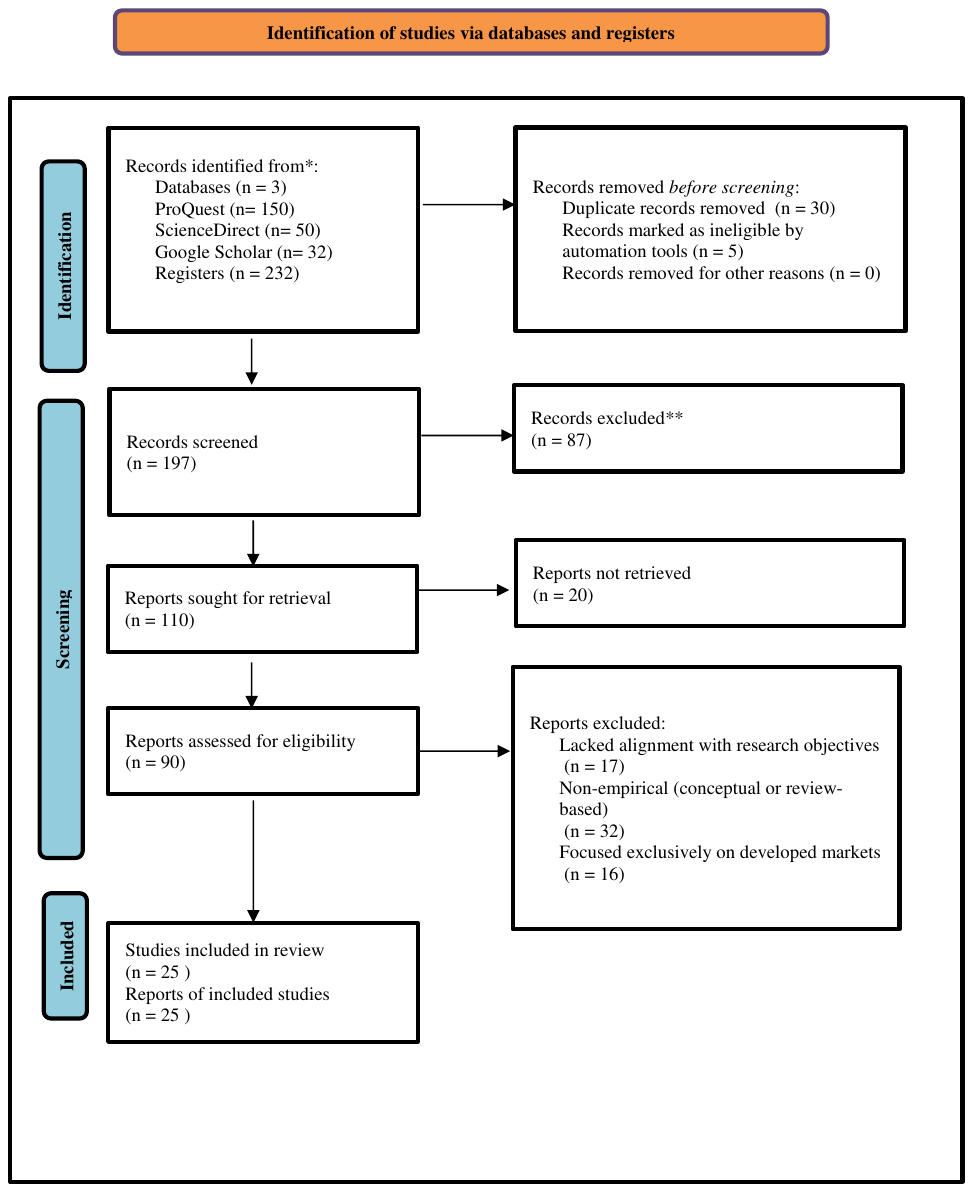
A thorough systematic search was carried out in three major academic databases: ProQuest, ScienceDirect, and Google Scholar. These sources were chosen because they were highly indexed peerreviewed materials on the topics of sustainability, business management and marketing. Search results were limited to empirical articles that were published within the years 2021 and 2026, which guaranteed the incorporation of the latest and theoretical changes in the sustainable branding environment. A strategic mix of Boolean operators and keywords was used to achieve the maximum sensitivity of search, which included such primary phrases like sustainable branding, green branding, brand image, CSR, and consumer loyalty, combined with geographic terms like emerging markets, Asia, Africa, Latin America, and Middle East. Formal search process ended in March 2025. Inclusion and Exclusion Criteria In order to preserve the integrity and focus of the synthesis, eligibility criteria were created. Only empirical studies involving qualitative, quantitative, and mixed-methods designs- that had been peerreviewed and published within the 2021-2026 period were eligible as inclusion criteria. The studies had to be eligible and state the existence of the relationship between at least one of the dimensions of sustainable branding (brand image, CSR, or environmental communication) and consumer loyalty in the context of emerging markets. The review on the other hand did not include conceptual, theoretical or review papers, and also grey literature that was not published. Moreover, those studies that involved only developed markets or could not be linked to the results of brand loyalty were eliminated as well to provide contextual significance. Screening and Selection Process The systematic selection was based on the multi-stage filtering strategy as outlined in PRISMA flow diagram. The first database search returned 232 records. After eliminating duplicates (n=30) and records that were determined as ineligible according to automation tools (n=5), 197 articles were left to go through the screening phase. Screening on title and abstract resulted in 87 articles being eliminated because they did not fit the intersection of sustainability and loyalty. Out of the 110 reports requested to be retrieved, 20 were not available so that only 90 reports could be assessed as eligible to be included in the full-text. Another 65 reports were then filtered according to some preset guidelines: 17 of them were not aligned to the research objectives, 32 were non-empirical, and 16 were based on developed markets. This stringent procedure has led to a culmination synthesis of 25 prime empirical studies with five recent works by the Journal of Business Management and Accounting (JBMA) being added to facilitate journal correspondence. Quality Appraisal and Data Synthesis In order to preserve the methodological validity of the results, the 25 included studies were subjected to a formal quality appraisal. The quality of quantitative studies was considered in terms of analytical clarity, sampling rigor, and data collection integrity, whereas the quality of qualitative contributions was evaluated in terms of methodological appropriateness and depth of the discussed themes. After the appraisal, the data were then abstracted with a standardized abstraction form to include important variables such as author, country, study design and main research outcomes. The analysis employed a thematic coding system, according to which the results were classified into three main pillars CSR, environmental communication, and brand image. This enabled the critical comparison of studies beyond descriptive reporting to determine the mediating paths and consistency gaps that constitute sustainable branding in the unstable market scenarios.
| Author, Year | Country | Study Design | Data Collection / Methodology | Relevancy | Question |
|---|---|---|---|---|---|
| Ali, Mohamed Isa & Ibrahim (2021) | Malaysia | Empirical Study | Survey using PLS-SEM; analyzed commitment and trust impact on online loyalty in banking.+2 | High | Q1 |
| Ahmad, Abdullah, Zainol & Ramely (2023) | Malaysia | Case Study | Semi-structured interviews; examined sustainability initiatives and customer attraction at The Datai. | High | Q1, Q2 |
| Bhattacharya et al. (2024) | Multiple EMs | Empirical Study | Survey-based analysis of CSR impact on trust and purchase intention.+2 | High | Q1 |
| Echezona (2024) | Emerging Markets | Empirical Study | Assessment of emotional loyalty through the lens of CSR authenticity.+2 | High | Q1 |
| Dangaiso et al. (2024) | Pre-emerging EMs | Survey Study | Investigation of CSR credibility and its link to brand preference.+2 | High | Q1 |
| Putera & Famiola (2024) | Indonesia | Banking Study | Empirical study on CSR initiatives and customer cross-buying behavior.+2 | High | Q1 |
| Currás-Pérez et al. (2023) | Mexico/Spain | Cross-Cultural Study | Survey comparing CSR and trust effects in emerging vs. developed markets.+2 | High | Q1 |
| Martínez-Sala et al. (2023) | Spain | Consumer Survey | Analysis of CSR initiatives and millennial loyalty in the fast food sector.+2 | High | Q1 |
| Nguyen et al. (2023) | Vietnam | Field Study | Field experiments on eco-labeling impact regarding trust and organic purchases.+2 | High | Q2 |
| Nahi & Develi (2023) | Morocco | Social Media Study | Empirical analysis of the impact of emotive storytelling in green communication.+2 | High | Q2 |
| Pancić et al. (2023) | Multiple | Survey Study | Examination of green advertising’s role in awareness and repurchase intentions.+2 | High | Q2 |
| Uikey & Baber (2023) | India | Survey Study | Study of green transparency's effect on EV consumer trust and loyalty.+2 | High | Q2 |
| Graça & Kharé (2024) | Brazil | Survey Study | Analysis of green perceived value and trust as drivers for product purchase.+2 | High | Q2 |
| Pranatasari & Diva (2025) | Indonesia | Mediation Analysis | Study of green trust as a mediator for repurchase intention in eco-markets.+2 | High | Q2 |
| Bi et al. (2025) | China | SEM Study | Quantitative analysis of green advertising's effect on organic food purchases via trust.+2 | High | Q2 |
| Chow, Yeow & See (2022) | Malaysia | Survey Study | SPSS analysis of factors (PEOU, PU) affecting Gen Z intentions to use SST. | High | Q2 |
| Pereira (2024) | Brazil | Social Media Analysis | Empirical study of brand image via digital marketing in the fast food sector.+2 | High | Q3 |
| Yuwono, Rahman & Hamid (2025) | Malaysia | Integrated Marketing | Analysis of marketing integration and segmentation on customer loyalty in banking.+2 | High | Q3 |
| Neha (2024) | India | Survey | Investigation of sustainable marketing’s impact on brand image and loyalty.+2 | High | Q3 |
| Jalu et al. (2024) | Ethiopia | Banking Study | Study of green innovation’s effect on perceived value and brand loyalty.+2 | High | Q3 |
| Mamani et al. (2024) | Peru | Survey Study | Examination of brand image mediating the link between perceived value and loyalty.+2 | High | Q3 |
| Hwang et al. (2021) | South Korea | Comparative Retail Study | Analysis of brand trust and satisfaction’s influence on retail loyalty.+2 | High | Q3 |
| Yuwono & Ellitan (2025) | Indonesia | Qualitative Study | In-depth interviews regarding ERM and organizational culture on competitive advantage. | High | Q3 |
| Hamzah, Gazali & Hussien (2026) | Malaysia | SEM Study | Integrated TAM-TRA model investigating online shopping intentions among students. | High | Q3 |
| Rodríguez-González et al. (2022) | Mexico | Automotive Study | Empirical analysis of integrated green strategies and their effect on loyalty.+2 | High | Q1, Q2, Q3 |
FINDINGS
The systematic literature review synthesized results from 25 empirical research studies that analysed the impact of sustainable branding on consumer loyalty in emerging markets. Results are reported according to the three pillars of sustainable branding: CSR, environmental communication, and brand image. Each of the three single factors separately influences consumer loyalty. However, concurrent use of these determinants has the most intense and enduring influence on loyalty. Corporate Social Responsibility (CSR) and Consumer Loyalty The results of existing literature synthesis prove that CSR is one of the key determinants of customer loyalty in the emerging markets where the awareness of socio-economic demands and ethical governing gains more and more influence in selecting a brand. Within such idiosyncratic markets, consumers are more interested in value propositions that go beyond practical exchange, CSR initiatives are therefore decoded as strategic communication enabling consumers to respond emotionally, and differentiate brands. Although extensive empirical data of research like Bhattacharya et al. (2024) and Chi and Phan
(2025) indicates a beneficial effect of CSR on brand trust and purchase intention, a critical thematic analysis shows that the linkage between the two is highly dependent on relational authenticity and contextual legitimacy. One important theoretical conflict that has been found in the review relates to the particular mediated path of CSR signals. Although certain researchers believe that CSR authenticity serves as a direct cause of emotional loyalty when it is sensitive to local needs, blended results in the Journal of Business Management and Accounting (JBMA) indicate that it may be a more complex, indirect process. In particular, Ali et al. (2021) show that relational antecedents, i.e., commitment and trust, have to be achieved as a prerequisite prior to CSR activities being able to translate into behavioral loyalty. This means that CSR will not act in isolation as a source of loyalty but rather as a reinforcing cue within an existing trust system. Such a point of view is also supported by Ahmad et al. (2023) who demonstrate that high-magnitude sustainability investments are significant sources of attraction to ethically conscious consumers, indicating that the magnitude of organizational commitment is a visible proxy of brand credibility. Furthermore, the review highlights that "institutional enforceability" significantly moderates the efficacy of CSR as a loyalty driver. Social and economic aspects of CSR tend to have a stronger impact on brand choice in pre-emerging economies than environmental stewardship. Nonetheless, as Fahmida (2025) notes, in cases where CSR is viewed as a legal obligation, which is not strictly followed, its legitimacy is compromised, thus, diminishing its ability to establish long-term consumer trust. This points to a critical point at which forced or compliance-based CSR might not reach the emotional alignment needed to trigger higher levels of loyalty behavior, including cross-buying, which Putera and Famiola (2024) suggest needs deep value alignment between the brand and consumer. Although CSR is an effective indicator of moral congruence during institutional uncertainty, the existing dependence on self-reported, cross-sectional information in most of the studies reviewed restricts the perception of the long-lasting behavioral trends. Further studies should thus consider how these indicators operate in the less controlled informal sectors in a bid to shift to a genuinely holistic model of sustainable branding. Environmental Communication and Consumer Loyalty The communication of environment has become a primary impetus to consumer loyalty in new markets as it addresses brand transparency, environmental responsibility, and moral congruence. There, where the regulatory frameworks tend to be still underdeveloped, such factors as eco-labels, green marketing campaigns, and sustainability narratives play a crucial role in terms of organizational authenticity. A severe analysis of the evidence reviewed, however, indicates that the effectiveness of these communications is not only a by-product of the message, but it depends upon a persuasive tie of perceived usefulness, emotional connections and verifiability. Although the literature of the world is focused on the convincing impact of narration and eco-labeling because the experiments in the field in Vietnam showed that labels had a significant positive impact on consumer trust and readiness to pay, the addition of certain results by the Journal of Business Management and Accounting (JBMA) provides an essential functional aspect. Chow et al. (2022) make a very important observation of this dynamic and analyze the behavioral intentions of Generation Z by stating that even the most powerful sustainability narrative can fail as long as the service technology behind the narrative is not seen as helpful or simple to use. This points to one of the critical needs in emerging markets: to promote long-lasting loyalty, greenness needs to be expressed in unison with the functional reliability. This point of view is also supported by Hamzah et al. (2026) who employs an integrated TAM-TRA model to illustrate that although attitudes are the driving forces behind digital consumption, trust is a complex and sometimes volatile aspect that can be readily compromised due to perceived digital threats. Moreover, the literature reveals that there is a considerable gap in transparency as to the long-term effects of green advertising. Although the empirical evidence of Pancić et al. (2023) and Uikey and Baber (2023) confirms that explicit environmental communication enhances brand awareness and repurchase intentions in markets like the Indian electric vehicle market, most of the existing studies are still constrained by concentrating on the short-term attitudinal change instead of the long-lasting behavioral loyalty. Critical synthesis shows that these communications should be able to circumvent the crucial mediator of "Green Trust" in order to become permanently loyal. It has been proven that green trust is a complete mediator between perceived value and repurchase intention (Pranatasari and Diva, 2025) and supported by Bi et al. (2025). In the absence of this trust, communication tactics can be susceptible to greenwashing backlash, which Durmuş Şenyapar (2024) cautions can cancel out loyalty among the ethically concerned consumers. Finally, environmental communication can only build loyalty when it has features of verifiability and cultural sensitivity. In line with the Brand Equity Theory, although value-based communication helps to strengthen the emotional connection, its strategic effectiveness lies in its capability to become a trusted signal, but not the marketing veneer. Brand Image and Consumer Loyalty Brand image is a critical determinant of consumer loyalty in the competitive environment of the emerging markets, especially when based on sustainability, innovation, and ethical values. Moral governance is a growing concern among consumers who prefer to engage with brands that have a coherent identity that reflects trust, purpose, and long-term commitment. Although there is extensive literature that confirms the positive relationship between an environmentally friendly brand image and loyalty in a wide variety of industries, fast fashion in India, retail in South Korea, and healthy food in Peru being examples, a thematic synthesis analysis demonstrates that perceived innovation and strategic internal consistency greatly mediate the strength of this relationship. One of the common themes in the review is how brand image is a critical cognitive shortcut in complicated market settings to be used as a foundation of consumer confidence. Mamani et al. (2024) determine that brand image is a good mediator of the relationship between perceived value and consumer loyalty. This is specially true of the banking industry, where Jalu et al. (2024) find that green brand innovation promotes green perceived value and ultimate loyalty, but this is considerably mediated by the existing degree of green knowledge of the consumer. The synthesis of empirical evidence of the Journal of Business Management and Accounting (JBMA) seeks to further enrich the conceptualization of strategic perspective of brand image by adding an organizational and functional dimension. Yuwono and Ellitan (2025) can add a more critical organizational angle to the topic, because, according to the authors, the competitive advantage of a brand and, consequently, the sustainability of its image lies in internal culture, which actively deals with external risks and promotes innovation. This implies that a brand image to be believable in the unstable emerging markets should be indicative of internal operational strength as opposed to just promotional aesthetics. Moreover, although Yuwono et al. (2025) emphasize the integration and segmentation of marketing to ensure the loyalty of banking institutions, Hamzah et al. (2026) show that the attitude and perceived ease of use have a significant effect on digital consumption patterns. It means that the presence of a sustainable brand image has to be provided via the functional and available digital touchpoints to stay relevant to modern consumers.
The brand image impact is compounded among those digitally active and younger generations, whose digital platforms are strategic in supporting sustainability-focused messages. Nevertheless, one major gap that scholars like Tahir et al. (2024) have identified is the so-called measurement gap, in which studies are mainly based on the self-reported perception of brand image, instead of longitudinal behavioral data, which can overestimate the relationship between brand sentiment and long-term loyalty. Moreover, there is also a critical limitation of the lack of comparative studies between the various socio-economic layers and this limits the applicability of these results in markets with a high level of economic disparity. In line with Brand Equity Theory, a morally led brand identity is necessary to offer the necessary level of differentiation, although in the long term its success in the emergent markets will be measured by its unwavering ability to align with brand conduct within the traditional and digital media ecosystem and its capacity to remain credible in both. Comparative and Integrated Perspectives The cumulative results of this systematic review indicate that although each of the branding experiences, namely: CSR, environmental communication and brand image, plays an independent role in consumer loyalty, the overall effect is non-linear and synergistic. Critical literature analysis shows that an integrated strategy of branding that aligns these dimensions has the longest lasting and strongest impact on loyalty results in the new markets. The empirical evidence presented by Rodríguez-González et al. (2022), who illustrate that in the Mexican automotive industry, sustainable supply chains and socially responsible environmental practices find their optimum potential to increase the loyalty only when combined with strong CSR and branding initiatives, supports this view. Likewise, Florido-Benítez (2024) assumes that e-commerce businesses are better placed to achieve higher loyalty of ethically sensitive populations through integrating sustainability into both communication and logistics, instead of applying it as a promotional veneer. Nonetheless, there is a critical theoretical conflict in relation to the consistency-behavior gap. According to Chekima et al. (2024), consumers are increasingly rewarding brands that exhibit elevated degrees of consistency in their sustainability commitments on the one hand and their real performance on the other. This synthesis is also added with empirical results of Journal of Business Management and Accounting (JBMA) that gives an operational aspect to this theoretical gap. According to Yuwono and Ellitan (2025), the external consistency is intrinsically ties to internal organizational consistency and strategic risk management, which means that integration is not just a marketing issue, but an operational necessity. Moreover, Yuwono et al. (2025) substantiate the idea that the organizing aspect of marketing integration and segmentation is the key determinant of loyalty in the banking industry, which lends credence to the overall statement that fragmented sustainability practices are much less likely to achieve success compared to comprehensive approaches. Although the advantages of integration are obvious, there is a serious lack of integration in the literature. Also striking is the absence of frameworks that offer actionable pathways enabling firms to adopt such integration at various touchpoints, especially in resource-bounded settings in emerging markets. The majority of the currently available research focuses on the outcomes facing the consumers, and does not evaluate the organizational alignment that needs to be done internally to sustain the brand-level consistency. A critical review of these results proves that sustainability cannot be an outlying issue; it needs to be a fibre that cuts across the whole branding framework. The most feasible framework of creating long-term consumer loyalty in the market that is characterized by cultural diversity and increased ethical consciousness is that of an integrated sustainable brand strategy in which ethical conduct, consistent communication, and identity based on values converge.
Consumer Loyalty
Environmental Communication
Brand Image
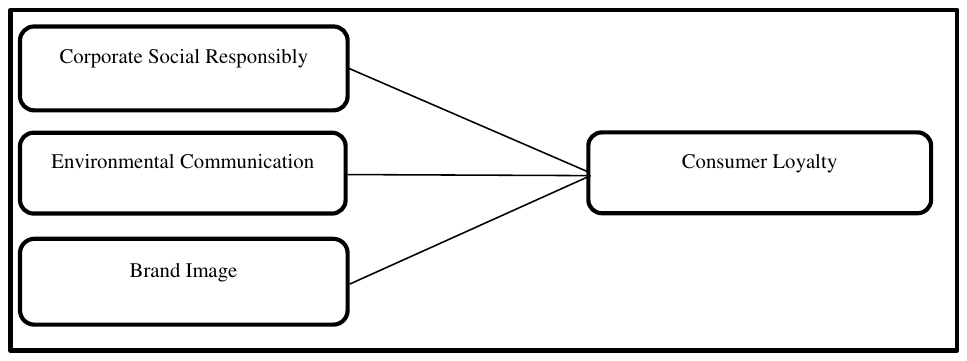
The analysis of the 25 original empirical studies leads to non-linear, complex, and synergistic interrelation between the dimensions of sustainable branding and consumer loyalty in the context of emerging markets. In order to fill the gaps in theory that have been raised by the recent scholarship, this study suggests an integrated conceptual framework that is based on both perspectives of Signalling Theory and Brand Equity Theory. This framework explains the way in which CSR, communication about the environment, and brand image as strategic cues accumulate into brand equity, and brand loyalty as behavioral. Theoretical Underpinnings The framework proposes Signalling Theory as a major perspective to understand how the companies in the economies with institutional uncertainty employ sustainability efforts as a high-clarity trust signalling. Within such settings, the consumers interpret the investment of a brand towards ethical governance and environmental stewardship as an indicator of product quality and corporate credibility. To supplement this, Brand Equity Theory offers the mechanism of how these sustainable associations are converted to brand value. When a brand identifies its moral self with the ethical ambitions of the consumer, companies can shift their interactions with consumers to more affective and behavioral loyalty. Interaction between Independent and Mediating Variables The framework establishes three central independent pillars CSR, environmental communication, and brand image that can be used together as the framework of a sustainable brand. CSR programs serve as ethical anchors that create emotional appeal, especially when they respond to the needs of a nearby community like education and health. Environmental communication can be used to provide transparency with eco-labels and authentic storytelling, leading to the perceived risk of greenness being less when in the hands of the consumer. Lastly, brand image is a shortcut in thinking, which enables consumers to make value-based choices in fast-paced market contexts. Most importantly, the review shows that these variables do not affect the loyalty in a vacuum, instead, their effect is strongly mediated by Relational Trust and Commitment and Green Trust. In the absence of building trust as a connecting bridge, branding activities are usually seen as shallow or fake, and the experience of greenwashing backlash can lead to brand equity losses. Organizational Alignment and Contextual Moderators The framework also includes Cultural Relevance and Digital Literacy as the important moderators that precondition the usefulness of sustainability signals. The influence of sustainable branding in emerging markets depends on the effectiveness of the message in adopting local standards and the convenience with which consumers can access the digital touchpoints of the brand. Moreover, as modern literature points out, the consistency of external brands is predetermined by Internal Organizational Culture and active risk management. This implies that a cohesive sustainable brand plan is not just a marketing deliverable but an operation necessity that demands alignment of internal ethos with external communication in order to establish sustainable competitive edge.
RESULT AND DISCUSSION
This section gives a critical analysis of the findings of the review in a comprehensive manner and is presented in theoretical, managerial, policy, and research dimensions. The discussion combines the findings of 25 empirical studies to show how CSR, environmental communication, and brand image intersect in stimulating consumer loyalty in the unique socio-economic environments of emerging markets. The analysis below places these findings in the current academic discussions with a focus on how sustainability is shifting to the periphery to the main strategic focus requiring organizational alignment and the moral consistency. Theoretical Considerations The results are soundly supported by, and extension of, ground-level theoretical models, especially when markets are characterized by institutional void and a lack of regulatory control. In particular, the review expands the Brand Equity Theory by showing that the loyalty based on sustainability is not an outcome of cognitive awareness but a profound emotional and moral appeal. Credibility of CSR, green transparency, and sustainable brand image are key motivators to both affective and behavioral loyalty. This is supported by empirical data of Ali et al. (2021) whose publication in the JBMA establishes that trust and commitment are the anchors of relationships of loyalty in digital service contexts. Moreover, the results support Signalling Theory since consumers in emerging markets decipher CSR and environmental branding as important trust signals that mitigate perceived risk. The scale and intensity of the signal are essential. As Ahmad et al. (2023) demonstrate, large investments in sustainability are high-clarity quality and quality signals that appeal to the sensitive consumer groups. These findings highlight the need to have composite theoretical models to combine branding, ethics, and cultural psychology. Lastly, the imperative of localization is still evident; the digital literacy and cultural expectations are highly mediating the consumer response. It is on this basis that the global models must include the elements of perceived ease of use and local attitude as observed in the use of the Technology Acceptance Model by Hamzah et al. (2026).
Implications
To the brand managers in the fast changing economies, the findings provide a strategic direction in which the focus is on the real integration and not the superficially integrated engagement. CSR needs to be no longer an appendage exercise but rather a built-in element of the branding framework with a focus on locally integrated initiatives to educate or restore health to foster genuine trust. Managers should adopt environmental communication as a loyalty technique by adopting clear and emotional stories, eco-labeling and storytelling. The most important is the element of authenticity since misleading greenwashing is a critical strategic threat that may irreversibly destroy brand equity and trust. Moreover, according to Chow et al. (2022), it is necessary that the managers can create a sustainable brand image that is seen as useful and convenient, as functional performance is a condition of loyalty among the representatives of Generation Z who expect ethical consistency in all contact points. The biggest effect is, however, obtained with the fully incorporated approach where ethical behavior and the consistent signaling meet. To sustain a competitive edge this external image, as Yuwono and Ellitan (2025) propose, should be backed by an internal culture of risk management and innovation. This implies that the policy and research should be structured to promote responsible branding through institutionalization. It is found that the strategies of private brands alone cannot be effective unless they are complemented with institutional frameworks that can encourage value-based consumerism and ensure the integrity of sustainability claims. Regulatory agencies can prevent greenwashing by establishing standard eco-labeling frameworks and requiring third-party verification to ensure transparency among the people. Lastly, this review establishes key research gaps that can be addressed in the future. Longitudinal and experimental research to monitor the influence of perceptual changes on behavioral loyalty over time is urgently needed instead of being restricted to cross-sectional designs. Comparative analysis of various regions is needed to establish moderating variables like the quality of regulation or cultural values orientations. Academic attention must also be increased to less represented sectors, in the form of agriculture and healthcare to shift towards a more genuinely inclusive concept of sustainable branding. CONCLUSION AND RECOMMENDATION This is a systematic literature review that incorporated 25 primary empirical studies in order to analyze the effects of sustainable branding strategies in consumer loyalty in the complex socio-economic environments of the emerging markets. The inquiry deduces that the strategic intersect of CSR, environmental communication, and brand image is essential in promoting brand trust, emotional connection, and enduring devotion in markets characterized by institutional uncertainty. Finally, sustainable branding is not a fringed reputational resource but a strategic requirement that organizations operating in culturally diverse and ethically conscious markets where trust is the key market differentiator should have. The synthesis indicates that sustainable branding within the emerging markets is an effective trustbuilding mechanism. Locally-based CSR programs and the focus on community needs creates a strong emotional attachment, a bond which is strengthened by high-magnitude sustainability messages which act as anchors to consumer attraction and retention. In the case of technological or service-based innovation, environmental communication is the main channel of credibility, as long as it is based on the perceived usefulness in functionality and convenience. Moreover, a brand image that is sustainability-oriented is an essential mental shortcut of digitally active consumers that use brand values to shape their self-concept. It is the strategic combination of these pillars, supported by a culture of innovation and risk management within, that eventually helps to achieve a sustainable competitive advantage.
On the basis of these findings, the following strategic suggestions can be made to the practitioners and policymakers. Managers are advised to formulate consistent branding strategies that integrate CSR, environmental communication, and brand identity into one and values-based message that is clearly implemented to mirror the priorities at the community levels. The balance between emotive and factual storytelling is essential and verifiability is more important to prevent the trust-destroying consequences of greenwashing. Moreover, the interactive storytelling that uses digital media must be exploited to convey brand values to younger consumers groups. It is recommended that policymakers should institutionalize incentives of auditable CSR actions like tax breaks or certifications and implement standardized eco-labeling programs to continue ensuring the integrity of sustainability statements. To the academic community, it is urgently necessary to shift an emphasis on cross-sectional designs to longitudinal and mixed-method designs that are able to trace the dynamic development of consumer loyalty over time in previously underrepresented fields such as agriculture and healthcare.
LIMITATION & FURTHER RESEARCH
Even though this review provides a very comprehensive compilation of sustainable brand strategies and its effects on consumer loyalty in the emerging economy, it should be noted that there are a number of limitations that are critical to the overall externalization of the findings. First, the study was strictly limited to articles in English based on peer-review by 2021-2026. Though this time limit is necessary to guarantee the incorporation of recent studies, it might also exclude valuable information published in the domestic journals in other languages or the gray literature, including the reports of nongovernmental organizations and corporate white papers. In turn, the findings might not be representative of the localized and non-Western perceptions needed to comprehend branding strategies in the particular cultural context. Second, although the scope of the review is broad, with a wide variety of settings, it is specifically oriented at emerging markets. This specialization maximizes depth at the expense of generalizability of results to the developed markets, where consumer attitudes and institutional structures are very different. Moreover, the methodological heterogeneity of the chosen studies, including surveys and content analysis via qualitative approaches, did not allow a statistical metaanalysis. This impossibility to determine the relative strength of effects is a limitation of this type of quantitative pooling, which points to a methodological gap that can be addressed by follow-up metaanalyses. Although the importance of digital branding has been highlighted, there is still a relative lack of empirical articles that directly deal with the complex processes of trust formation in digital contexts. With the ongoing social media and algorithmic content redesigning brand-consumer relationships, there is an urgent need to explore the nexus of digital trust and sustainability rhetoric. Against these lacunae, a number of future research avenues emerge. First and foremost, researchers need to formulate and experiment with empirical cross-dimension models to explore the relationship between CSR, environmental communication, and brand image and their impact on loyalty as an integrated bundle. It may be appropriate to use the structural equation modeling (SEM) and moderated mediation methods to get a more detailed insight into these dimensions. Moreover, the research should be done in the future by using longitudinal and mixed-method designs to study the dynamic development of consumer loyalty over time in the context of brand activities or crisis events that transcend the constraints of cross-sectional studies that are not dynamic. The geographical and cultural breadth of the literature needs to be broadened to cover underserved areas like sub-Saharan Africa, rural southeast Asia and Latin America. Moreover, intra-industry aspect demands that the scholarly focus in the field where sustainability is nascent like healthcare and agriculture be conducted to understand whether loyalty drivers are equivalent in comparison to conventional consumer-facing sectors. Lastly, it should be subject to future research to understand the effect of algorithmic platforms and influencer authenticity on brand perceptions. Although this review offers a valid initial point, further studies should extend and diversify the areas covered to capture the dynamic nature of the digital aspects of this field.
ACKNOWLEDGEMENT
This research did not receive any specific grant from funding agencies in the public, commercial, or not-for-profit sectors.
References
- Ahmad, R., Abdullah, J. E., Zainol, N. A., & Ramely, A. (2023). Attracting customers using sustainability: A look at the Datai, Langkawi. Journal of Business Management and Accounting, 13(1), 57–78. https://doi.org/10.32890/jbma2023.13.1.3
- Aisyah, R., & Faiz, A. (2024). Examining the impact of corporate social responsibility on brand loyalty in emerging markets. International Journal of Economics, Management and Accounting, 1(1), 6–10. https://doi.org/10.61132/ijema.v1i1.31
- Ali, N., Isa, Z. M., & Ibrahim, D. (2021). The role of commitment and trust towards online loyalty in the banking industry. Journal of Business Management and Accounting, 11(No.2), 25–40. https://doi.org/10.32890/jbma2021.11.2.2
- Bhattacharya, C., Parasar, A., Jain, A., Menghani, K., Unni, M. V., & Sundrani, D. (2024). Analyzing the impact of corporate social responsibility on consumer behavior in emerging markets. European Economic Letters, 14(3). https://eelet.org.uk/index.php/journal/article/view/2038
- Bi, Y., Zhang, Y., & Wang, X. (2025). The influence mechanism of green advertising on consumers' organic food purchase intention: The mediating role of green perceived value and green trust. Frontiers in Sustainable Food Systems, 5, 1515792. https://doi.org/10.3389/ fsufs.2025. 1515792
- Chi, H. K., & Phan, H. T. (2025). Revealing the role of corporate social responsibility, service quality, and perceived value in determining customer loyalty: A meta-analysis study. Sustainability, 17(10), 4304. https://doi.org/10.3390/su17104304
- Curras-Perez, R., Alvarado-Herrera, A. & Vera-Martínez, J. (2023). Comparing the effects of consumers' perceptions of companies' corporate social responsibility initiatives in emerging and developed markets. Asia Pacific Journal of Marketing and Logistics 35, 11, 2748-2764. https://doi.org/10.1108/APJML-09-2022-0761
- Chow, M. M., Yeow, J. A., & See, C. K. (2022). Factors affecting generation z’s intention to use self-service technology (SST). Journal of Business Management and Accounting, 12(No.1), 81–96. https://doi.org/10.32890/jbma2022.12.1.4
- Dangaiso, P., Mukucha, P., Jaravaza, D. C., & Makudza, F. (2024). How perceived corporate social responsibility and consumer brand preference are linked in pre-emerging economies: The role of brand credibility and brand attitude. Cogent Business & Management, 11(1), 2367094. https://doi.org/10.1080/23311975.2024.2367094
- Durmuş Şenyapar, H. N. (2024). Unveiling greenwashing strategies: A comprehensive analysis of impacts on consumer trust and environmental sustainability. Journal of Energy Systems, 8(3), 164–181. https://doi.org/10.30521/jes.1436875
- Echezona, O. (2024). Relationship between corporate social responsibility (CSR) initiatives and brand loyalty in emerging markets. International Journal of Business Strategies, 10(1), 13–25. https://doi.org/10.47672/ijbs.1821
- Fahmida, L. (2025). Economic implications of corporate governance and corporate social responsibility: Evidence from banks in Bangladesh. arXiv preprint, arXiv:2501.15594. https://doi.org/10.48550/arXiv.2501.15594
- Florido-Benítez, L. (2024). Exploring the sustainable future of e-commerce companies through a digital marketing and logistics context. Journal of Management Marketing and Logistics, 11(1), 17-32. https://doi.org/10.17261/Pressacademia.2024.1882
- Graça, S., & Kharé, V. (2024). The influence of green perceived value, trust, and satisfaction on intention to buy green products in Germany and Brazil. Sustainability, 16(5), 1578. https://doi.org/10.20900/jsr20240013
- Hamzah, A. A., Gazali, H. M., & Hussien, S. N. M. (2026b). Digital consumption in higher education: an analysis of online spending among labuan’s university students. Journal of Business Management and Accounting, 16(1), 82–102. https://doi.org/10.32890/jbma2026.16.1.5
- Hwang, S., Lee, M., Park, E., & del Pobil, A. P. (2021). Determinants of customer brand loyalty in the retail industry: A comparison between national and private brands in South Korea. Journal of Retailing and Consumer Services, 63, 102684. https://doi.org/10.1016/j.jretconser. 2021.102684
- Jalu, G., Dasalegn, G., Japee, G., Tangl, A., & Boros, A. (2024). Investigating the effect of green brand innovation and green perceived value on green brand loyalty: Examining the moderating role of green knowledge. Sustainability, 16(1), 341. https://doi.org/10.3390/su16010341
- Mamani, M., Huamán, R., & Quispe, L. (2024). The impact of perceived value on brand image and loyalty: A study of healthy food brands in emerging markets. Frontiers in Nutrition, 11, 1482009. https://doi.org/10.3389/fnut.2024.1482009
- Martínez-Sala, A.-M., Monserrat-Gauchi, J., & Quiles-Soler, C. (2023). Corporate social responsibility and millennial consumer loyalty: Exploring their relationship regarding healthy eating in the fast food sector. El Profesional de la Información, 32(6), e320613. https://doi.org/10.3145/ epi.2023.nov.13
- Mogaji, E., Adeola, O., Adisa, I., Hinson, R. E., Mukonza, C., & Kirgiz, A. C. (2022). Green Marketing in Emerging Economies: Communication and Brand Perspective: An Introduction. In Palgrave studies of marketing in emerging economies (1–16). https://doi.org/10.1007/978-3-030-82572-0_1
- Nahi, H., & Develi, E. İ. (2023). Impact of social media storytelling on moroccan consumer behavior. Journal of International Trade, Logistics and Law, 9(2), 236-251. https://www.jital.org/index.php/jital/article/view/427
- Nguyen, A. T., Ha, V. D., Ngo, H. K., Le, N. A., Khong, P. M., Do, N. T. T., Trinh, M. T., Nguyen, T. D., Ngo, T. Q. K., & Vu, L. C. (2023). Understanding the importance of eco-labeling for organic foods at UNESCO Biosphere Reserves: A case study of cocoa powder at the Dong Nai, Vietnam. Sustainability, 15(12), 9603. https://doi.org/10.3390/su15129603
- Page, M. J., McKenzie, J. E., Bossuyt, P. M., Boutron, I., Hoffmann, T. C., Mulrow, C. D.,... & Moher, D. (2021). The PRISMA 2020 statement: An updated guideline for reporting systematic reviews. BMJ, 372, n71. https://doi.org/10.1136/bmj.n71
- Pancić, M., Serdarušić, H., & Ćućić, D. (2023). Green marketing and repurchase intention: Stewardship of green advertisement, brand awareness, brand equity, green innovativeness, and brand innovativeness. Sustainability, 15(16), 12534. https://doi.org/10.3390/su151612534
- Uikey, A. a. A., & Baber, R. (2023). Exploring the factors that foster green brand loyalty: The role of green transparency, green perceived value, green brand trust and self-brand connection. SPIRE - Sciences Po Institutional REpository. https://doi.org/10.31620/ jccc.09.23/13
- Pereira, M. (2024). The influence of social media marketing on brand equity: Evidence from the fast-food industry in Brazil. International Journal of Strategic Marketing Practice, 6(1), 23–34. https://doi.org/10.47604/ijsmp.2455
- Neha, Joshi, P., & Kumar, N. (2024). Sustainable marketing initiatives and consumer perception of fast fashion brands. Textile & Leather Review, 7, 104–124. https://doi.org/10.31881/tlr.2023.
- Pranatasari, F. D., & Vw, M. a. D. (2025). Green Repurchase Intention of Wiguna Market visitors: The role of green Perceived value, Green Perceived Quality, Green WOM with green Trust as mediation. Dinasti International Journal of Economics Finance & Accounting, 5(6), 6110–6118. https://doi.org/10.38035/dijefa.v5i6.3797
- Putera, M. B. Y., & Famiola, M. (2024). Attitudinal loyalty manifestation in banking CSR: Cross-Buying behavior and customer advocacy. arXiv (Cornell University). https://doi.org/10.48550/arxiv.2404.11063
- Rastogi, T., Agarwal, B., & Gopal, G. (2024). Exploring the nexus between sustainable marketing and customer loyalty with the mediating role of brand image. Journal of Cleaner Production, 440, 140808. https://doi.org/10.1016/j.jclepro.2024.140808 Rodríguez‐González, R. M., Maldonado‐Guzman, G., & Madrid‐Guijarro, A. (2022). The effect of green strategies and eco‐innovation on Mexican automotive industry sustainable and financial performance: Sustainable supply chains as a mediating variable. Corporate Social Responsibility and Environmental Management, 29(4), 779–794. https://doi.org/10.1002/ csr.2233
- Tahir, A. H., Adnan, M., & Saeed, Z. (2024). The impact of brand image on customer satisfaction and brand loyalty: A systematic literature review. Heliyon, 10(16), e36254. https://doi.org/10.1016/j.heliyon.2024.e36254
- Schiaroli, V., Fraccascia, L., & Dangelico, R. M. (2024). How can consumers behave sustainably in the fashion industry? A systematic literature review of determinants, drivers, and barriers across the consumption phases. Journal of Cleaner Production, 483, 144232. https://doi.org/10.1016/j.jclepro.2024.144232
- Yuwono, M. A., & Ellitan, L. (2025). Implementation of enterprise risk management as a strategy for increasing competitive advantage: Study at companies in Central Kalimantan. Journal of Business Management and Accounting (JBMA), 15(1), 55-78. https://doi.org/10.32890/ jbma2025.15.1.4