Strategic Human Resource Management in the Future of Work: A Systematic Review of Digital Transformation, Inclusion, and Sustainability
- Faculty of Business, Design and Arts Swinburne University of Technology, Sarawak Campus
- Faculty of Business and Communication, University Malaysia Perlis
Journal of Business Management and Accounting 16(1) (2026) · https://doi.org/10.32890/jbma2026.16.1.4
Abstract
The global workforce is undergoing rapid transformation, driven by advancements in technology, growing environmental concerns, and changing societal expectations. These forces have significantly redefined the field of Human Resource Management (HRM). This systematic literature review examines the crucial role of HRM in addressing the emerging challenges and complexities of the future of work. Despite growing academic and practical interest in this area, a lack of consolidated knowledge persists, hindering the mapping of multifaceted challenges and strategic responses required of HR professionals. This review employed a structured methodology, grounded in the PRISMA framework, to address this gap, utilizing advanced searches across the Scopus, ScienceDirect, and Web of Science databases. The keywords "human resource management," "future," and "work" guided the search, resulting in a refined selection of 31 recent and peer-reviewed articles for in-depth analysis. The synthesis of findings revealed three core thematic clusters shaping the discourse: (1) Strategic and Inclusive Human Resource Practices in Evolving Workplaces, highlighting the integration of equity, diversity, and inclusive leadership in response to changing workforce demographics and expectations; (2) Technology, Digital Transformation, and the Future of Work, emphasizing the implications of artificial intelligence, algorithmic management, and virtual environments on HR functions and employee experiences; and (3) Green HRM, Sustainability, and Global Workforce Challenges, focusing on the growing alignment between HRM practices and environmental sustainability goals, particularly through green training, leadership, and employee engagement. The synthesis concludes that the future relevance of HRM hinges on its ability to integrate strategic inclusivity, ethical technology adoption, and green practices into a cohesive, human-centric framework. The findings provide a comprehensive foundation for scholars, practitioners, and policymakers seeking to advance HRM strategies in an increasingly volatile and complex world of work.
Keywords: Human resource management, future work, digital transformation, inclusion, sustainability
INTRODUCTION
The landscape of Human Resource Management (HRM) is undergoing a transformative shift, driven by rapid technological advancements, shifting workforce expectations, and the global evolution of work arrangements (Baluch & Ridder, 2021; Tscharntke et al., 2012). The concept of the "Future of Work" encapsulates changes that transcend traditional employment models, encompassing hybrid work, digitalization, the gig economy, artificial intelligence (AI), and evolving skill demands (Kolade & Owoseni, 2022; Lim, 2023). These trends have significant implications for HRM as organizations strive to remain agile, inclusive, and innovative in a highly volatile and complex environment. As a strategic function, HRM plays a central role in shaping how organizations attract, develop, retain, and engage talent (Koon & Juhary, 2011; Mohd Aris et al., 2023). Hence, understanding how HRM can adapt and lead in the future of work is vital for sustaining organizational performance and workforce well-being (Dabić et al., 2023; Schultz, 2021). The convergence of disruptive forces makes it timely and necessary to re-examine HRM theories, policies, and practices within this emerging paradigm.
A growing body of literature has examined the intersections between HRM and the future of work, offering insights into various dimensions such as workforce digital readiness, remote and hybrid work structures, and automation’s impact on job design and talent development Strategic HRM scholars have begun to explore the implications of AI and people analytics on decision-making processes, workforce planning, and performance management (Bondarouk & Brewster, 2016; Richards et al., 2023). At the same time, employee-centric themes such as psychological safety, resilience, and well-being have gained prominence, considering the increased emphasis on work-life integration and the demand for purposeful employment (Harrington & Ladge, 2009; Sengupta & Al-Khalifa, 2022). Although scholars widely discuss these topics, the literature lacks a consolidated framework that integrates strategic (inclusive practices), technological (AI and digital transformation), and ethical (sustainability) dimensions. This review synthesizes these fragmented discourses into a coherent framework to guide both research and practice.
Despite the advancements in the literature, several gaps and challenges persist. For instance, the ethical and cultural implications of data-driven HRM practices remain underexplored, particularly in non- Western contexts. While AI and automation promise efficiency, concerns around job displacement, algorithmic bias, and employee autonomy remain unresolved (Diez-Martin et al., 2019; Lawal & Rafsanjani, 2022). Additionally, the evolving psychological contract between employers and employees, characterized by shifting expectations of flexibility, inclusivity, and meaning, requires more longitudinal and cross-disciplinary investigation. There is a pressing need to bridge the gap between technology and humanity in HRM, fostering a more holistic and humane approach to managing future workforces. As we look ahead, the HRM scholarship must embrace interdisciplinary research, inclusive global perspectives, and prioritize sustainable and ethical practices. Future research should also focus on developing agile HRM models that support continuous learning, digital adaptation, and inclusive leadership. Ultimately, HRM must not only respond to changes in the future of work but also actively shape it to create systems that are adaptive, resilient, and deeply human-centric (De Lima et al., 2014; Yulianty & Senen, 2023).
LITERATURE REVIEW
Macro-level forces are fundamentally reshaping the future of work, driven by rapid technological advancements, globalization, demographic transitions, and shifting societal values. These forces exert profound pressure on HRM to move beyond its traditional operational functions toward a more strategic, dynamic, and integrative role within organizations. The accelerated adoption of artificial intelligence (AI), machine learning, automation, and digital platforms is redefining the nature of work, rendering some roles obsolete while simultaneously creating new ones that demand complex, adaptive skill sets (Ng et al., 2025; Savant, 2025; Pan & Froese, 2023). As a result, HRM must prioritize continuous learning and foster a culture of lifelong development through structured reskilling and upskilling initiatives. Furthermore, globalization and the proliferation of digital connectivity have facilitated the emergence of remote, hybrid, and geographically dispersed workforces, necessitating inclusive HR practices that promote cultural competence, virtual collaboration, and cross-border communication (Farndale et al., 2025; Vandy & Mohanty, 2023; Latifat et al., 2023). The COVID-19 pandemic has further catalyzed these transitions by normalizing remote work and exposing the need for agile HR strategies that ensure organizational continuity and employee well-being (Ng et al., 2025; Saxena, 2024; Lim, 2023).
These transformations have elevated the role of HRM from a transactional, compliance-driven function to that of a strategic business partner tasked with aligning human capital with long-term organizational goals (Latifat et al., 2023; Ng et al., 2025). In this capacity, HR leaders are increasingly focused on enhancing the employee experience and fostering environments characterized by diversity, equity, and inclusion (DEI), as well as psychological safety and holistic well-being, which are vital for attracting, engaging, and retaining talent in the modern workforce (Ng et al., 2025; Lim, 2023; Davidescu et al., 2020). Simultaneously, HRM must grapple with complex ethical and structural challenges posed by technological integration, including concerns over algorithmic bias, data privacy, and the displacement of human labour by intelligent machines (Vandy & Mohanty, 2023; Pan & Froese, 2023; Davidescu et al., 2020). In response, contemporary HR strategies embrace a data-driven and evidence-based approach, leveraging workforce analytics to inform decisions related to talent acquisition, performance management, and leadership development across diverse socio-cultural and legal environments (Vandy & Mohanty, 2023; Folarin, 2021). This strategic pivot necessitates reimagining HRM systems, practices, and metrics to account for both efficiency and equity, ensuring that technological and organizational change is inclusive and socially responsible.
Looking forward, the success of HRM in navigating the complexities of the future workplace will depend on its capacity to harness innovation, adapt to global labour market dynamics, and cultivate resilient, learning-oriented organizational cultures (Ng et al., 2025; Savant, 2025; Farndale et al., 2025). HR leaders must remain vigilant and responsive to emerging trends such as green HRM, ethical AI governance, and digital well-being, while fostering collaboration across stakeholders to co-create human-centric, sustainable work environments (Vandy & Mohanty, 2023; Pan & Froese, 2023). The paradigm shift toward sustainable HRM, characterized by values of flexibility, inclusivity, and agility, will be instrumental in enhancing job satisfaction, organizational performance, and long-term viability (Ng et al., 2025; Davidescu et al., 2020). This future-focused approach to HRM must not only anticipate and address the uncertainties posed by continuous disruption but also uphold employees' ethical and developmental needs, recognizing them as core enablers of strategic success. Ultimately, the future of work demands that HRM transcend traditional boundaries, embracing a forward-thinking, systemic, and human-centered paradigm that aligns technological progress with the evolving aspirations of a global workforce (Ng et al., 2025; Savant, 2025; Latifat et al., 2023).
| No. | Key Influences | HRM Strategy Impact | Supporting Citations |
|---|---|---|---|
| 1. | Forces Driving Transformation | External forces are reshaping work, requiring adaptive and digitally enabled HRM practices. | (Ng et al., 2025; Savant, 2025; Farndale et al., 2025; Saxena, 2024; Lim, 2023; Vandy & Mohanty, 2023; Latifat et al., 2023; Pan & Froese, 2023) |
| 2. | Strategic and Inclusive HRM | HRM is becoming a strategic driver that fosters inclusion and aligns talent with organizational goals. | (Ng et al., 2025; Farndale et al., 2025; Saxena, 2024; Lim, 2023; Vandy & Mohanty, 2023; Latifat et al., 2023; Davidescu et al., 2020) |
| 3. | Technology and Ethics in HRM | Technology enhances HR decision-making but requires ethical oversight and workforce re-skilling. | (Vandy & Mohanty, 2023; Folarin, 2021; Pan & Froese, 2023; Davidescu et al., 2020) |
| 4. | Sustainable & Human-Centered HRM | Future-ready HRM prioritizes learning, well-being, and sustainable, responsible work practices. | (Ng et al., 2025; Savant, 2025; Farndale et al., 2025; Vandy & Mohanty, 2023; Pan & Froese, 2023; Davidescu et al., 2020) |
RESEARCH QUESTIONS
Using the PICo (Population, Interest, Context) framework, here are three research questions based on the themes “Strategic and Inclusive Human Resource Practices in Evolving Workplaces”, “Technology, Digital Transformation, and the Future of Work”, and “Green HRM, Sustainability, and Global Workforce Challenges”:
Research Question 1: How do inclusive HRM strategies influence employee engagement among diverse talent groups in an evolving work environment? P (Population): Diverse talent groups I (Interest): Inclusive and strategic HRM practices Co (Context): Evolving workplace structures
Research Question 2: What is the impact of AI-driven HR technologies on talent acquisition and workforce agility in digitally transforming organisations? P (Population): HR professionals and employees involved in recruitment and workforce development I (Interest): Use of AI and digital HR tools Co (Context): Organizations undergoing digital transformation
Research Question 3: How do green HRM practices contribute to organizational sustainability goals among multinational corporations? P (Population): Multinational corporations’ HR managers and employees I (Interest): Green HRM practices Co (Context): Global sustainability initiatives
These three research questions aim to explore human resource management practices in the context of the future of work.
MATERIAL AND METHODS
This systematic literature review adopted the PRISMA (Preferred Reporting Items for Systematic Reviews and Meta-Analyses) framework to ensure methodological transparency, thoroughness, and consistency throughout the review process. By following PRISMA guidelines, the study ensured a structured and replicable approach to identifying, screening, and selecting relevant literature. This framework enhances the reliability and credibility of findings by promoting clarity in inclusion criteria and procedural steps. Moreover, it underscores the importance of incorporating randomized studies, given their potential to minimize bias and strengthen the evidence base. The literature search was conducted across three major academic databases: Scopus, Web of Science (WoS), and ScienceDirect, which were selected for their comprehensive coverage and scholarly reliability. A comprehensive index of peer-reviewed literature covering a range of subjects, particularly in the field of business management, is provided by Scopus, WoS, and ScienceDirect. They are globally recognized, high- impact academic repositories known for indexing peer-reviewed, quality-assured research outputs across various disciplines. Researchers understand that no database is flawless; each presents drawbacks, such as varying degrees of detail or coverage gaps, which they must consider during the review process.
Identification
In adherence to the framework, the identification stage is a critical foundation for ensuring the systematic and rigorous selection of relevant literature. This initial phase involves a comprehensive and structured search of academic databases using carefully selected keywords. In this study, the keywords "human resource management", "future", and "work" were strategically employed to capture scholarly discourse that intersects with the evolving landscape of HRM in the context of the Future of Work. The databases selected for this process were Scopus, WoS, and ScienceDirect. The search yielded a substantial volume of literature, with 3,399 records retrieved from Scopus, 2,332 records from Web of Science, and 619 records from ScienceDirect, totaling 6,350 initial records. This large dataset reflects the robust academic interest in the interplay between HRM and the future of work. It highlights the necessity of a methodical screening process to ensure relevance and quality.
| Database | Search String |
|---|---|
| Scopus | TITLE-ABS-KEY ( ( "human resource management" OR HRM ) AND future AND ( work OR job ) ) AND ( LIMIT-TO ( PUBYEAR , 2025 ) ) AND ( LIMIT-TO ( SUBJAREA , "BUSI" ) ) AND ( LIMIT-TO ( DOCTYPE , "ar" ) ) AND ( LIMIT-TO ( LANGUAGE , "English" ) ) AND ( LIMIT-TO ( PUBSTAGE , "final" ) ) Date of Access: July 2025 |
| WoS | ( ( "human resource management" OR HRM ) AND future AND ( work OR job ) ) (Topic) and 2025 or 2024 (Publication Years) and Article (Document Types) and English (Languages) and Business Economics (Research Areas) and Article (Document Types) and Article (Document Types) and Business Economics (Research Areas) and 2025 (Publication Years) Date of Access: July 2025 |
| ScienceDirect | TITLE-ABS-KEY ( ( "human resource management" OR HRM ) AND future AND ( work OR job ) ) Date of Access: July 2025 |
Screening
The screening phase of the PRISMA framework is an essential step in refining and narrowing the body of literature to ensure methodological integrity and thematic relevance. After identifying 6,350 records across Scopus, WoS, and ScienceDirect, a rigorous screening process was applied using a set of predefined eligibility criteria. This process limited the selection to peer-reviewed journal articles written in English and at the final publication stage, published in 2025, and explicitly indexed within the Business, Management, and Accounting subject category. The review was deliberately scoped to publications from the year 2025 to capture the very latest research and emerging trends at the cutting edge of the field, which represents a focused scope rather than an attempt at broad generalization. Publications such as conference proceedings, book chapters, review articles, and in-press manuscripts were excluded to maintain a focus on finalized and scholarly validated research. This systematic exclusion process led to the removal of 6,225 records, reflecting the necessity of filtering out irrelevant, outdated, or non-peer-reviewed content that could otherwise dilute the academic rigor of the review. Ultimately, 125 records remained post-screening: 52 from Scopus, 55 from WoS, and 18 from ScienceDirect. This refined corpus represents the most pertinent and up-to-date contributions to the discourse on HRM in the context of the Future of Work.
Further enhancing the credibility and reliability of the review, a deduplication process was conducted to eliminate overlapping records found across the databases. Sixteen duplicate entries were identified and removed, ensuring each article contributed uniquely to the dataset and analysis. The use of three distinct, reputable databases strengthened the breadth of the initial search but also necessitated careful screening to avoid redundancy. The resulting dataset of 109 unique articles forms a focused, high- quality literature base for in-depth synthesis and thematic analysis. This thorough screening process aligns with PRISMA’s emphasis on transparency and reproducibility and illustrates a commitment to ensuring content precision and academic robustness. By eliminating peripheral literature and emphasizing disciplinary relevance, the review offers insightful, evidence-based contributions to HRM theory and practice, particularly in understanding the transformational shifts driven by digitalization, hybrid work models, and evolving employee expectations in the future of work era.
| Criterion | Inclusion | Exclusion |
|---|---|---|
| Language | English | Non-English |
| Timeline | 2025 | < 2025 |
| Literature Type | Journal (Article) | Conference, Book, Review |
| Publication Stage | Final | In Press |
| Subject | Business, Management & Accounting | Besides Business, Management & Accounting |
Eligibility
The eligibility stage marks the third and one of the most critical phases in the PRISMA systematic review process, during which the retained records undergo a full-text assessment to confirm their alignment with the research objectives and methodological standards. From the initial pool of 109 unique articles identified after the screening phase, the researchers conducted a comprehensive evaluation to assess each study's conceptual relevance, methodological robustness, and empirical contribution. During this phase, 78 papers were disqualified for various reasons, including insufficient alignment with the core themes of Human Resource Management (HRM), Future of Work, and strategic workforce transformation. While thematically adjacent, some articles lacked empirical depth or failed to provide substantive insights into the evolving paradigms of HRM in relation to automation, hybrid work structures, or employee well-being dimensions considered central to this review. Others were excluded due to weak methodological designs, lack of peer-reviewed validation, or superficial engagement with the future of work discourse, thereby falling short of the quality threshold required for inclusion in a high-impact synthesis.
Ultimately, 31 articles were deemed eligible and retained for the final analysis, representing the most rigorous and thematically pertinent contributions to the field. These selected studies offer diverse yet complementary perspectives, encompassing a range of research designs and methodologies. We narrowed down to this set based on its relevance and strong emphasis on conceptual clarity, theoretical grounding, and practical implications, the essential criteria for shaping scholarly dialogue and informing policy and practice in contemporary HRM. This focused corpus ensures that the subsequent synthesis and thematic coding are based on a high-integrity knowledge base, capable of capturing the complex interplay between digital transformation, workforce agility, talent management, and evolving leadership models in the future of work context. By upholding strict eligibility standards, this stage safeguards against thematic dilution and enhances the analytical depth of the review, ultimately contributing to a more coherent, insightful, and impactful academic output.
Data Abstraction and Analysis
An integrative analysis approach was employed as the central evaluative method in this study to systematically explore and synthesize insights derived from a range of research designs, with a particular focus on qualitative inquiry. The central objective of this analytical phase was to identify, categorize, and structure key themes and subthemes that reflect current developments in HRM within the context of the Future of Work. The thematic development process commenced with an in-depth data collection phase, during which the authors meticulously reviewed the full texts of 31 rigorously selected articles. As illustrated in Figure 2, this process involved a comprehensive examination of textual content, conceptual frameworks, and empirical evidence to extract insights directly aligned with the study’s core research questions. Following the full-text review of the 31 articles, an inductive thematic analysis was conducted. This involved open coding of key findings and concepts from each article, which were then grouped into categories and subsequently synthesized into the three overarching themes presented in the results.
The authors critically appraised each study’s methodological orientation, empirical findings, and theoretical contributions to ensure analytical depth and thematic coherence. This process enabled the identification of cross-cutting themes that transcend individual study contexts while highlighting unique insights relevant to contemporary HRM challenges. Collaborative engagement among co-authors was central to theme generation; multiple rounds of discussion were held to iteratively refine the themes and ensure they were grounded in evidence and contextually relevant. The researchers maintained a reflective log throughout the analytical process to document analytical decisions, emergent interpretations, methodological uncertainties, and conceptual tensions. This audit trail enhanced transparency and methodological rigor, aligning with best practices in qualitative synthesis. Any discrepancies or interpretive disagreements concerning theme development were openly deliberated among the research team, ensuring consensus-driven outcomes. This collaborative and iterative process ensured that the thematic structure accurately represents the nuanced landscape of HRM in the future of work, providing a robust foundation for subsequent analysis and scholarly interpretation.
To enhance consistency and coherence, the researchers refined the initially generated themes through an iterative process. The thematic analysis underwent validation by two domain experts, one specializing in human resource management and the other in business management. They independently reviewed the findings to assess the relevance and accuracy of the identified issues. This expert evaluation phase played a critical role in establishing domain validity by confirming the clarity, significance, and appropriateness of each theme. Revisions were subsequently made based on a combination of expert feedback, evaluative comments, and the researchers’ informed judgment.
Quality of Appraisal
Following the methodological guidelines outlined by Kitchenham and Charters (Kitchenham, 2007), the selected set of 31 articles underwent a structured quality assessment to evaluate the robustness of the evidence and enable a comparative analysis. This study employed the quality evaluation framework developed by Abouzahra et al. (2020), which includes five targeted assessment questions. Each study was rated using a three-point scoring system: a score of 1 was assigned if the criterion was fully satisfied ("Yes"), 0.5 if it was partially met with identifiable limitations ("Partly"), and 0 if the criterion was not addressed at all ("No"). This systematic approach ensured a consistent and transparent evaluation of methodological rigor across all included studies.
| Quality Assessment | Expert 1 | Expert 2 | Total Score |
|---|---|---|---|
| Is the purpose of the study clearly stated? | Y | Y | 2 |
| Is the interest and the usefulness of the work clearly presented? | Y | Y | 2 |
| Is the study methodology clearly established? | Y | Y | 2 |
| Are the concepts of the approach clearly defined? | Y | Y | 2 |
| Is the work compared and measured with other similar work? | Y | Y | 2 |
Each expert independently evaluated the study based on the established criteria, and the individual scores were aggregated to generate a composite quality rating. The results consistently reflected high scores, indicating that the study met the predefined quality benchmarks and demonstrated methodological soundness.
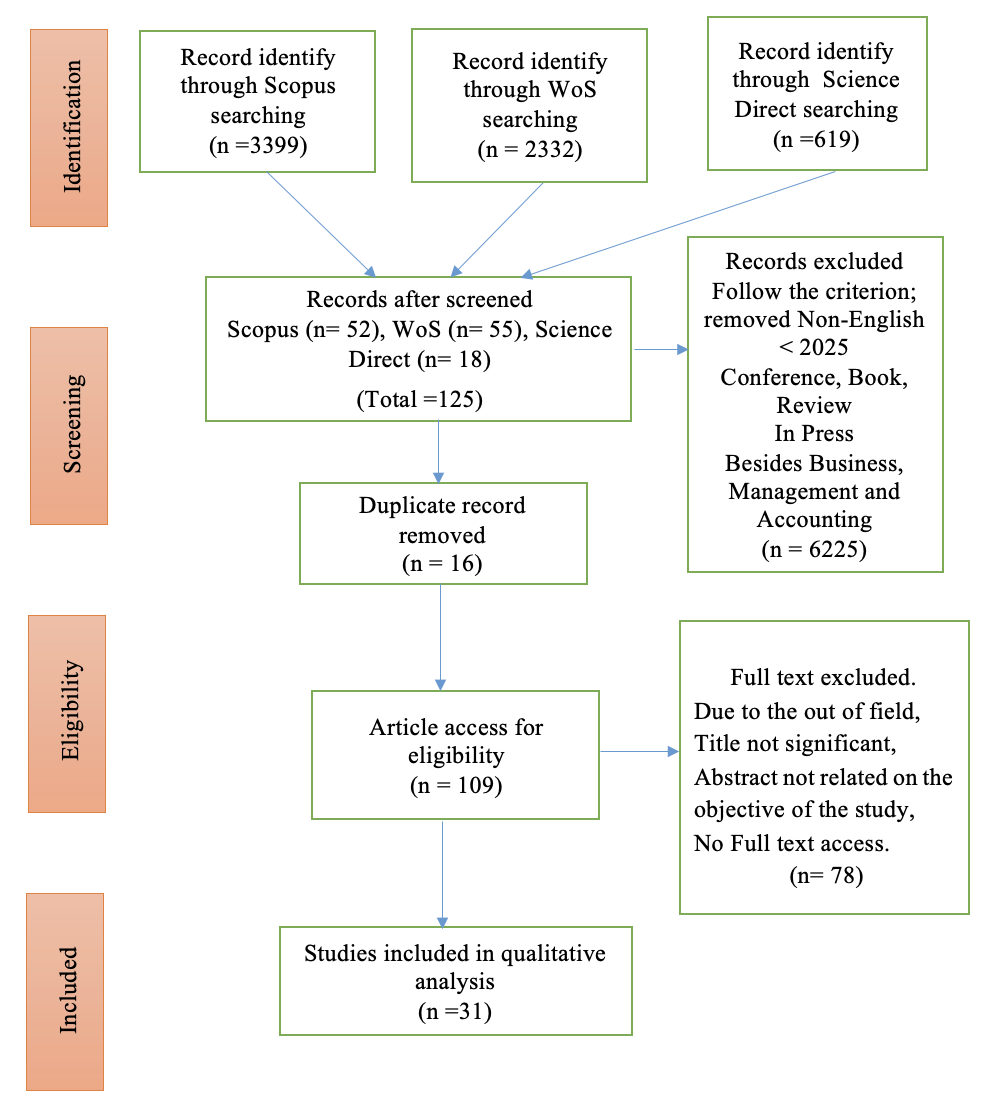
Note. The flow diagram is derived from Moher et al. (2009)
RESULTS
Background of the selected study is presented in Table 5 below:
| No. | Author | Journal | Title | Scopus | WoS | Science Direct | Remarks |
|---|---|---|---|---|---|---|---|
| 1 | Rahman et al. (2025) | Journal of Management Development | Stimulating job satisfaction through gender diversity: exploring the impact of HRM practices in the banking sector of Bangladesh | / | / | / | Strategic and Inclusive Human Resource Practices in Evolving Workplaces |
| 2 | Javali et al. (2025) | International Journal of Organizational Analysis | Multicultural challenges and employee experience in globally dispersed teams: insights from Indian software firms | / | / | / | Green HRM, Sustainability, and Global Workforce Challenges |
| 3 | Cooke et al. (2025) | Human Resource Management Review | Women's authorship in international human resource management research: Implications for responsible management education and emerging scholars | / | / | / | Strategic and Inclusive Human Resource Practices in Evolving Workplaces |
| 4 | Cömert et al. (2025) | Management Research Review | The green attraction: mediating role of environmental CSR and green HRM in the relationship between green culture and organizational attractiveness | / | / | Green HRM, Sustainability, and Global Workforce Challenges | |
| 5 | Ferrer et al., (2025) | Asia Pacific Journal of Human Resources | The Australian Human Resource Management Profession: Current State and Future Challenges in the Post-COVID World of Work | / | / | Green HRM, Sustainability, and Global Workforce Challenges | |
| 6 | Zahra & Ullah (2025) | Journal of Chinese Human Resources Management | Valuing the Employee Value Propositions: A Tactic to Make Employees Stay on the Job | / | / | Strategic and Inclusive Human Resource Practices in Evolving Workplaces | |
| 7 | Alfes et al. (2025) | Human Resource Management | The Buffering Role of Anti-Violence Human Resource Management Practices in Shaping How Police Officers Cope with Workplace Violence | / | / | Strategic and Inclusive Human Resource Practices in Evolving Workplaces | |
| 8 | Chaudhary et al. (2025) | SA Journal of Human Resource Management | An intriguing convergence between metaverse and sustainable human resource management | / | / | Technology, Digital Transformation, and the Future of Work | |
| 9 | Singh et al. (2025) | SA Journal of Human Resource Management | Green human resource management and Sustainable Development Goals in non-profit organisations | / | / | Green HRM, Sustainability, and Global Workforce Challenges | |
| 10 | El Hammoumi et al. (2025) | Business, Management and Economics Engineering | The capacity of absorption and the management of human resources in asymmetrical strategic alliances: The case of Moroccan SMES | / | / | Green HRM, Sustainability, and Global Workforce Challenges | |
| 11 | Muhammad et al. (2025) | Cogent Business & Management | Mediating effect of appraisal fairness between the relationship of appraisal satisfaction and employee performance appraisal: a case of Bauchi State Teachers Service Commission, Nigeria | / | / | Strategic and Inclusive Human Resource Practices in Evolving Workplaces | |
| 12 | Atay et al. (2025) | Sustainable Futures | Society 5.0 and human-centered technology: Redefining talent management in the digital age | / | / | Technology, Digital Transformation, and the Future of Work | |
| 13 | Ozkan-Canbolat et al. (2025) | International Journal of Organization Theory and Behavior | Does the fuzzy logic model explains more? Moderating effect of personality on the relationship between SR-HRM and job performance | / | / | Strategic and Inclusive Human Resource Practices in Evolving Workplaces | |
| 14 | Chuang (2025) | International Journal of Organizational Analysis | A philosophical look at Confucian humanity in the Age of Robots | / | / | Technology, Digital Transformation, and the Future of Work | |
| 15 | Al Ruwaili (2025) | Quality - Access to Success | Role of the Human Resources Information System in Promotion of Job Performance in the Gulf Cooperation Council Countries | / | Strategic and Inclusive Human Resource Practices in Evolving Workplaces | ||
| 16 | Zhang et al. (2025) | International Journal of Human Resource Management | Navigating algorithmic paradox management: the role of workplace game engagement and regulatory focus | / | Technology, Digital Transformation, and the Future of Work | ||
| 17 | Maisonneuve et al. (2025) | Journal of Healthcare Leadership | Managing Resilience and Exhaustion Among Health Care Workers Through Psychological Self-Care: The Impact of Job Autonomy in Interaction With Role Overload | / | Green HRM, Sustainability, and Global Workforce Challenges | ||
| 18 | Fletcher & Swierczynski (2025) | International Journal of Human Resource Management | Non-binary gender identity expression in the workplace and the role of supportive HRM practices, co-worker allyship, and job autonomy | / | Strategic and Inclusive Human Resource Practices in Evolving Workplaces | ||
| 19 | Hameli & Bela (2025) | EuroMed Journal of Business | High commitment HRM and well-being of frontline food service employees: the mediating roles of job demands and psychological conditions | / | Strategic and Inclusive Human Resource Practices in Evolving Workplaces | ||
| 20 | Almadana et al. (2025) | VINE Journal of Information and Knowledge Management Systems | Work engagement through social exchange mechanisms: does the role of knowledge-sharing behavior matter? | / | Strategic and Inclusive Human Resource Practices in Evolving Workplaces | ||
| 21 | Luo et al. (2025) | Benchmarking | The future of healthcare: green transformational leadership and GHRM’s role in sustainable performance | / | Green HRM, Sustainability, and Global Workforce Challenges | ||
| 22 | Gholami et al. (2025) | Journal of Manufacturing Technology Management | Green lean six sigma practices: a scale development and measurement model from an engineer’s perspective | / | Green HRM, Sustainability, and Global Workforce Challenges | ||
| 23 | Shabu et al. (2025) | International Journal of Accounting and Economics Studies | Shaping the gig economy: insights into management, technology, and workforce dynamics | / | Technology, Digital Transformation, and the Future of Work | ||
| 24 | Lu et al. (2025) | Human Resource Management | Enhancing Employee Outcomes Through Common Good Human Resource Management: Exploring the Role of Meaningfulness and Thriving | / | Strategic and Inclusive Human Resource Practices in Evolving Workplaces | ||
| 25 | Pak et al. (2025) | Human Resource Management | Antecedents and outcomes of enabling HR practices: The paradox of consistency and flexibility | / | Strategic and Inclusive Human Resource Practices in Evolving Workplaces | ||
| 26 | Michael et al. (2025) | Global Business and Organizational Excellence | Employee Commitment and Cognitive Engagement as Moderators in the Relationship Between Quality of Work Life and Work Life Balance: A Conditional Moderated ModeratedMediation Model | / | Strategic and Inclusive Human Resource Practices in Evolving Workplaces | ||
| 27 | Kim & Lee (2025) | Global Business and Finance Review | A Study on the Effect of Polychronicity, Job Performance, Work Engagement and Turnover Intention of Hotel Employees | / | Green HRM, Sustainability, and Global Workforce Challenges | ||
| 28 | Thomas & Turnbull (2025) | Industrial Relations | The value of industrial relations research(ers): Activism inside and outside the UK Academy | / | Green HRM, Sustainability, and Global Workforce Challenges | ||
| 29 | Pandey (2025) | Emerald Emerging Markets Case Studies | Cultural collisions: the struggle for recognition in a cross-cultural workplace | / | Green HRM, Sustainability, and Global Workforce Challenges | ||
| 30 | Yang & Zhang (2025) | Humanities and Social Sciences Communications | Employee experience: conceptualization, scale development, and validation | / | Green HRM, Sustainability, and Global Workforce Challenges | ||
| 31 | Carter & Liu (2025) | International Journal of Information Management | How was my performance? Exploring the role of anchoring bias in AI-assisted decision making | / | Technology, Digital Transformation, and the Future of Work |
Strategic and Inclusive Human Resource Practices in Evolving Workplaces
The first theme, Strategic and Inclusive Human Resource Practices in Evolving Workplaces, explores how HRM is evolving to foster equity, fairness, and high performance in modern workplace structures. Key sub-themes include gender and identity inclusivity, performance appraisal systems, commitment- based HRM, and the role of personality and cognitive factors in optimizing job performance. These studies underscore the evolution of HRM strategies in fostering inclusive, equitable, and performance- driven workplaces.
Recent research examining gender dynamics and identity inclusion underscores the necessity for HRM practices that are responsive to the diverse needs of employees. Rahman et al. (2025) reveal that gender diversity serves as a mediating factor in the relationship between HRM practices and job satisfaction. Their findings indicate that male and female employees often exhibit differing preferences in areas such as recruitment, training, occupational safety, and workplace conditions. In a related study, Fletcher and Swierczynski (2025) demonstrate that supportive HRM strategies, alongside co-worker allyship and increased job autonomy, can help bridge the gap between actual and ideal expressions of gender identity among non-binary employees. Further extending this discourse, Cooke et al. (2025) explore how gender influences academic authorship, suggesting that the principles of inclusion should be applied not only in organizational settings but also within academic environments and educational frameworks. Collectively, these studies highlight the role of inclusive HRM in enhancing employee satisfaction, promoting equity, and enriching the diversity of perspectives and knowledge.
Appraisal systems and organisational resources have a significant influence on job performance and employee engagement. Muhammad et al. (2025) reveal that fairness in performance appraisals partially mediates the relationship between satisfaction and actual performance, emphasizing the necessity of fair evaluation mechanisms. Al Ruwaili (2025) finds that Human Resources Information Systems (HRIS) have a significant impact on job performance, with systems related to compensation and recruitment being particularly influential. Zahra and Ullah (2025) further show that employee value propositions enhance organizational commitment and retention when aligned with sustainable HR strategies. These findings collectively suggest that when implemented equitably and transparently, performance-related systems are essential for improving motivation, retention, and engagement in strategic HRM.
Researchers are increasingly examining commitment-focused HRM strategies through psychological and behavioral lenses. Hameli and Bela (2025) highlight the indirect influence of high-commitment HRM on well-being, mediated by psychological conditions such as meaningfulness and availability. Lu et al. (2025) support this perspective by linking standard good HRM practices with employee thriving and innovation, suggesting that meaningfulness in work contributes significantly to positive employee outcomes. Similarly, Michael et al. (2025) explore how employee commitment and cognitive engagement moderate the relationship between quality of work life and job/life satisfaction, advocating for holistic strategies that integrate psychological dimensions into HRM. These findings align with Pak et al. (2025), who assert that frontline managers require consistency and flexibility to support individualized needs while maintaining organizational alignment, presenting a practical paradox within HRM delivery.
Finally, studies have also emphasized the role of individual personality traits and contextual coping mechanisms in determining employee outcomes. Ozkan-Canbolat et al. (2025) find that personality traits, especially conscientiousness and agreeableness, moderate the effects of social responsibility- driven HRM on job performance, underscoring the need for personalized HR interventions. Almadana et al. (2025) question, however, the effectiveness of trust and knowledge-sharing behaviors in mediating work engagement, suggesting that cultural and organizational contexts must be considered. Alfes et al. (2025) further highlight the significance of contextual HRM practices by showing how anti-violence policies help police officers cope with workplace violence, buffering adverse outcomes like turnover intentions through denial-based coping strategies. These studies reinforce the necessity of integrating psychological safety, individual differences, and contextual awareness into HRM practices to ensure strategic alignment and employee well-being.
Taken together, the studies within these sub-themes reveal important complementarities and tensions in how inclusive and performance-oriented HRM practices operate. Research on gender and identity inclusion by Rahman et al. (2025), Fletcher and Swierczynski (2025), and Cooke et al. (2025) emphasizes the importance of equity, voice, and representation as fundamental foundations for employee satisfaction and organizational legitimacy. In contrast, studies by Muhammad et al. (2025), Al Ruwaili (2025), and Zahra and Ullah (2025) shift the focus toward structural mechanisms such as fair appraisal systems, HRIS, and employee value propositions, highlighting how transparency and resource alignment drive performance and retention. Bridging these perspectives, Hameli and Bela (2025), Lu et al. (2025), and Michael et al. (2025) demonstrate that HRM practices exert their influence through psychological conditions, particularly meaningfulness, commitment, and cognitive engagement. At the same time, Ozkan-Canbolat et al. (2025), Almadana et al. (2025), and Alfes et al. (2025) caution against one-size-fits-all approaches by showing that personality traits, cultural context, and coping mechanisms significantly condition HRM effectiveness. Collectively, these studies suggest that strategic HRM outcomes emerge from the alignment of inclusive values, fair systems, psychological engagement, and contextual sensitivity rather than from isolated HR practices.
Technology, Digital Transformation, and the Future of Work
The second theme, 'Technology, Digital Transformation, and the Future of Work,' emphasizes how digital transformation and technology integration are reshaping the future of work. The key sub-themes include the implications of algorithmic control, virtual environments, artificial intelligence (AI), and human-centered technology on HRM systems, offering critical perspectives on how organizations navigate the resulting complexities.
A key dimension of technological advancement in HRM revolves around algorithmic management and its impact on performance and employee coping mechanisms. Zhang et al. (2025) investigate how ride- hailing drivers adapt to the paradoxes generated by algorithmic HRM, finding that relational game engagement, driven by promotional focus, enhances service performance more effectively than efficiency-focused strategies. The dual strategies adopted by workers highlight the nuanced behavioral responses to algorithm-driven systems. Complementing this, Shabu et al. (2025) provide a bibliometric overview of gig economy studies, exposing the significant role of AI-driven platforms in influencing worker conditions, policy gaps, and regulatory challenges. The study highlights the importance of addressing worker well-being and fairness in algorithmic environments. Similarly, Carter and Liu (2025) demonstrate that AI-generated performance recommendations introduce anchoring bias in managerial decision-making, where the nature and magnitude of the AI input skew performance appraisals. These findings point to the urgent need for HR practices that not only incorporate digital systems but also develop mechanisms to ensure fairness, transparency, and human agency in AI-assisted environments.
In parallel, human-centered innovation has emerged as a guiding principle for aligning technological systems with sustainable talent development. Atay et al. (2025), drawing on the Society 5.0 framework, advocate for strategic, human-oriented approaches in digital HRM. The study identifies key transformative practices in talent acquisition, development, and retention across various sectors, including defence, transportation, and smart cities, emphasising the importance of flexible and ethically grounded frameworks. Chuang (2025) contributes a philosophical lens, proposing Confucian humanism as a model for navigating the moral challenges of robotic work environments. By prioritizing moral character, continuous learning, and workplace ethics, organizations may balance technological integration with social responsibility and human flourishing. Meanwhile, Chaudhary et al. (2025) explore the emerging convergence between the metaverse and sustainable HRM through a bibliometric analysis. The study highlights how immersive virtual platforms can enhance employee engagement, learning, and development, while supporting broader sustainability goals. Together, these perspectives suggest that strategic HRM in the digital age must be both technologically competent and ethically grounded to navigate a complex and interconnected future.
Collectively, the studies within these sub-themes illustrate a tension between technological efficiency and human agency in digitally mediated workplaces. Research by Zhang et al. (2025), Shabu et al. (2025), and Carter and Liu (2025) highlights how algorithmic and AI-driven systems are reshaping control, performance evaluation, and worker behavior, often introducing new biases, regulatory challenges, and coping demands for both employees and managers. In contrast, Atay et al. (2025), Chuang (2025), and Chaudhary et al. (2025) reframe digital transformation as an opportunity to embed ethical, human-centered, and sustainability-oriented principles into HRM systems. While the former group emphasizes the risks of depersonalization, algorithmic dominance, and fairness erosion, the latter underscores the potential of technology to enhance engagement, learning, and moral responsibility when guided by thoughtful design. Taken together, these studies suggest that the future of HRM lies not in resisting technological advancement, but in integrating algorithmic innovation with humanistic values to ensure that digital transformation supports both organizational performance and employee well-being.
Green HRM, Sustainability, and Global Workforce Challenges
The third theme, Green HRM, Sustainability, and Global Workforce Challenges, presents a nuanced understanding of the increasing relevance of green HRM (GHRM), multicultural competence, and employee experience in achieving both organizational and environmental objectives. The key sub- themes include how strategic HR practices contribute to organizational performance, sustainability goals, and the well-being of the workforce.
An emerging area of emphasis in recent scholarship is the influence of environmentally focused HRM practices on advancing sustainable organizational outcomes. Luo et al. (2025) highlight that green training programs, environmentally oriented job analysis, and intellectual stimulation are key elements that enhance sustainability performance in the healthcare industry, particularly when reinforced by transformational leadership with an ecological focus. In a similar vein, Cömert et al. (2025) illustrate that environmentally responsible HR practices, in conjunction with environmental corporate social responsibility, play a mediating role in the relationship between organizational green culture and the perceived attractiveness of the organization. Their research is especially relevant to members of Generation Z, who increasingly value ethical environmental practices and sustainable work environments. Singh et al. (2025) broaden this discussion within the context of the non-profit sector, demonstrating how green HR initiatives implemented by environmental organizations in South Africa contribute to the advancement of the United Nations Sustainable Development Goals. Together, these studies underscore the strategic importance of green HRM in promoting ecological responsibility, strengthening organizational reputation, and fostering long-term resilience.
Beyond sustainability, the growing complexity of multicultural teams and geographically dispersed workforces introduces new challenges for HRM. Javali et al. (2025) examine this dynamic within Indian software firms, revealing how communication breakdowns and cultural diversity negatively impact employee experience, while trust plays a pivotal positive role. Pandey (2025) similarly explores cultural misalignments in cross-border work settings, revealing how clashes in organizational values and recognition practices lead to employee disengagement and increased risk of turnover. El Hammoumi et al. (2025) emphasize the importance of human capital development in Moroccan SMEs engaged in asymmetrical strategic alliances, particularly highlighting the significance of absorptive capacity in facilitating knowledge transfer and enhancing competitive positioning. These studies collectively argue for more inclusive and context-specific HRM practices that acknowledge the diversity and complexity of global teams, while fostering trust and capability development.
Workforce resilience and well-being remain central to effective HRM in volatile and demanding work environments. Maisonneuve et al. (2025) emphasize the role of job autonomy and psychological self- care in enhancing the resilience of healthcare workers and reducing emotional exhaustion. Their findings suggest that contextualized HR practices, when aligned with autonomy and manageable workloads, can help mitigate burnout and enhance employee resilience during crises. Complementing this, Kim and Lee (2025) reveal that hotel employees with high polychronicity and the ability to manage multiple tasks simultaneously show improved engagement and performance, particularly when supported by organizational structures. Yang and Zhang (2025) also contribute by conceptualizing and validating a multi-dimensional scale of employee experience, asserting its critical influence on job satisfaction, organizational commitment, and reduced turnover intention. These insights highlight the growing need for HRM strategies that not only manage work complexity but also prioritize the psychological and emotional dimensions of employee engagement.
In the context of post-pandemic recovery and workforce transformation, the HR profession must adapt to evolving societal expectations. Ferrer et al. (2025) provide a comprehensive overview of the HR landscape in Australia, underscoring the shift toward hybrid working and the call for multi-stakeholder engagement in a VUCA (volatile, uncertain, complex, and ambiguous) environment. Similarly, Gholami et al. (2025) develop a validated measurement model for Green Lean Six Sigma practices, reinforcing the relevance of HRM in Industry 4.0 contexts by aligning strategic integrity, technology, and eco-innovation. Thomas and Turnbull (2025) revisit the relevance of industrial relations researchers in shaping contemporary HR discourse, asserting that activist scholarship can sustain and enrich the field amid socio-economic shifts. These perspectives collectively reinforce the strategic importance of HRM as a mediator between environmental sustainability, workplace innovation, and social equity.
Across these sub-themes, the reviewed studies collectively demonstrate that sustainability-oriented HRM extends beyond environmental initiatives to encompass cultural, psychological, and structural dimensions of workforce management. Research on green HRM by Luo et al. (2025), Cömert et al. (2025), and Singh et al. (2025) highlights the strategic value of environmentally aligned HR practices in enhancing organizational performance, employer attractiveness, and societal impact. In contrast, studies by Javali et al. (2025), Pandey (2025), and El Hammoumi et al. (2025) shift attention to the human and relational complexities of global and multicultural workforces, highlighting trust, cultural alignment, and absorptive capacity as critical enablers of sustainable performance. Complementing these perspectives, Maisonneuve et al. (2025), Kim and Lee (2025), and Yang and Zhang (2025) emphasize employee resilience, autonomy, and experience as key mechanisms through which HR practices contribute to well-being and engagement. Finally, Ferrer et al. (2025), Gholami et al. (2025), and Thomas and Turnbull (2025) situate these micro-level dynamics within broader post-pandemic, technological, and socio-economic transformations, reinforcing HRM’s integrative role in balancing ecological sustainability, workforce adaptability, and social responsibility.
| Themes | Sub-Themes |
|---|---|
| Strategic and Inclusive Human Resource Practices in Evolving Workplaces | Gender and identity inclusivity Performance appraisal systems Commitment-based HRM The role of personality and cognitive factors in optimizing job performance |
| Technology, Digital Transformation, and the Future of Work | The implications of the followings on HRM systems: Algorithmic control Virtual environments Artificial intelligence (AI) Human-centered technology |
| Green HRM, Sustainability, and Global Workforce Challenges | How strategic HR practices contribute to: Organizational performance Sustainability goals Workforce well-being. |
The findings of this review explicitly address the three research questions by illustrating how HRM practices are evolving to meet the demands of the future of work. In relation to Research Question 1, the evidence demonstrates that inclusive and strategic HRM practices enhance employee engagement by fostering fairness, representation, and psychological meaningfulness across diverse talent groups, particularly when supported by transparent performance systems and commitment-oriented approaches. Addressing Research Question 2, the findings indicate that AI-driven and digital HR technologies are reshaping talent acquisition and workforce agility by enhancing decision speed, flexibility, and responsiveness. However, their effectiveness depends on the ethical implementation, human oversight, and preservation of employee trust and agency. Regarding Research Question 3, the review confirms that green HRM practices contribute to organizational sustainability by integrating environmental values into HR systems, while also supporting workforce resilience, well-being, and global workforce alignment. Overall, the findings indicate that future-ready HRM emerges from the integration of inclusivity, digital capability, and sustainability, rather than from isolated or purely technical interventions.
CONCLUSION, IMPLICATIONS, AND LIMITATIONS
This systematic literature review investigated the evolving roles and approaches within HRM in response to the changing nature of work. The review was based on peer-reviewed studies sourced from three well-established academic databases, namely Scopus, ScienceDirect, and Web of Science. Guided by the PICo framework and organized through the PRISMA protocol, the study applied stringent inclusion criteria to identify research that addressed strategic, technological, and sustainability-related aspects of human resource practices in contemporary organizational contexts. A total of thirty-one articles were methodically selected and examined to answer three core research questions that underpin the review.
The analysis revealed three principal thematic domains: (1) Strategic and Inclusive Human Resource Practices in Evolving Workplaces, (2) Technology, Digital Transformation, and the Future of Work, and (3) Green HRM, Sustainability, and Global Workforce Challenges. A key finding was the growing prioritization of inclusive talent strategies, adaptive leadership models, and employee well-being initiatives driven by demographic shifts and workforce diversification. Technological innovations, particularly the integration of artificial intelligence and algorithmic tools in HR processes, have been frequently highlighted for their potential to improve operational efficiency, while also raising concerns about ethics and accountability. Furthermore, sustainability-focused initiatives, including green HRM and environmentally conscious leadership, emerged as pivotal elements influencing global HR strategies.
Theoretical implications of this review provide a foundational framework for future research, proposing that studies on the future of HRM should simultaneously consider the interplay of technology, inclusion, and sustainability, rather than examining them in isolation. As for practical implications, for HR practitioners, this synthesis suggests: (1) Investing in DEI training must be coupled with algorithmic bias audits. (2) Rolling out green HRM initiatives can be a powerful tool for employer branding and attracting Gen Z talent. (3) Policies supporting remote work must be intentionally designed to foster inclusion and prevent proximity bias.
However, certain limitations are acknowledged. The most significant limitation of this review is its exclusive focus on literature published in 2025. While this provides a snapshot of the most current research, it may overlook seminal works and established theories from prior years that underpin the field. Furthermore, the reliance on three major databases and a specific set of keywords may have omitted relevant studies published in other repositories or using different terminology. Additionally, the review was limited to English-language publications and a specific set of databases, potentially excluding valuable contributions from non-English or regionally indexed sources. Future studies are encouraged to undertake longitudinal assessments of emerging HR trends, explore intercultural HR practices, and empirically test the frameworks presented in this study. Ultimately, systematic reviews such as this are instrumental in unifying fragmented academic discourse and guiding future research. By capturing ongoing shifts and pressing challenges, they lay the groundwork for constructing agile, evidence-based HRM strategies that are suited to a volatile and rapidly changing global employment landscape.
ACKNOWLEDGEMENT
This research was conducted without financial support from any governmental, commercial, or non- profit funding bodies.
References
- Abouzahra, A., Sabraoui, A., & Afdel, K. (2020). Model composition in model driven engineering: A systematic literature review. Information and Software Technology, 125(May), 106316. https://doi.org/10.1016/j.infsof.2020.106316
- Al Ruwaili, N. F. (2025). Role of the human resources information system in promotion of job performance in the gulf cooperation council countries. Quality - Access to Success, 26(205), 255–269. https://doi.org/10.47750/QAS/26.205.26
- Alfes, K., Tham, T. L., Pariona-Cabrera, P., Holland, P., & Bartram, T. (2025). The buffering role of anti-violence human resource management practices in shaping how police officers cope with workplace violence. Human Resource Management, 64(3), 713–730. https://doi.org/10.1002/ hrm.22281
- Almadana, A. V, Suharnomo, S., & Perdhana, M. S. (2025). Work engagement through social exchange mechanisms: Does the role of knowledge-sharing behavior matter? VINE Journal of Information and Knowledge Management Systems, 55(1), 135–145. https://doi.org/10.1108/VJIKMS-05-2022-0149
- Atay, S., Müftüoğlu, C. T., Gülmez, N., & Şahin, M. (2025). Society 5.0 and human-centered technology: Redefining talent management in the digital age. Sustainable Futures, 9. https://doi.org/10.1016/j.sftr.2025.100733
- Baluch, A. M., & Ridder, H. G. (2021). Mapping the research landscape of strategic human resource management in nonprofit organizations: A systematic review and avenues for future research. Nonprofit and Voluntary Sector Quarterly, 50(3). https://doi.org/10.1177/0899764020939653
- Bondarouk, T., & Brewster, C. (2016). Conceptualising the future of HRM and technology research. International Journal of Human Resource Management, 27(21). https://doi.org/10.1080/ 09585192.2016.1232296
- Carter, L., & Liu, D. P. (2025). How was my performance? Exploring the role of anchoring bias in AI-assisted decision making. International Journal of Information Management, 82, 102875. https://doi.org/10.1016/j.ijinfomgt.2025.102875.
- Chaudhary, A., Khandelwal, S., Deshpande, P., & Panjabi, P. (2025). An intriguing convergence between metaverse and sustainable human resource management. SA Journal of Human Resource Management, 23. https://doi.org/10.4102/sajhrm.v23i0.2699
- Chuang, S. (2025). A philosophical look at Confucian humanity in the Age of Robots. International Journal of Organizational Analysis, 33(5), 1324–1334. https://doi.org/10.1108/IJOA-03-2024-4380
- Cömert, P. N., Ozer, E., Gürol, Y., Akan, G., & Bulgur, N. E. (2025). The green attraction: mediating role of environmental CSR and green HRM in the relationship between green culture and organizational attractiveness. Management Research Review, 48(6), 966–990. https://doi.org/10.1108/MRR-05-2024-0360
- Cooke, F. L., Sanders, K., De Cieri, H., & Bhoir, M. K. B. (2025). Women’s authorship in international human resource management research: Implications for responsible management education and emerging scholars. Human Resource Management Review, 35(3). https;//doi.org/10.1016/ j.hrmr.2025.101087
- Dabić, M., Maley, J. F., Švarc, J., & Poček, J. (2023). Future of digital work: Challenges for sustainable human resources management. Journal of Innovation and Knowledge, 8(2). https://doi.org/10.1016/j.jik.2023.100353
- Davidescu, A. A. M., Apostu, S. A., Paul, A., & Casuneanu, I. (2020). Work flexibility, job satisfaction, and job performance among romanian employees-Implications for sustainable human resource management. Sustainability (Switzerland), 12(15), 1-53. https://doi.org/10.3390/su12156086
- De Lima, E. P., Machado, C. G., Kluska, R. A., Hundzinski, L. N., Rocha, L. M., Da Silva, E. H. D. R., & Da Costa, S. E. G. (2014). 20th Americas Conference on Information Systems, AMCIS 2014 BT - 20th Americas Conference on Information Systems, AMCIS 2014, August 7, 2014 - August 9, 2014. IIE Annual Conference and Expo 2014.
- Diez-Martin, F., Blanco-Gonzalez, A., & Prado-Roman, C. (2019). Research challenges in digital marketing: Sustainability. Sustainability (Switzerland), 11(10). https://doi.org/10.3390/ su11102839
- El Hammoumi, A., Seghyar, N., El Hammoumi, M., & El-Ouali, A. (2025). The capacity of absorption and the management of human resources in asymmetrical strategic alliances: The case of moroccan smes. Business, Management and Economics Engineering, 23(1), 108–131. https://doi.org/10.3846/bmee.2025.21166
- Farndale, E., Horak, S., Piyanontalee, R., Puffer, S. M., & Vidović, M. (2025). Looking back to look forward: Disruption, innovation and future trends in international human resource management. International Business Review, 24(1), 1-9. https://doi.org/10.1016/j.ibusrev.2024.102362
- Ferrer, J., Treuren, G. J. M., Holland, P., & Bartram, T. (2025). The Australian human resource management profession: Current state and future challenges in the post-COVID world of work. Asia Pacific Journal of Human Resources, 63(2). https://doi.org/10.1111/1744-7941.12431
- Fletcher, L., & Swierczynski, J. (2025). Non-binary gender identity expression in the workplace and the role of supportive HRM practices, co-worker allyship, and job autonomy. International Journal of Human Resource Management, 36(7), 1068–1101. https://doi.org/10.1080/ 09585192.2023.2284191
- Folarin, K. (2021). The future of human resources – trends, reflections and strategies. European Journal of Human Resource, 5(1), 1-19. https://doi.org/10.47672/ejh.670
- Gholami, H., Lee, J. K. Y., Garza-Reyes, J. A., & Salameh, A. A. (2025). Green lean six sigma practices: a scale development and measurement model from an engineer’s perspective. Journal of Manufacturing Technology Management, 36(1), 179–202. https://doi.org/10.1108/JMTM-12-2023-0555
- Hameli, K., & Bela, B. (2025). High commitment HRM and well-being of frontline food service employees: the mediating roles of job demands and psychological conditions. EuroMed Journal of Business, 20(1), 114–136. https://doi.org/10.1108/EMJB-01-2023-0019
- Harrington, B., & Ladge, J. J. (2009). Work-life integration:. Present dynamics and future directions for organizations. Organizational Dynamics, 38(2). https://doi.org/10.1016/j.orgdyn. 2009.02.003
- Javali, G. R., B.K, M., & Kumar, K. M. S. (2025). Multicultural challenges and employee experience in globally dispersed teams: insights from Indian software firms. International Journal of Organizational Analysis, 33(7), 1765–1788. https://doi.org/10.1108/IJOA-03-2024-4358
- Vandy, J. F., & Mohanty, S. (2023). Future of work - opportunities, challenges and implications for international, comparative and cross-national HRM. International Journal on Recent and Innovation Trends in Computing and Communication, 11(9), 4300-4306. https://doi.org/10.17762/ijritcc.v11i9.9887
- Kim, H., & Lee, Y. (2025). A study on the effect of polychronicity, job performance, work engagement and turnover intention of hotel employees. Global Business and Finance Review, 30(2), 1–16. https://doi.org/10.17549/gbfr.2025.30.2.1
- Kitchenham, B. (2007). Guidelines for performing systematic literature reviews in software engineering. Technical Report, Ver. 2.3 EBSE Technical Report. EBSE.
- Kolade, O., & Owoseni, A. (2022). Employment 5.0: The work of the future and the future of work. Technology in Society, 71. https://doi.org/10.1016/j.techsoc.2022.102086
- Koon, V. Y., & Juhary, A. (2011). Relationship between business strategy and human resource management practices in private and public limited companies in Malaysia. Journal of Business Management and Accounting, 1(2), 1-22. https://e-journal.uum.edu.my/index.php/jbma/article/view/8907 Latifat Omolara Ayanponle, Oluwafunmi Adijat Elufioye, Onyeka Franca Asuzu, Ndubuisi Leonard Ndubuisi, Kehinde Feranmi Awonuga, & Rosita Ebere Daraojimba. (2023). The future of work and human resources: A review of emerging trends and HR’s evolving role. International Journal of Science and Research Archive, 11(2), 113-124. https://doi.org/10.30574/ijsra.2024.11.2.0151
- Lawal, K., & Rafsanjani, H. N. (2022). Trends, benefits, risks, and challenges of IoT implementation in residential and commercial buildings. In Energy and Built Environment, 3, 3. https://doi.org/10.1016/j.enbenv.2021.01.009
- Lim, W. M. (2023). The workforce revolution: Reimagining work, workers, and workplaces for the future. In Global Business and Organizational Excellence, 42, 4. https://doi.org/10.1002/ joe.22218
- Lu, Y., Zhang, M. M., Yang, M. M., & Li, T. (2025). Enhancing employee outcomes through common good human resource management: Exploring the role of meaningfulness and thriving. Human Resource Management, 64(2), 485–502. https://doi.org/10.1002/hrm.22270
- Luo, J., Zaman, S. I., Jamil, S., & Khan, S. A. (2025). The future of healthcare: green transformational leadership and GHRM’s role in sustainable performance. Benchmarking, 32(3), 805–837. https://doi.org/10.1108/BIJ-08-2023-0523
- Maisonneuve, F., Galy, A., Groulx, P., Chênevert, D., Grady, C., & Coderre-Ball, A. M. (2025). Managing resilience and exhaustion among health care workers through psychological self-care: The impact of job autonomy in interaction with role overload. Journal of Healthcare Leadership, 17, 63–73. https://doi.org/10.2147/JHL.S501193
- Michael, A. R., Maria, G. M., George, H. J., Jayacyril, C. M., & Parayitam, S. (2025). Employee commitment and cognitive engagement as moderators in the relationship between quality of work life and work life balance: A conditional moderated Moderated-Mediation Model. Global Business and Organizational Excellence, 44(4), 94–118. https://doi.org/10.1002/joe.22287
- Mohd Aris, N. F., Omar, S. S., & Angsor M, M. A. (2023). The exposition of HR management in a micro-business: Kak Yus Soya case study. Journal of Business Management and Accounting, 13(2), 285-323. https://doi.org/10.32890/jbma2023.13.2.6
- Moher D, Liberati A, & Tetzlaff J, A. D. (2009). PRISMA 2009 flow diagram. In The PRISMA statement, 6, 1000097.
- Muhammad, M., Suleiman, W., Al Mamun, M. A., Jewel, R. M., & Mozumder, M. A. (2025). Mediating effect of appraisal fairness between the relationship of appraisal satisfaction and employee performance appraisal: a case of Bauchi State Teachers Service Commission, Nigeria. Cogent Business & Management, 12(1). https://doi.org/10.1080/23311975.2025.2450297
- Ng, E., Stanton, P., Umeh, C., Bamber, G., Stone, D., Lukaszewski, K., Aw, S., Lyons, S., Schweitzer, L., Ren, S., Özbilgin, M., & Varma, A. (2025). Megatrends affecting the world of work: Implications for human resource management. Personnel Review, 54(5), 1113-1149. https://doi.org/10.1108/pr-02-2025-0100.
- Ozkan-Canbolat, E., Kalemci, R. A., & Kalemci-Tuzun, I. (2025). Does the fuzzy logic model explains more? Moderating effect of personality on the relationship between SR-HRM and job performance. International Journal of Organization Theory and Behavior, 28(1), 34–55. https://doi.org/10.1108/IJOTB-04-2023-0083
- Pak, J., Heidarian Ghaleh, H., Ma, Z., & Akhtar, M. N. (2025). Antecedents and outcomes of enabling HR practices: The paradox of consistency and flexibility. Human Resource Management Journal, 35(2), 371–396. https://doi.org/10.1111/1748-8583.12571
- Pan, Y., & Froese, F. J. (2023). An interdisciplinary review of AI and HRM: Challenges and future directions. Human Resource Management Review, 33(1). http://doi.org/10.1016/j.hrmr.2022. 100924
- Pandey, M. (2025). Cultural collisions: the struggle for recognition in a cross-cultural workplace. Emerald Emerging Markets Case Studies, 15(2), 1–17. https://doi.org/10.1108/EEMCS-08-2024-0358
- Rahman, M. R., Rahman, M. M., Miraz, M. S. H., & Rabbi, H. M. F. (2025). Stimulating job satisfaction through gender diversity: exploring the impact of HRM practices in the banking sector of Bangladesh. Journal of Management Development, 44(3), 386–414. https://doi.org/10.1108/ JMD-06-2024-0197
- Richards, J., Ellis, V., Canduela, J., Pustelnikovaite, T., & Saxena, S. (2023). Developing the concept of leaveism: From presenteeism/absence to an emergent and expanding domain of employment? Human Resource Management Journal, 33(2). https://doi.org/10.1111/1748-8583.12452
- Savant, R. (2025). The future of work: Evolving strategies in human resource management for a digital and agile workforce. Journal of Informatics Education and Research, 5(2), 2288-2292. https://doi.org/10.52783/jier.v5i2.2686
- Saxena, D. (2024). The changing human resource scenario : 1990 to 2024. International Journal for Multidisciplinary Research, 6(5), 1-9. https://doi.org/10.36948/ijfmr.2024.v06i05.27362
- Schultz, C. M. (2021). The relationship between self-leadership, the future of human resource management, and work engagement. SA Journal of Human Resource Management, 19. https://doi.org/10.4102/sajhrm.v19i0.1701
- Sengupta, D., & Al-Khalifa, D. (2022). Pandemic imposed remote work arrangements and resultant work-life integration, future of work and role of leaders—a qualitative study of Indian millennial workers. Administrative Sciences, 12(4). https://doi.org/10.3390/admsci12040162
- Shabu, K., Priya, K. M., Mageswari, S. S., Prabhash, N., & Hari, A. (2025). Shaping the gig economy: insights into management, technology, and workforce dynamics. International Journal of Accounting and Economics Studies, 12(1), 92–103. https://doi.org/10.14419/sx68fc91
- Singh, S., Martins, A., & Tefera, O. (2025). Green human resource management and sustainable development goals in non-profit organisations. SA Journal of Human Resource Management, 23. https://doi.org/10.4102/sajhrm.v23i0.2780
- Thomas, H., & Turnbull, P. (2025). The value of industrial relations research(ers): Activism inside and outside the UK Academy. Industrial Relations, 64(2), 151–167. https://doi.org/10.1111/ irel.12361
- Tscharntke, T., Tylianakis, J. M., Rand, T. A., Didham, R. K., Fahrig, L., Batáry, P., Bengtsson, J., Clough, Y., Crist, T. O., Dormann, C. F., Ewers, R. M., Fründ, J., Holt, R. D., Holzschuh, A., Klein, A. M., Kleijn, D., Kremen, C., Landis, D. A., Laurance, W., … Westphal, C. (2012). Landscape moderation of biodiversity patterns and processes - eight hypotheses. In Biological Reviews, 87, 3. https://doi.org/10.1111/j.1469-185X.2011.00216.x
- Yang, P., & Zhang, S. (2025). Employee experience: conceptualization, scale development, and validation. Humanities and Social Sciences Communications, 12(1). http://doi.org/10.1057/ s41599-025-04926-5
- Yulianty, P. D., & Senen, S. H. (2023). Analysis systematic literature review: The study of HRM transformation into digital-based GHRM future research agenda. West Science Business and Management, 1(05). https://doi.org/10.58812/wsbm.v1i05.517
- Zahra, M., & Ullah, N. (2025). Valuing the employee value propositions: A tactic to make employees stay on the job. Journal of Chinese Human Resources Management, 16(2), 55–68. https://doi.org/10.47297/wspchrmWSP2040-800504.20251602
- Zhang, Z., Yin, K., Cai, Z., & Liu, G. (2025). Navigating algorithmic paradox management: the role of workplace game engagement and regulatory focus. International Journal of Human Resource Management, 36(2), 351–383. https://doi.org/10.1080/09585192.2024.2444325