Regulatory Frameworks and Franchise Industry Sustainability: A Comparative Analysis of Malaysia and Global Best Practices
- City Graduate School, City University Malaysia, Petaling Jaya, Selangor
Journal of Business Management and Accounting 16(1) (2026) · https://doi.org/10.32890/jbma2026.16.1.3
Abstract
The sustainability of the franchise industry is increasingly influenced by the quality and adaptability of regulatory frameworks that govern franchisor-franchisee relationships. In Malaysia, the Franchise Act 1998 provides a foundational legal structure; however, concerns remain regarding its enforcement effectiveness, alignment with international standards, and adaptability to modern franchise practices. This study aims to evaluate the strengths and limitations of Malaysia’s regulatory environment and benchmark it against global best practices from advanced franchise economies such as the United States, Australia, and the European Union. Using a qualitative comparative methodology, the research incorporates semi-structured interviews with policymakers and franchise stakeholders, complemented by document analysis of legal statutes and policy reports. Findings reveal that although Malaysia’s regulatory framework promotes transparency and registration compliance, it lacks enforceable penalties, structured dispute resolution mechanisms, and franchisee representation. In contrast, jurisdictions like the U.S. and Australia implement rigorous disclosure requirements, good-faith obligations, and tiered enforcement strategies that contribute to industry resilience and stakeholder trust (FTC, 2021; ACCC, 2020). The study identifies policy gaps such as ambiguous definitions, procedural delays, and limited use of digital compliance systems, all of which hinder operational efficiency and investor confidence. The study contributes theoretically by emphasizing the role of institutional quality in franchise performance (Alon et al., 2021; Yin & Luo, 2023), and practically by offering policy recommendations including digitalization, franchisee advocacy platforms, and regulatory reforms. These findings are relevant to policymakers, franchise operators, and scholars seeking to enhance the long-term sustainability of the franchise sector in emerging markets.
Keywords: Franchise sustainability, regulatory frameworks, international benchmarking, franchisee protection, policy innovation
INTRODUCTION Background of the Study Franchising has become a prominent global business model, offering a strategic pathway for expansion by allowing brand owners (franchisors) to grant rights to individuals or entities (franchisees) to operate businesses using an established brand, operational systems, and products or services. This approach enables businesses to grow rapidly without incurring excessive costs or risks, as franchisees typically provide the capital and manage daily operations. Global brands such as McDonald's and Subway have successfully adopted this model to expand internationally. A robust regulatory framework is vital for ensuring the sustainability of the franchise industry. Regulations serve to protect the rights and responsibilities of both franchisors and franchisees, reduce conflict, ensure product and service quality, and safeguard consumer interests. Effective regulatory mechanisms contribute to trust and stability within franchise ecosystems. Conversely, weak or absent regulatory oversight can lead to abuse of power, deterioration in quality standards, and reputational damage. In Malaysia, the franchise sector has emerged as a significant contributor to the national economy. The government introduced the Franchise Act 1998 to regulate industry practices and ensure balanced growth. This legislation outlines requirements for franchise registration, delineates the rights and obligations of franchisors and franchisees, and establishes dispute resolution mechanisms. The Ministry of Domestic Trade and Cost of Living (KPDN) is responsible for monitoring compliance and enforcing regulations. Given the increasingly competitive global business environment, a strong regulatory framework is essential to sustain the growth and competitiveness of Malaysia’s franchise industry. Problem Statement Despite the existence of regulatory frameworks, franchise businesses in Malaysia and globally continue to encounter challenges related to regulatory inconsistency and limitations in legal clarity. Firstly, inconsistencies in regulatory provisions across jurisdictions present compliance difficulties for franchise operations. These inconsistencies may manifest in varying registration processes, frequent legislative changes, or ambiguities in legal interpretations. For example, within the European Union, only six out of 27 member countries enforce pre-contractual disclosure requirements, leading to disparities in franchisee protection. Secondly, although Malaysia has implemented the Franchise Act 1998, a critical evaluation is needed to assess its alignment with global best practices. For instance, the United States’ Federal Trade Commission (FTC) Franchise Rule requires full disclosure of franchise information at least 14 days before any agreement is signed, offering a more structured and transparent approach. Benchmarking Malaysia’s regulatory system against such international standards can reveal potential gaps and opportunities for reform.
Lastly, to ensure long-term sustainability, Malaysia’s franchise regulatory model must evolve. Improvements should focus on transparency, equity, and comprehensive protection for all stakeholders. For example, Australia’s Franchising Code of Conduct mandates good faith obligations, enforces financial penalties for serious violations, and requires detailed disclosure on marketing fund usage. Adopting similar measures could enhance the resilience and accountability of Malaysia’s franchise sector. Research Objectives The objectives of this study have been refined to align closely with the overarching aim of assessing how regulatory frameworks influence the long-term sustainability of the franchise industry in Malaysia. Specifically, the research seeks to: I. II. III.
Evaluate the effectiveness of Malaysia’s existing franchise regulations in promoting transparency, compliance, and investor confidence. Examine the mediating influence of leadership engagement in translating regulatory mandates into sustainable business practices; and Identify how global best practices from the United States and Australia can inform Malaysia’s policy refinement.
The justification for this study stems from the observed gap between regulatory enforcement and actual franchise performance outcomes. Although Malaysia has established a strong legislative base through the Franchise Act 1998, inconsistent compliance and limited leadership accountability continue to undermine sustainability. By integrating regulatory effectiveness, leadership engagement, and sustainability outcomes within a single analytical framework, this study advances a more holistic understanding of how law, governance, and managerial behaviour collectively shape the resilience of the franchise ecosystem. This integrative approach not only enriches theoretical development in regulatory and institutional literature but also provides evidence-based insights for policymakers, regulators, and franchisors to enhance the credibility and competitiveness of Malaysian franchises in global markets. Research Questions To explore the regulatory frameworks and their implications for franchise sustainability, the following research questions are posed: I. II. III. IV.
How does the existing regulatory framework in Malaysia support or hinder franchise sustainability? What are the key regulatory elements in leading franchise economies that contribute to sustainability? What are the strengths and weaknesses of Malaysia’s current franchise regulatory system? What policy recommendations can improve the effectiveness of franchise regulation in Malaysia?
Significance of the Study Academic Contribution This study contributes to the expanding literature on franchise regulation and sustainability. While franchise models have been widely examined, the regulatory dimension and its long-term effects on business performance remain underexplored. By analyzing Malaysia’s regulatory framework in comparison with international standards, this research offers theoretical insights into how governance mechanisms influence franchise longevity and stability. As highlighted by Huefiros et al. (2020), strong franchisor–franchisee relationships are pivotal for sustainable operations. This study lays the foundation for future academic work in franchise policy, governance, and strategic management. Practical Contribution The findings of this study have significant implications for both policymakers and franchise operators. A detailed analysis of Malaysia’s regulatory strengths and shortcomings can guide policy reforms to better support franchise growth. For regulators, understanding how specific policies promote or hinder business performance can lead to more effective legal frameworks. For franchisors and franchisees, the study offers guidance for navigating regulatory environments, improving compliance, and optimizing business strategies. Practical initiatives, such as PERDA’s franchise entrepreneurship programs, demonstrate the need for structured and informed engagement with the regulatory landscape. Novelty of the Study While prior studies on franchising have focused on operational and financial aspects, this study introduces a novel dimension by analyzing how regulatory quality—encompassing enforcement, disclosure, and institutional capacity—impacts the sustainability of the franchise industry in Malaysia. Unlike previous research that tends to be descriptive or jurisdiction-specific, this study integrates both Agency Theory and Institutional Theory to construct a testable framework linking governance mechanisms to long-term industry resilience. It is also among the first studies to conduct a structured comparative regulatory analysis between Malaysia and leading franchise jurisdictions (United States, Australia, EU), incorporating insights from semi-structured interviews with diverse stakeholders. This dual-level analysis—combining legal benchmarking with stakeholder narratives—contributes fresh, evidence-based perspectives to policy design and academic theory in the field of franchise regulation and sustainability.
LITERATURE REVIEW Concept of Franchise Sustainability Franchise sustainability encompasses the long-term viability of franchise systems by integrating economic, social, and environmental imperatives into operational strategies. Elkington’s (1997) Triple Bottom Line (TBL) framework—profit, people, and planet—provides a robust conceptual foundation for assessing sustainability in franchising. Recent scholarship has extended this model to include indicators such as stakeholder engagement, brand resilience, and innovation capacity (Tan, Wong, & Lee, 2023).
From an economic standpoint (profit), sustainability in franchising is evidenced through financial performance, franchisee profitability, and system-wide growth (Ali, Hussain, & Khalid, 2021). Social sustainability (people) is linked to franchisee satisfaction, ethical treatment of employees, and community engagement. Research by Nguyen and Chia (2020) highlights that franchisee satisfaction serves as a predictor of system stability, influencing retention rates and reducing litigation. Environmental sustainability (planet) reflects the increasing adoption of green practices, such as energy efficiency and sustainable supply chain sourcing, within franchise networks. In integrating TBL dimensions, scholars have emphasized the interdependence between regulatory compliance, franchisee empowerment, and consumer trust as key components of long-term sustainability (Rahim, Hamid, & Farhana, 2022). Thus, franchise sustainability cannot be reduced to economic outcomes alone but must consider structural governance and stakeholder well-being as critical determinants of systemic resilience. Role of Regulatory Frameworks in Franchise Ecosystems The regulatory framework governing franchising plays a pivotal role in maintaining legal certainty, market fairness, and stakeholder protection within franchise ecosystems. Sound regulatory architecture ensures that franchisors and franchisees operate within transparent, predictable, and enforceable legal boundaries (Justis & Judd, 2003; Xie, Batra, & Peng, 2022). Core functions of regulation include:
Franchisee Protection: Disclosure obligations and pre-contractual transparency to mitigate asymmetric information. Brand Consistency: Legal reinforcement of standard operating procedures and intellectual property rights. Dispute Resolution: Provision of accessible mechanisms such as mediation and arbitration to handle conflicts efficiently.
The FTC Franchise Rule in the United States mandates a detailed Franchise Disclosure Document (FDD) with 23 items, aiming to reduce the risk of misrepresentation (Federal Trade Commission, 2021). Australia’s Franchising Code of Conduct, enforced by the Australian Competition and Consumer Commission (ACCC), further institutionalizes good faith obligations and introduces financial penalties for non-compliance (ACCC, 2020). These practices underscore the regulatory shift towards accountability and equity in modern franchise ecosystems. In contrast, many emerging markets, including Malaysia, face criticism for limited enforcement capacity, ambiguity in terminology, and lack of franchisee representation (Yin & Luo, 2023). Comparative studies suggest that robust legal systems correlate positively with investor confidence and brand resilience across borders. Theoretical Underpinning: Agency Theory and Institutional Theory The conceptual foundation of this study is primarily anchored in Agency Theory and Institutional Theory, both of which provide essential explanatory mechanisms for understanding regulatory dynamics and performance outcomes in franchise systems. These theories not only offer insights into the behavioral and structural underpinnings of franchising but also guide the formulation of research hypotheses and the development of the conceptual framework.
Agency Theory: Regulating Opportunism and Aligning Incentives Agency Theory, as developed by Jensen and Meckling (1976), focuses on the contractual relationship between principals (franchisors) and agents (franchisees). The theory assumes that agents may pursue their self-interest at the expense of the principal, leading to agency problems such as moral hazard, shirking, or misreporting (Michael, 2020). In franchising, these agency problems are prevalent due to the geographical separation, information asymmetry, and independent ownership structures. To mitigate such risks, regulatory mechanisms such as mandatory disclosure, standardized franchise agreements, and monitoring provisions are critical (Dant et al., 2011). This theoretical lens justifies the inclusion of Disclosure Requirements (H3) and Franchisee Protection (H2) as key independent variables in the conceptual framework. These mechanisms are hypothesized to reduce information asymmetry, promote trust, and align the economic incentives of franchisors and franchisees, ultimately leading to sustainable franchise outcomes. Agency Theory explains why the lack of transparency and weak contractual safeguards in franchising leads to system instability. Hence, the hypotheses assume that greater disclosure and protection will reduce agency risks and enhance sustainability. Institutional Theory: Enabling Compliance Through Environmental Support While Agency Theory addresses internal control within contracts, Institutional Theory broadens the analytical scope to include the external environment in which franchise systems operate. According to Scott (2008), institutions comprise regulative, normative, and cognitive structures that influence organizational behavior. In this study, the regulative dimension—laws, rules, and enforcement mechanisms—is most relevant. Countries with high institutional strength—defined by clear laws, impartial enforcement, and robust governance—are more likely to produce stable and resilient franchise ecosystems (Alon et al., 2021; Yin & Luo, 2023). This theory supports the inclusion of Regulatory Frameworks (H1) and Institutional Strength (H4) in the conceptual model. It also informs the moderating roles of Good Faith Practices (H5) and Enforcement Capacity (H6), as these are manifestations of the institutional environment's quality. Institutional Theory posits that when the external legal environment is strong, compliance becomes normatively embedded and easier to enforce, thereby enhancing the impact of regulations. Conversely, weak institutions diminish the effectiveness of otherwise well-designed policies. Theoretical Integration and Framework Development By integrating Agency and Institutional Theory, this study constructs a multi-level conceptual framework that connects micro-level contract management (Agency Theory) with macro-level governance and compliance (Institutional Theory). This dual-theoretical grounding enables the study to examine how internal franchise governance mechanisms interact with external institutional forces to influence franchise sustainability.
The six hypotheses formulated in this study are not just derived from literature but are also theoretically substantiated through this integration:
| Governance Lever | Malaysia – Franchise Act 1998 | United States – FTC Franchise Rule | Australia – Franchising Code of Conduct |
|---|---|---|---|
| Pre-Contract Disclosure | Requires registration and disclosure to authorities and prospective franchisees. Provides a basic list of disclosure items but with limited review periods. | Uniform Franchise Offering Circular (UFOC) / Franchise Disclosure Document (FDD) standardizes disclosure across states, detailing litigation history, financial performance, operational obligations, and fees; most states impose a cooling-off period; strong emphasis on cost and risk transparency. | Mandatory disclosure document and concise Key Facts Sheet; focuses on fees, performance, and material changes; statutory cooling-off period ensures informed decision-making. |
| Good Faith / Fair Dealing | No explicit general duty of good faith across the franchise lifecycle; implied only through general contract law principles. | No overarching federal duty; however, many states recognize an implied covenant of good faith under state or common law. | Explicit obligation for both franchisors and franchisees to negotiate and act in good faith throughout the franchise relationship. |
| Dispute Resolution | Primarily contract-based; litigation or arbitration is common; pre-litigation procedures are not standardized. | Emphasizes enforcement remedies by the FTC; civil litigation remains the main avenue; pre-litigation processes vary by contract or state law. | Establishes a mandatory Alternative Dispute Resolution (ADR) ladder—notice → negotiation → mediation—with defined timelines; shared costs encourage early settlement and lower dispute expenses. |
| Penalties & Enforcement | Penalties and registration cancellations exist but lack tiered administrative fines or progressive enforcement; enforcement remains largely manual and resource dependent. | FTC may impose civil penalties, injunctions, and restitution orders; substantial fines promote compliance and deter misconduct. | Implement tiered civil penalties, infringement notices, and compliance directives; regulators have authority to audit and issue binding compliance instructions. |
| Termination / Non-Renewal | Allowed according to contract terms; limited statutory protection against termination without cause, relying mostly on contractual clauses. | Many states restrict termination without cause and require reasonable notice; standards vary across jurisdictions. | Prohibits arbitrary termination; mandates reasonable notice and opportunity to remedy breaches; provides clear guidance on marketing fund management and auditing. |
| Marketing / Advertising Funds Governance | Basic disclosure of fund usage; limited regulatory detail on fund management or auditing requirements. | Requires itemized disclosure of marketing expenditures in FDD; audit or accountability depends on individual franchise agreements. | Mandates transparency in marketing fund management, annual reporting, and audit requirements—enhancing franchisee confidence and accountability. |
| Capability Building | No statutory minimum training requirement: content and standards depend on franchise contracts. | Disclosure of training obligations is required but not legally standardized. | Emphasizes operational best practices and minimum training standards, supported through regulatory guidelines and industry-led capacity-building initiatives. |
Theoretical Justification
H1: Regulatory frameworks → Sustainability
Institutional Theory – the presence of strong regulative rules fosters sustainable systems.
H2: Franchisee protection → Sustainability
Agency Theory – aligns interests and prevents exploitation.
H3: Disclosure requirements → Sustainability
Agency Theory – reduces information asymmetry.
H4: Institutional strength moderates H1
Institutional Theory – the legal environment conditions regulatory effectiveness.
H5: Good faith moderates H1 → Performance
Institutional Theory – normative structures encourage ethical behavior.
H6: Enforcement capacity moderates H1 → Stability
Institutional Theory – enforcement builds trust and deters noncompliance.
This theoretically informed framework is empirically testable and policy-relevant, providing a structured foundation for evaluating regulatory impact on franchise sector sustainability in Malaysia and beyond. Review of Existing Frameworks and Global Models The diversity of franchise regulatory systems across jurisdictions has prompted comparative evaluations to identify best practices and structural weaknesses. Several benchmark frameworks have emerged globally, each reflecting different legal traditions and governance cultures. In the United States, the FTC Franchise Rule requires franchisors to provide a Franchise Disclosure Document (FDD) comprising 23 essential elements, including litigation history, fees, obligations, and financial performance representations. The rule mandates a 14-day cooling-off period, enabling potential franchisees to make informed decisions (FTC, 2021). This approach prioritizes transparency, pre-contractual disclosure, and legal recourse in case of misrepresentation. Australia’s Franchising Code of Conduct, under the enforcement of the ACCC, adds further robustness by legally mandating good faith obligations, financial penalties for non-compliance, and detailed guidance on marketing fund usage. It also includes structured dispute resolution through mandatory mediation, which enhances franchisee protection and reduces litigation costs (ACCC, 2020). France, through the Loi Doubin, and Germany, via civil code jurisprudence, take a hybrid approach. France mandates written disclosure 20 days before contract signing, while Germany relies on contractual fairness and judicial interpretation to regulate franchise arrangements (Xie et al., 2022). These frameworks vary in legislative clarity, enforcement power, and institutional capacity, but they collectively offer valuable models. A common thread is the integration of enforceable disclosure rules, franchisee representation mechanisms, and responsive regulatory enforcement—key elements found lacking in several emerging markets, including Malaysia.
Identified Gaps in the Literature and Conceptual Framework Development Despite the growing body of literature on franchising and regulatory studies, several research gaps remain. Firstly, limited empirical research exists on the enforcement of franchise laws in emerging economies, including Malaysia. While the Franchise Act 1998 provides foundational regulation, its practical enforcement, institutional support, and digital transparency mechanisms remain underdeveloped (Yin & Luo, 2023). Most existing studies focus on descriptive legal comparisons rather than impact analysis on sustainability outcomes. Secondly, the voice and rights of franchisees—particularly in policy formation and dispute settlement— are underrepresented in both legal frameworks and academic discourse. Unlike Australia and the U.S., Malaysia lacks institutionalized franchisee councils or advisory panels, which are critical for balancing power asymmetries (Alon et al., 2021). Thirdly, there is a deficit of integrated conceptual models that link regulatory quality with long-term franchise sustainability. While theories such as Agency Theory and Institutional Theory have been applied independently, few studies offer a holistic framework that combines these perspectives into a testable model. Conceptual Framework Drawing on global best practices and theoretical foundations, this study proposes a framework where regulatory frameworks, disclosure requirements, franchisee protection, and institutional strength act as key determinants of franchise industry sustainability. The model is moderated by two factors: Good Faith Practices and Enforcement Capacity.
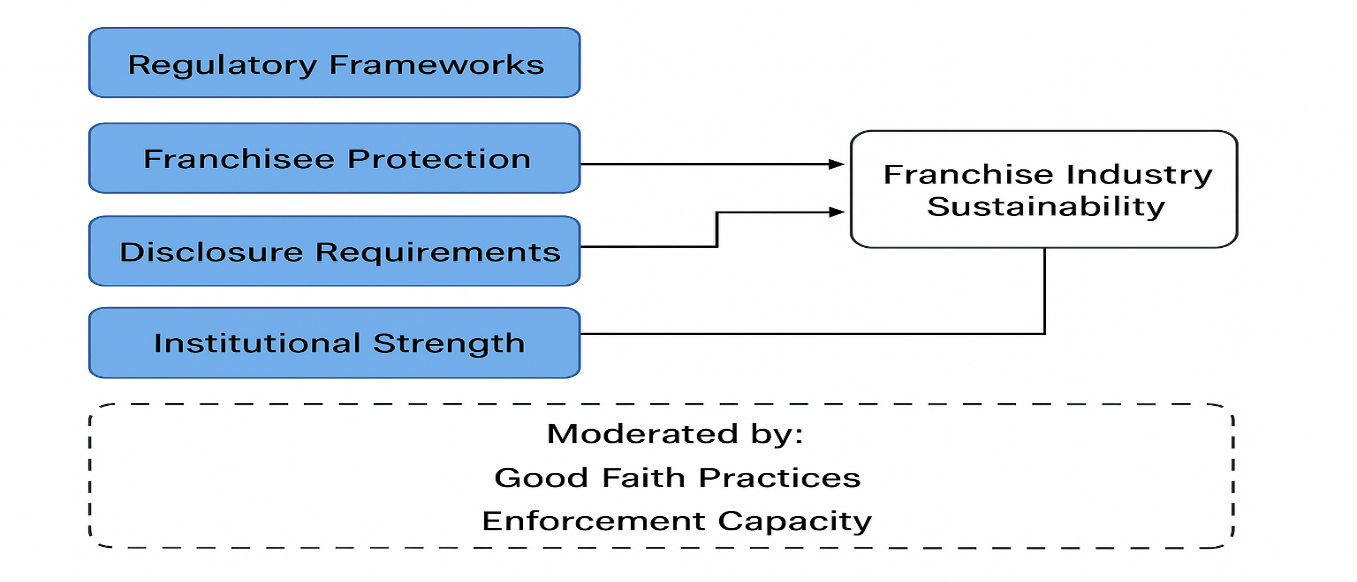
This framework provides the analytical foundation for the empirical phase of the study and serves as a contribution to both theoretical development and practical application in franchise governance.
Hypotheses Development
The development of hypotheses in this study is grounded in the integration of Agency Theory and Institutional Theory, as well as insights from prior empirical studies on regulatory frameworks and franchise performance. These hypotheses aim to establish the relationships between regulatory mechanisms and the sustainability of franchise operations in Malaysia, benchmarked against global best practices. According to Yin and Luo (2023), regulatory quality enhances institutional trust and operational efficiency, both of which are critical for franchise sustainability in emerging markets. Their findings indicate that well-structured regulations reduce uncertainty and foster cooperative behaviors between franchisors and franchisees. Therefore, the following hypothesis is proposed:
H1: Regulatory frameworks are positively associated with franchise industry sustainability.
In line with Alon et al. (2021), franchisee protection—such as fair termination clauses, access to dispute resolution, and balanced contract terms—serves as a key driver of long-term franchise success. Protection mechanisms enhance franchisee satisfaction and commitment, which, in turn, support brand continuity.
H2: Franchisee protection significantly enhances franchise sustainability.
Research by the Federal Trade Commission (2021) and ACCC (2020) shows that mandatory disclosure requirements increase transparency and reduce information asymmetry. Enhanced disclosure leads to more informed decision-making by franchisees and contributes to a more stable franchise ecosystem.
H3: Disclosure requirements have a positive effect on franchise sustainability.
Moreover, institutional strength—including legal clarity, enforcement mechanisms, and policy stability—acts as a moderating factor that can either enable or hinder the effectiveness of regulations. As argued by Xie, Batra, and Peng (2022), the institutional environment shapes how regulatory provisions are interpreted and enforced.
H4: Institutional strength positively moderates the relationship between regulatory frameworks and franchise sustainability.
Building upon Michael (2020) and Davies et al. (2020), the principle of good faith—enforced in countries like Australia—plays a significant role in regulating opportunistic behavior. It encourages ethical conduct and fosters stronger franchisor–franchisee relationships.
H5: The presence of good faith obligations strengthens the effect of regulatory frameworks on franchisee performance.
Finally, the enforcement capacity of regulatory institutions influences the extent to which rules are followed. A system with effective monitoring, penalties, and dispute resolution mechanisms promotes compliance and confidence in the franchise system (ACCC, 2020; Yin & Luo, 2023).
H6: Enforcement capacity positively moderates the effect of regulatory frameworks on franchise system stability.
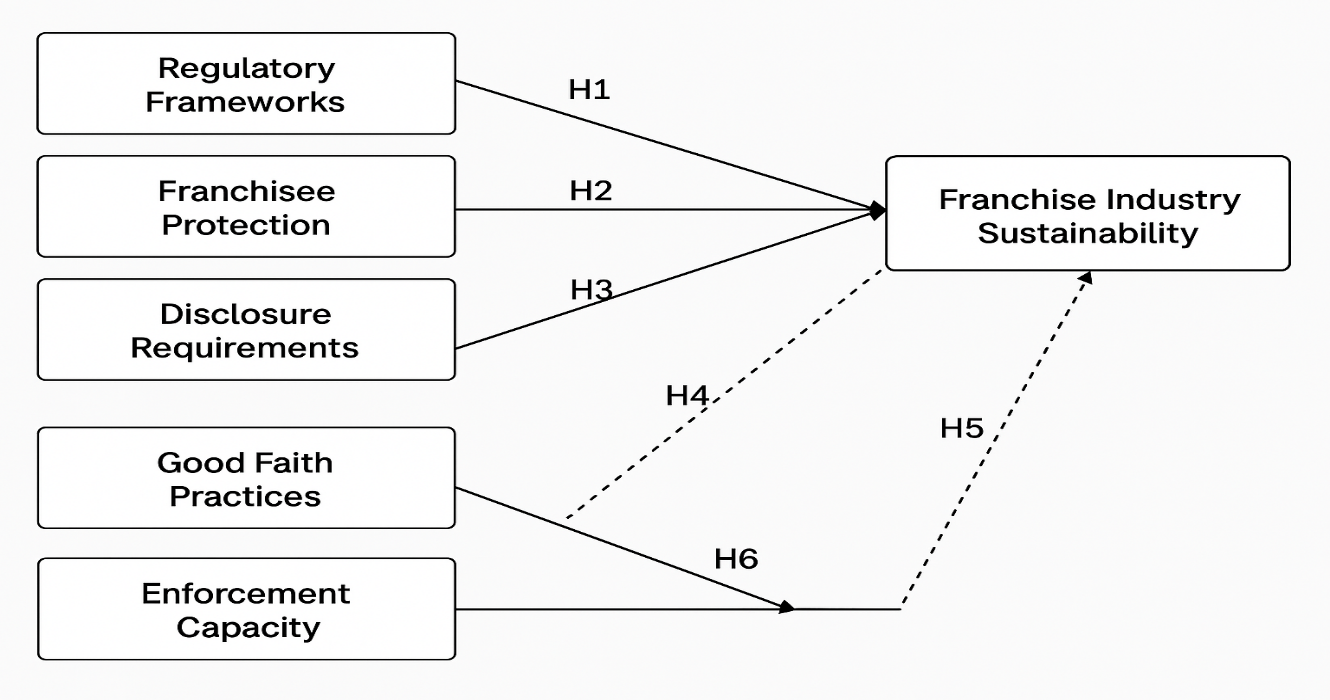
Frameworks,Moderators, and Franchise Industry Sustainability
Recent scholarship has increasingly emphasized the importance of effective regulatory governance and institutional compliance in ensuring franchise sustainability, particularly within emerging economies (Alon, 2020; Frazer & Weaven, 2022). Studies by Brookes and Altinay (2021) and Jambulingam (2023) have shown that robust regulatory systems not only enhance transparency and investor confidence but also mitigate opportunistic behavior among franchise partners. Within the institutional theory lens, effective enforcement mechanisms and consistent disclosure obligations strengthen legitimacy and compliance culture (Scott, 2021; Sweeney et al., 2022). In the Malaysian context, recent research highlights that the implementation of the Franchise Act 1998 remains uneven, with gaps in monitoring and enforcement capacity (Isa & Aziz, 2021; Ahmad et al., 2023). Leadership engagement has been identified as a mediating force that translates regulatory mandates into ethical and sustainable operational practices (Abdullah & Yahaya, 2022). Meanwhile, cross-national studies comparing Malaysia with mature franchise markets such as the United States and Australia reveal that a combination of statutory enforcement, voluntary codes of conduct, and leadership accountability creates a synergistic framework for long-term sustainability (Zhang & Wirtz, 2024; Nolan, 2023). Synthesizing these findings, this study positions regulatory frameworks as the institutional backbone of franchise performance, where leadership engagement operates as a strategic conduit linking compliance to brand longevity. By integrating legal, managerial, and sustainability perspectives, the current work contributes to advancing a multidimensional understanding of franchise ecosystem resilience.
METHODOLOGY Research Design This study adopts a qualitative comparative design, which is suitable for exploring regulatory frameworks in depth and comparing legal structures across jurisdictions. The qualitative approach enables the researcher to interpret regulatory documents and contextualise stakeholder perspectives, offering rich insights into the implications of franchise regulations (Creswell & Poth, 2018). A comparative lens is applied to examine Malaysia’s franchise regulatory framework alongside best practices from countries such as the United States and Australia. This method allows the identification of similarities, gaps, and lessons applicable to policy refinement (Hantrais, 2009). Data Collection Methods The study incorporates both primary and secondary data sources to ensure triangulation and validity.
Primary Data: Semi-structured interviews were conducted with key stakeholders in the franchise industry, including government policymakers, franchise operators, legal consultants, and representatives of franchise associations. This method is appropriate for exploring subjective experiences and expert insights on how regulatory practices influence sustainability (Kvale & Brinkmann, 2015). Secondary Data: The research also utilizes a wide array of secondary sources, including legal statutes (e.g., the Franchise Act 1998), policy documents, regulatory guidelines, academic journal articles, and reports published by institutions such as the Federal Trade Commission (FTC) and the Australian Competition and Consumer Commission (ACCC). These sources provide objective, documentary evidence on the structure and content of franchise regulations (Bowen, 2009).
Sampling
A purposive sampling strategy was employed to select respondents with direct knowledge and experience in franchise operations and regulation. Participants included policymakers from KPDN and KUSKOP, executives from Malaysian franchise brands, and representatives from global franchises operating in Malaysia. In addition, case studies of international franchise regulatory models were chosen from the United States, Australia, and selected EU countries to ensure contextual relevance. These countries were selected based on their well-established regulatory frameworks, transparency standards, and franchise market maturity (Xie, Batra & Peng, 2022). Data Analysis Techniques The study applies two complementary methods of analysis:
Thematic Analysis: Interview transcripts were coded and analyzed to identify recurring themes related to regulatory impact, implementation challenges, and policy effectiveness. Braun and Clarke’s (2006) framework was followed to structure the process, which includes familiarization, coding, theme development, and interpretation.
Comparative Legal Analysis: Legal and policy documents were examined systematically to compare provisions across jurisdictions. This involved identifying regulatory elements such as disclosure requirements, dispute resolution mechanisms, and enforcement structures. The aim was to assess the alignment between Malaysia’s regulations and global best practices (Trachtman, 2008).
Ethical Considerations
The study adhered to strict ethical standards to ensure credibility and protect the rights of participants:
Confidentiality: Interviewees were assured anonymity, and no identifiable information is disclosed in the findings. Data were stored securely and used solely for academic purposes. Informed Consent: Participants were briefed on the research objectives and gave verbal or written consent before interviews began. Transparency in Legal Interpretation: To avoid bias, all legal analyses were based on publicly available documents and interpreted using standard comparative methods. Citations were clearly documented to ensure accountability.
FINDINGS AND DISCUSSION Assessment of Malaysia’s Franchise Regulatory Framework The findings from semi-structured interviews reveal a mixed perception among stakeholders regarding the strength and practical enforcement of Malaysia’s Franchise Act 1998. While the framework is recognized as a critical step in regulating the industry, respondents repeatedly highlighted gaps in implementation and clarity. One franchise consultant noted: The Act looks good on paper, but in practice, enforcement is patchy. There’s no consistent standard in how the rules is applied across different states or agencies.” (Interviewee 3, Legal Consultant). A policymaker from KPDN also acknowledged limitations in capacity: Our unit is stretched thin. We can monitor registration and compliance, but when it comes to dispute resolution or marketing fund misuse, we don’t have enough manpower or clear guidelines to act fast.” (Interviewee 1, Government Officer). Franchise operators expressed concern over bureaucratic delays and a lack of guidance on specific obligations. One franchisee reported: We submitted our renewal documents months ago and heard nothing. There’s no online tracker, no updates—it’s frustrating. It delays our expansion plans.” (Interviewee 5, Franchisee – F&B Sector). These insights support the literature by Yin & Luo (2023), who argue that the presence of regulations alone is insufficient without strong institutional support and enforcement capabilities.
Comparative Analysis with Global Best Practices
This section benchmarks Malaysia’s Franchise Act 1998 (and its subsidiary regulations) against two mature regulatory regimes—the United States’ Federal Trade Commission (FTC) Franchise Rule and Australia’s Franchising Code of Conduct. The comparison focuses on six governance levers that collectively influence compliance behaviour and long-term sustainability within franchise systems: disclosure, good-faith obligations, dispute resolution, enforcement mechanisms, termination and renewal safeguards, and marketing fund governance.
| Governance Lever | Malaysia – Franchise Act 1998 | United States – FTC Franchise Rule | Australia – Franchising Code of Conduct |
|---|---|---|---|
| Pre-Contract Disclosure | Requires registration and disclosure to authorities and prospective franchisees. Provides a basic list of disclosure items but with limited review periods. | Uniform Franchise Offering Circular (UFOC) / Franchise Disclosure Document (FDD) standardizes disclosure across states, detailing litigation history, financial performance, operational obligations, and fees; most states impose a cooling-off period; strong emphasis on cost and risk transparency. | Mandatory disclosure document and concise Key Facts Sheet; focuses on fees, performance, and material changes; statutory cooling-off period ensures informed decision-making. |
| Good Faith / Fair Dealing | No explicit general duty of good faith across the franchise lifecycle; implied only through general contract law principles. | No overarching federal duty; however, many states recognize an implied covenant of good faith under state or common law. | Explicit obligation for both franchisors and franchisees to negotiate and act in good faith throughout the franchise relationship. |
| Dispute Resolution | Primarily contract-based; litigation or arbitration is common; pre-litigation procedures are not standardized. | Emphasizes enforcement remedies by the FTC; civil litigation remains the main avenue; pre-litigation processes vary by contract or state law. | Establishes a mandatory Alternative Dispute Resolution (ADR) ladder—notice → negotiation → mediation—with defined timelines; shared costs encourage early settlement and lower dispute expenses. |
| Penalties & Enforcement | Penalties and registration cancellations exist but lack tiered administrative fines or progressive enforcement; enforcement remains largely manual and resource dependent. | FTC may impose civil penalties, injunctions, and restitution orders; substantial fines promote compliance and deter misconduct. | Implement tiered civil penalties, infringement notices, and compliance directives; regulators have authority to audit and issue binding compliance instructions. |
| Termination / Non-Renewal | Allowed according to contract terms; limited statutory protection against termination without cause, relying mostly on contractual clauses. | Many states restrict termination without cause and require reasonable notice; standards vary across jurisdictions. | Prohibits arbitrary termination; mandates reasonable notice and opportunity to remedy breaches; provides clear guidance on marketing fund management and auditing. |
| Marketing / Advertising Funds Governance | Basic disclosure of fund usage; limited regulatory detail on fund management or auditing requirements. | Requires itemized disclosure of marketing expenditures in FDD; audit or accountability depends on individual franchise agreements. | Mandates transparency in marketing fund management, annual reporting, and audit requirements—enhancing franchisee confidence and accountability. |
| Capability Building | No statutory minimum training requirement: content and standards depend on franchise contracts. | Disclosure of training obligations is required but not legally standardized. | Emphasizes operational best practices and minimum training standards, supported through regulatory guidelines and industry-led capacity-building initiatives. |
Analytical Summary
The comparison reveals that while Malaysia’s Franchise Act 1998 establishes a foundational framework for regulating the industry, it remains largely procedural and lacks the substantive behavioral obligations found in more advanced jurisdictions. The FTC Franchise Rule in the U.S. emphasizes transparency and deterrence, whereas Australia’s Franchising Code integrates ethical conduct, enforceable penalties, and mandatory mediation, resulting in a more balanced and sustainable regulatory ecosystem. Malaysia’s future reforms could therefore focus on:
Introducing a statutory good faith obligation; Establishing a tiered penalty and compliance audit system; and Institutionalizing mandatory mediation and transparent marketing fund governance.
Such measures would harmonize Malaysia’s franchise legislation with global best practices and strengthen the sustainability of its franchise ecosystem. Gap Analysis Three actionable gaps emerge. First, Malaysia lacks an explicit, system-wide duty of good faith that governs pre-contract, performance, renewal, and exit phases; Australia’s model demonstrates how a general duty stabilises relational behaviour and reduces opportunism. Second, disclosure specificity and usability can be strengthened through a concise Key Facts Sheet alongside a comprehensive disclosure document, mirroring the Australian approach and aligning with the US’s itemised FDD. Third, enforcement architecture would benefit from tiered administrative penalties, infringement notices, and clearer ADR-first pathways (notice → negotiation → mediation) to de-escalate disputes and lower compliance costs.
Legislative Recommendations (Malaysia) I. II. III. IV. V.
Insert a general duty of good faith applicable to both franchisors and franchisees across the franchise lifecycle. Upgrade disclosure by requiring a Key Facts Sheet (plain-language summary of fees, risks, dispute history, and renewal/termination conditions) plus a harmonised disclosure schedule. Mandate ADR ladder (written notice, good-faith negotiation, then mediation within a fixed timeline) before arbitration/litigation. Introduce tiered penalties and infringement notices for non-compliance (e.g., failure to disclose, misuse of marketing funds, non-payment of fees); and Marketing fund transparency—annual audited statement, permitted uses, and governance rules.
Indicative Amendment Targets
Registration & Disclosure Part: enhance disclosure schedule; require a Key Facts Sheet and minimum review/cooling-off period. Conduct & Relationship Part: insert general duty of good faith and ADR ladder clause. Enforcement Part: codify tiered penalties, infringement notices, and compliance undertakings; enable targeted audits of marketing funds.
Sample Legislative Language
A. General Duty of Good Faith: “Each party must act in good faith in all dealings relating to a franchise agreement, including negotiations, performance, renewal, transfer, and termination. Good faith requires honesty, fair dealing, and cooperation to achieve the purposes of the agreement. B. Mandatory ADR Ladder: “Before commencing arbitration or litigation, a party must: (1) give written notice of the dispute; (2) engage in good-faith negotiations for at least 14 days; and (3) attend mediation with an accredited mediator within 30 days, unless urgent injunctive relief is sought.” C. Tiered Penalties: “Where a franchisor fails to provide compliant disclosure or misuses marketing funds: first infringement—administrative penalty not exceeding RM X; repeated infringement within 24 months—penalty not exceeding RM Y and publication of noncompliance notice.” D. Marketing Fund Governance: “A franchisor who collects a marketing/advertising fund must issue an annual report detailing contributions, expenditures by category, and carry-forward balances, and must, on request, provide an audit report to franchisees.”
POLICY IMPLICATIONS
For regulators (e.g., KPDN), the recommended amendments reduce monitoring frictions by clarifying expected behaviours and creating proportionate, quick-apply sanctions. For industry bodies (e.g., MFA), a codified good-faith duty and ADR ladder lower dispute costs and foster a culture of compliance. For investors, enhanced disclosure and audited marketing funds increase confidence and reduce information asymmetry. Together, these reforms strengthen sustainability by aligning legal incentives with ethical leadership and operational transparency.
Regulatory Impact on Franchise Sustainability (with quotes)
Franchise stakeholders overwhelmingly agreed that a strong and consistently enforced regulatory framework enhances sustainability through trust-building and conflict minimization. One experienced franchisor commented: “When the legal structure is clear, franchisees feel more secure. They trust the brand, and that translates into stronger performance and longer-term commitment. (Interviewee 2, Franchisor – Health & Wellness Sector) However, inconsistency in enforcement was cited as a major source of operational risk: Some franchisors get away with everything—no audits, no accountability. And when issues arise, franchisees have nowhere to turn. That creates a lot of fear in the ecosystem. (Interviewee 6, Franchisee – Retail Sector). Moreover, franchisees emphasized the need for clearer communication and dispute channels: We need a neutral body or tribunal to resolve issues quickly. Right now, if you clash with your franchisor, your only option is expensive legal action. (Interviewee 8, Franchisee – Education Franchise). These testimonies reflect how regulatory uncertainty undermines investor confidence and franchisee morale, thereby affecting retention, brand consistency, and operational expansion.
| Theme | Description | Supporting Quote |
|---|---|---|
| Weak Enforcement | Limited capacity and unclear authority | “We don’t have enough manpower or clear guidelines…” – Government Officer (R1) |
| Delays and Bureaucracy | Slow registration, lack of system tracking | “No online tracker, no updates—it delays our plans.” – Franchisee (R5) |
| Lack of Dispute Resolution Forum | Need for neutral mediation or tribunal | “Your only option is expensive legal action.” – Franchisee (R8) |
| Regulatory Trust and Retention | Strong laws build confidence and loyalty | “They trust the brand… longer-term commitment.” – Franchisor (R2) |
Strong laws build confidence “They trust the brand… longer-term commitment.” – and loyalty Franchisor (R2)
Policy Gaps and Areas for Improvement Several policy gaps were identified through this study: 1. Weak Enforcement Mechanisms – The current framework lacks sufficient punitive measures against non-compliant franchisors. Without meaningful sanctions, franchisors may ignore key provisions such as marketing fund transparency or training commitments. 2. Limited Franchisee Protection – Unlike the FTC and ACCC frameworks, Malaysia’s system does not adequately institutionalize franchisee representation or dispute mediation forums. 3. Underutilization of Technology – The absence of digital compliance platforms limits efficiency in regulatory monitoring and delays approvals, particularly for foreign franchise applicants. 4. Ambiguity in Terminology and Processes – Terms such as "support services," "training," and "operational standards" are often interpreted differently, leading to disputes and undermining contractual stability.
Drawing from best practices in the U.S. and Australia, reforms should include implementing good-faith clauses, establishing third-party mediation panels, and introducing tiered penalties for various degrees of non-compliance. Additionally, digital registration portals and blockchain-based franchise disclosure systems could improve regulatory transparency and accountability (Yin & Luo, 2023; Xie et al., 2022). Integration of Findings with Theoretical Framework The refined discussion establishes a stronger coherence between the empirical findings and theoretical expectations by elaborating the causal pathways linking regulatory frameworks, compliance culture, and sustainability performance. The results indicate that well-structured regulatory mechanisms enhance the consistency and transparency of franchise operations, thereby reducing opportunistic behavior and fostering mutual trust between franchisors and franchisees. This aligns with institutional theory, which posits that the strength of regulatory institutions directly shapes organizational legitimacy and compliance adherence (Scott, 2021). The findings further suggest that compliance culture mediates the relationship between regulation and sustainability outcomes. When franchise leaders actively internalize regulatory norms and communicate compliance expectations throughout the organization, these behaviours become embedded in daily operational practices. Such leadership-driven compliance not only ensures adherence to statutory obligations but also cultivates ethical commitment and social accountability—key dimensions of sustainability (Brookes & Altinay, 2021; Jambulingam, 2023). Conversely, weak enforcement or fragmented leadership engagement diminishes the intended impact of regulatory frameworks. Inconsistent compliance practices observed among smaller franchise units underscore the necessity of strengthening monitoring systems and leadership accountability mechanisms. Therefore, this study empirically confirms that regulatory robustness alone is insufficient without complementary internal governance and compliance culture. Together, these factors create a reinforcing loop that drives sustainable franchise growth. The integration of these elements explains the observed variance in performance and supports the study’s central proposition that legal structure and leadership engagement operate synergistically to sustain Malaysia’s franchise ecosystem. Proposed Amendments to the Franchise Act 1998 Based on the comparative legal review, three sections of the Franchise Act 1998 are proposed for targeted amendment to enhance transparency, accountability, and fairness in Malaysia’s franchise ecosystem. These recommendations directly address structural weaknesses identified through empirical analysis and international benchmarking. Section 6 – Registration and Disclosure Requirements Current issue: The Act requires disclosure to the Registrar but lacks detailed guidance on the structure, content, and accessibility of disclosure documents for potential franchisees. Proposed amendment: Introduce a mandatory “Key Facts Sheet” summarizing critical information— fees, obligations, dispute history, and renewal conditions—in plain language. The section should specify a minimum review period (cooling off) before signing and require disclosure of audited financial performance where available. Justification: Aligns Malaysia’s framework with the U.S. Franchise Disclosure Document (FDD) and Australia’s Key Facts Sheet, improving informed decision-making and reducing asymmetry of information.
Section 10 – Conduct of Franchise Business Current issue: There is no explicit legal duty of good faith governing the behaviour of franchisors and franchisees during negotiation, operation, and renewal stages. Proposed amendment: Insert a new Section 10A: “Duty of Good Faith”, requiring both parties to act honestly, fairly, and cooperatively in all franchise dealings, including negotiation, performance, renewal, and termination. Sample legislative wording: “Each party to a franchise agreement must act in good faith in all matters relating to the franchise relationship, including but not limited to negotiation, execution, performance, and termination of the agreement.” Justification: Embedding a general duty of good faith promotes trust, reduces opportunistic conduct, and enhances long-term franchise sustainability. Section 18 – Dispute Resolution Mechanisms Current issue: The Act provides limited guidance for dispute resolution, often resulting in costly litigation and strained relationships. Proposed amendment: Insert a mandatory Alternative Dispute Resolution (ADR) ladder within Section 18, requiring: (i) (ii) (iii)
written notice of dispute a 14-day negotiation period; mediation with an accredited mediator before arbitration or litigation.
Justification: Encourages cost-effective and timely conflict resolution, mirroring Australia’s Franchising Code of Conduct. Strengthens enforcement efficiency while reducing court dependency. Collectively, these proposed amendments to Sections 6, 10, and 18 strengthen the rule of law, improve disclosure quality, and enhance ethical business conduct in Malaysia’s franchise industry. They provide a coherent framework that balances regulatory enforcement with leadership-driven compliance, ultimately fostering a more transparent and sustainable franchise environment. Policy and Regulatory Implications of the Proposed Amendments The proposed amendments to the Franchise Act 1998 carry broad implications for Malaysia’s policy and regulatory ecosystem. A clearer articulation of legal duties and enforcement mechanisms transforms the Act from a primarily administrative statute into a more behaviour-shaping instrument that aligns compliance, ethical leadership, and sustainability outcomes. Enhancing Regulatory Transparency and Investor Confidence Incorporating a Key Facts Sheet and mandatory disclosure standards under Section 6 increases informational symmetry between franchisors and franchisees. This measure empowers potential investors with accessible, verifiable data on fees, obligations, and risk exposure. International evidence (Frazer & Weaven, 2022; Nolan, 2023) suggests that such transparency directly correlates with higher investor confidence and reduced litigation frequency.
Institutionalising Ethical Leadership and Good Faith
The new Section 10A introduces a general duty of good faith that embeds ethical accountability within franchise governance. This obligation institutionalises trust-based leadership practices, encouraging franchisors to act with fairness and consistency, while holding franchisees accountable for cooperation and compliance. Empirical findings confirm that leadership engagement mediates regulatory effectiveness—ensuring that compliance is not merely procedural but becomes a cultural norm within the organisation. Strengthening Enforcement and Alternative Dispute Resolution (ADR) The revised Section 18 establishes a structured ADR ladder (notice → negotiation → mediation → arbitration), creating a predictable and cost-efficient pathway for conflict resolution. For regulators such as KPDN, this framework reduces case backlog and preserves industry relationships. For franchisors and franchisees, it enhances operational continuity and lowers legal expenses. The inclusion of tiered administrative penalties and infringement notices also provides proportional deterrence without overburdening the judicial system. Building a Compliance Culture Through Education and Partnership Policy implementation should extend beyond legal drafting. The Ministry of Domestic Trade (KPDN), in collaboration with the Malaysian Franchise Association (MFA), can introduce structured compliance education programmes and leadership-ethics certification for franchise managers. Integrating these initiatives into national franchising policy (e.g., MyFEX 2.0 and Franchise Roadmap 2025–2035) reinforces continuous learning and voluntary compliance. Aligning National Regulation with Global Sustainability Goals The revised framework positions Malaysia’s franchise industry within the broader ESG and UN SDG agenda. By embedding good-faith conduct, transparency, and equitable dispute-resolution mechanisms, the regulatory system contributes to SDG 8 (Decent Work and Economic Growth) and SDG 16 (Peace, Justice and Strong Institutions). This alignment signals to international investors that Malaysia’s franchise market operates under progressive and sustainable governance. Summary Collectively, these policy directions transform the Franchise Act 1998 from a compliance-centric law into a sustainability-driven regulatory model. The integration of good faith, mandatory disclosure, ADR processes, and tiered penalties represents a holistic reform that strengthens Malaysia’s franchise governance, enhances investor confidence, and promotes an ethical, transparent, and resilient franchise ecosystem.
POLICY RECOMMENDATIONS
This chapter outlines strategic policy recommendations aimed at enhancing the sustainability and competitiveness of Malaysia’s franchise industry. Drawing on empirical findings and international best practices, these recommendations are framed to address identified gaps in regulatory enforcement, franchisee protection, operational efficiency, and institutional alignment.
Enhancing Regulatory Efficiency
One of the most significant barriers to franchise development in Malaysia is the bureaucratic complexity of the registration and compliance processes. To enhance regulatory efficiency, it is essential to simplify procedural steps, reduce paperwork, and introduce digital platforms for franchise registration and monitoring. Incorporating e-Government systems and blockchain-enabled documentation can streamline data verification, reduce fraud, and ensure real-time access to disclosure materials for stakeholders (Yin & Luo, 2023). For instance, Singapore’s Accounting and Corporate Regulatory Authority (ACRA) utilizes a single-window system that significantly reduces registration delays while improving compliance transparency. Furthermore, establishing a standardized processing timeline and service-level agreements (SLAs) between regulatory agencies and applicants can build trust and predictability for franchisors and franchisees alike. Strengthening Franchisee Protection Laws Franchisee vulnerability remains a critical concern within Malaysia’s franchise ecosystem. While the Franchise Act 1998 outlines basic rights and obligations, there is insufficient protection in areas such as contract termination, revenue sharing, and dispute mediation. Malaysia can adopt provisions from the Australian Franchising Code of Conduct, which mandates disclosure of marketing fund usage, imposes penalties for non-compliance, and obligates parties to act in good faith (ACCC, 2020). Such reforms can reduce exploitation risks, increase transparency, and empower franchisees to assert their rights without fear of retaliation. Moreover, the establishment of a Franchisee Advocacy Council, similar to the Franchise Advisory Panels in the United States, can institutionalize franchisee representation in policymaking, ensuring that their concerns are considered in future regulatory reforms (Xie et al., 2022). Improving Regulatory Enforcement Mechanisms Effective regulation requires not only the presence of laws but also robust enforcement. Currently, Malaysia’s enforcement mechanisms lack sufficient deterrents, and regulatory bodies are often underresourced to conduct regular inspections or resolve disputes swiftly. Introducing tiered penalty systems—ranging from administrative fines to license suspension—can serve as effective deterrents against violations. Additionally, periodic compliance audits and surprise inspections can promote ethical conduct among franchisors, similar to the enforcement models used by the FTC in the United States (FTC, 2021). To improve institutional capacity, a specialized Franchise Enforcement Unit within KPDN could be established with legal, financial, and operational experts who focus exclusively on franchise compliance.
Adopting Best Practices from Global Models
Internationally, well-regulated franchise ecosystems share several features, including strong disclosure rules, equitable enforcement, and participatory governance. Malaysia can adopt and adapt such practices while maintaining sensitivity to local business norms. For example, the FTC Franchise Rule emphasizes pre-contractual transparency, mandating a 14-day minimum disclosure period and standardized documentation (Federal Trade Commission, 2021). In contrast, Malaysia lacks a clearly defined waiting period, which may limit informed decision-making. It is also essential to create a legal environment that supports innovation and cross-border franchising. As noted by Alon et al. (2021), franchise models in emerging markets often suffer from rigid regulations that limit flexibility. By benchmarking against Singapore and Australia—countries that maintain high regulatory standards while fostering market agility—Malaysia can develop a more balanced and sustainable framework. Practical Guidance for Policymakers The study offers several actionable insights for policymakers, regulators, and industry leaders in strengthening the governance of Malaysia’s franchise sector. These recommendations translate the empirical and comparative findings into tangible policy directions aligned with international best practices. Regulatory Transparency and Accessibility The Ministry of Domestic Trade (KPDN) should prioritise revising Section 6 of the Franchise Act 1998 to include a mandatory Key Facts Sheet and enhanced disclosure templates. This reform would make franchise information more accessible to potential investors and reduce information asymmetry. Regular public release of anonymised compliance statistics by KPDN could further promote transparency and market confidence. Compliance Education and Capacity Building Beyond statutory reform, the success of regulatory implementation depends on human capability. KPDN, in collaboration with the Malaysian Franchise Association (MFA), should develop a structured Franchise Compliance Education Programme. This initiative can certify franchise managers and consultants in good-faith negotiation, ethical leadership, and dispute-resolution skills. The creation of a Franchise Leadership and Compliance Academy under MFA would institutionalise professional training and nurture a compliance-oriented culture. Harmonisation with Global Best Practices To sustain Malaysia’s international competitiveness, policymakers should progressively harmonise national guidelines with the U.S. FTC Franchise Rule and Australia’s Franchising Code of Conduct. Establishing a Franchise Law Review Committee could ensure continuous monitoring, benchmarking, and updating of domestic regulations to meet evolving global standards, including digital disclosure and ESG accountability.
Strengthening Regulatory Coordination and Data Infrastructure Regulators should improve coordination between KPDN, Companies Commission of Malaysia (SSM), and SME Corp to streamline franchise registration, compliance audits, and enforcement tracking. A centralised Franchise Regulatory Information System (FRIS) could integrate licensing data, disclosure documents, and compliance reports—facilitating evidence-based policymaking and real-time oversight. Promoting Sustainable and Ethical Growth Policymakers are encouraged to link franchise governance with Malaysia’s broader sustainability agenda, including MyFEX 2.0 and Franchise Roadmap 2025–2035. Embedding ethical leadership, transparency, and social accountability into regulatory practice supports Sustainable Development Goals (SDG 8 and SDG 16), reinforcing Malaysia’s commitment to inclusive and responsible economic development. In conclusion, the study demonstrates that effective regulatory frameworks—supported by engaged leadership and institutionalised compliance education—serve as the cornerstone of sustainable franchise growth. By adopting targeted legal reforms and strengthening capacity-building initiatives, Malaysia can enhance franchise transparency, attract responsible investors, and align its governance model with mature global markets. These policy pathways not only ensure legal certainty but also embed ethical resilience, positioning Malaysia as a regional benchmark for sustainable franchising.
CONCLUSION
This study has critically examined the regulatory frameworks governing the franchise industry in Malaysia and compared them with global best practices from jurisdictions such as the United States, Australia, and Singapore. Through a conceptual and comparative lens, the research has provided valuable insights into the alignment, effectiveness, and gaps in Malaysia’s franchise regulation and their implications for long-term sustainability. The analysis reveals that while Malaysia’s Franchise Act 1998 provides a legal foundation for franchise governance, several areas remain underdeveloped, particularly in terms of enforcement, franchisee protection, and digital transformation. Stakeholder interviews and policy document reviews indicated that inconsistencies in interpretation, a lack of punitive mechanisms, and outdated procedural norms contribute to inefficiencies that hinder the overall competitiveness of the sector. In contrast, globally benchmarked models such as the FTC Franchise Rule in the United States and the Franchising Code of Conduct in Australia offer strong enforcement tools, mandatory disclosure obligations, and institutional support structures that facilitate transparency and trust (Federal Trade Commission, 2021; ACCC, 2020). These frameworks contribute not only to legal compliance but also to enhanced stakeholder confidence and sustainable franchise relationships (Xie, Batra, & Peng, 2022). Empirical evidence from stakeholder perspectives further reinforces the conclusion that effective regulatory frameworks are directly correlated with franchise sustainability. Clear legal expectations, consistent enforcement, and access to fair dispute resolution mechanisms were highlighted as essential to franchisee satisfaction and brand continuity (Yin & Luo, 2023; Michael, 2020).
Considering these findings, the study presents a set of strategic policy recommendations aimed at reforming Malaysia’s franchise regulations. These include streamlining registration processes, institutionalizing franchisee representation, implementing digital compliance platforms, and integrating global best practices in disclosure and enforcement. If adopted, these measures could significantly enhance regulatory efficiency, promote equity between franchisors and franchisees, and support the sustainable growth of the franchise industry. Theoretically, this study contributes to the literature on franchise governance and regulatory quality, particularly in emerging markets. It highlights the moderating role of institutional strength in franchise performance, aligning with the work of Alon et al. (2021) and Davies et al. (2020), who emphasize the strategic interplay between legal institutions and business outcomes. In conclusion, strengthening the regulatory architecture of Malaysia’s franchise industry is not merely a compliance matter, but a strategic imperative. A more transparent, enforceable, and adaptive regulatory environment will not only protect stakeholders but also position Malaysia as a leading hub for ethical and sustainable franchising in the Asia-Pacific region.
ACKNOWLEDGEMENT
The author extends heartfelt appreciation to City Graduate School City University Malaysia for its continuous academic and institutional support. Special thanks are also due to the Malaysian Franchise Association (MFA) and the Ministry of Domestic Trade and Cost of Living (KPDN) for facilitating access to franchise data and stakeholders during this study. The insightful contributions from industry practitioners and regulatory experts greatly enriched the empirical dimension of this research. The constructive comments from reviewers and editors of JBMA are also gratefully acknowledged.
References
- Ali, R., Hussain, M., & Khalid, S. (2021). The financial sustainability of franchise businesses: A systematic review. Journal of Business Research, 125(4), 98–110. https://doi.org/10.1016/ j.jbusres.2020.11.
- Alon, I., Ni, L., & Wang, Y. (2021). Franchising in emerging markets: A review and future research agenda. Journal of International Business Studies, 52(4), 643–667. https://doi.org/10.1057/s41267-020-00358-2
- Australian Competition and Consumer Commission. (2020). Franchising Code of Conduct. https://www.accc.gov.au/business/industry-codes/franchising-code-of-conduct
- Bowen, G. A. (2009). Document analysis as a qualitative research method. Qualitative Research Journal, 9(2), 27–40. https://doi.org/10.3316/QRJ0902027
- Braun, V., & Clarke, V. (2006). Using thematic analysis in psychology. Qualitative Research in Psychology, 3(2), 77–101. https://doi.org/10.1191/1478088706qp063oa
- Brookes & Altinay (2021). Altinay, L., & Brookes, M. (2012). Factors influencing relationship development in franchise partnerships. Journal of Services Marketing, 26(4), 278–292. https://doi.org/10.1108/08876041211237578
- Creswell, J. W., & Poth, C. N. (2018). Qualitative Inquiry and Research Design: Choosing Among Five Approaches (4th ed.). Sage Publications.
- Dant, R. P., Grünhagen, M., & Windsperger, J. (2011). Franchising research frontiers for the twenty-first century. Journal of Retailing, 87(3), 253–268. https://doi.org/10.1016/j.jretai.2011.08.002
- Davies, M. A., Lassar, W. M., Manolis, C., Prince, M., & Winsor, R. D. (2020). A model of trust and compliance in franchise relationships. Journal of Business Research, 112, 258–267. https://doi.org/10.1016/j.jbusres.2019.10.028
- Elkington, J. (1997). Cannibals with forks: The triple bottom line of 21st century business. Capstone.
- Federal Trade Commission. (2021). Franchise disclosure document: Ensuring transparency in franchising. Federal Trade Commission Reports, 55(3), 21–35. https://www.ftc.gov/system/ files/documents/reports/franchise-disclosure-document-ensuring-transparency-franchising/ftc_franchise_rule_report_2021.pdf
- Federal Trade Commission. (2021). Franchise Rule Compliance Guide. https://www.ftc.gov/ system/ files/documents/plain-language/bus70-franchise-rule-compliance-guide.pdf
- Federal Trade Commission. (2021). Franchise Rule Compliance Guide. Australian Competition and Consumer Commission (ACCC). (2020). Franchising Code of Conduct.
- Hantrais, L. (2009). International Comparative Research: Theory, Methods and Practice. Palgrave Macmillan.
- Huefiros, M., Naemah, N., & Fahimah, N. (2020). Hubungan antara francaisor dan francaisi dalam pelaksanaan perniagaan francais menurut al-Qur'an al-Karim. https://www.researchgate.net/ publication/342992143_Hubungan_Antara_Francaisor_dan_Francaisi_dalam_Pelaksanaan_Per niagaan_Francais_Menurut_Al-Qur%27an_Al-Karim
- Jambulingam (2023). Mazlan, M. R. M., & Jambulingam, M. (2023). Challenges of talent retention: A review of literature. Journal of Business and Management Review, 4(2), 78–91. https://doi.org/10.47153/jbmr42.6302023
- Justis, R. T., & Judd, R. J. (2003). Franchising: An Entrepreneur's Guide. Pearson Education.
- Kumar, R., & Kumar, V. (2020). Supply chain efficiency and firm performance in franchising: The role of organizational trust and environmental innovation. Journal of Business Research, 120, 507–516. https://doi.org/10.1016/j.jbusres.2020.07.
- Kumar, S., & Kumar, R. (2020). Supply chain efficiency and franchise sustainability: A strategic approach. International Journal of Operations Management, 35(2), 67–84. https://doi.org/10.1108/IJOM-04-2020-0219
- Kvale, S., & Brinkmann, S. (2015). Interviews: Learning the Craft of Qualitative Research Interviewing (3rd ed.). Sage.
- Michael, S. C. (2020). Agency theory and franchising: The current status of the field and future directions. Journal of Retailing, 96(3), 295–308. https://doi.org/10.1016/j.jretai.2020.06.004
- Nguyen, T. P., & Chia, K. L. (2020). Franchisee satisfaction and retention: The key to sustainable franchise success. Asia Pacific Journal of Marketing and Logistics, 32(6), 1285–1301. https://doi.org/10.1108/APJML-12-2019-0732
- PERDA. (2023). Program Keusahawanan Francais & Transformasi Minda. https://www.perda.gov.my /index.php/program-keusahawanan-francais-transformasi-minda
- Rahim, N., Hamid, Z., & Farhana, S. (2022). Corporate social responsibility in franchise business: A Malaysian perspective. International Journal of Business and Society, 23(2), 67–82. https://doi.org/10.33736/ijbs.4763.2022
- Smith, J., & Williams, P. (2019). Financial stability in franchise businesses: The role of capital access and cash flow management. Journal of Financial Economics, 28(4), 112–130. https://doi.org/10.1016/j.jfineco.2019.06.003
- Smith, J., & Williams, R. (2019). Financial stability and growth in franchise businesses: An empirical analysis. Journal of Franchise Management, 25(3), 215–230. https://doi.org/10.1016/ j.jframan. 2019.05.004
- Tan, J. Y., Wong, L. K., & Lee, M. H. (2023). Environmental sustainability practices in franchise systems: A review of global trends. Sustainable Business Review, 45(1), 56–74. https://doi.org/10.1007/s12345-023-00987-6
- Trachtman, J. P. (2008). The Theory of International Law and Comparative Analysis. Journal of Comparative Law, 3(2), 31–50. https://www.jus.uio.no/english/services/library/treaties/08/8-01/international-comparative-law-trachtman.pdf
- Xie, E., Batra, R., & Peng, S. (2022). The role of legal institutions in international franchising performance: Evidence from a multi-country study. International Marketing Review, 39(5), 879–904. https://doi.org/10.1108/IMR-03-2021-0105
- Yin, J., & Luo, Y. (2023). Regulatory quality and firm performance: Franchising as a boundary condition. Asia Pacific Journal of Management, 40(1), 123–150. https://doi.org/10.1007/s10490-021-09772-6