Digital Consumption in Higher Education: An Analysis of Online Spending Among Labuan's University Students
- Labuan Faculty of International Finance, University Malaysia Sabah
Journal of Business Management and Accounting 16(1) (2026) · https://doi.org/10.32890/jbma2026.16.1.5
Abstract
The digital era has transformed consumer behaviour, with online shopping becoming increasingly common especially among university students who are often early have adopted the digital era of technology. This study investigates the factors influencing online shopping intentions among undergraduate students at University Malaysia Sabah, International Labuan, employing an integrated model that combines the Technology Acceptance Model and the Theory of Reasoned Action. Specifically, the study examines the impact of perceived usefulness, perceived ease of use, attitude, subjective norm, and trust on online shopping intention. Data were collected from a purposive sample of 210 Malaysian consumers via an online questionnaire. Structural equation modelling using SmartPLS-SEM and statistical analysis with SPSS version 27 were employed for data analysis. The results indicate that PU, PEOU, ATT, and SN positively influence online shopping intention among UMSKAL undergraduates, while, contrary to expectations, TR exhibits a negative influence. These findings offer valuable insights for consumers, researchers, and policymakers seeking to understand and enhance online shopping experiences, particularly within the context of UMSKAL students. This study contributes novel insights by integrating user and non-user perspectives to explore online shopping intentions within this population.
Keywords: Online shopping,, TAM, TRA, UMSKAL, undergraduate students, digital consumption
INTRODUCTION
The rapid digital transformation of the past decade has profoundly impacted societal paradigms, including communication, labour practices, and, notably, consumption patterns. The rise of e- commerce, accelerated by the COVID-19 pandemic and its associated restrictions, has fundamentally altered purchasing behaviour. The pandemic-induced shift towards online platforms for the acquisition of goods and services represents a significant departure from traditional brick-and-mortar retail, compelling consumers to adapt to a new digital marketplace. This abrupt transition necessitated widespread behavioural modifications, encompassing restricted movement, social distancing, and a reconfiguration of social interactions. (Al-Hattami, 2021).
Consumers are increasingly drawn to online shopping for several reasons. The convenience of comparative pricing, the 24/7 availability surpassing the limited operating hours of physical stores, the extensive product selection, the time saved compared to in-person shopping, and the potential for cost savings all contribute to this growing trend. Furthermore, Jason and Aishah (2021) suggested that Generation Z, the cohort currently comprising many higher education students, will be the dominant consumer group in the future of online purchasing.
The shift to remote learning during the COVID-19 pandemic created increased demand for educational technology and resources. Students increasingly relied on online platforms to purchase laptops, webcams, headphones, and software. While cost remains a primary concern for consumers, as Zhao (2023) noted, other factors, such as perceived convenience and usefulness, influence purchasing decisions. The pandemic significantly accelerated the adoption of online shopping, positioning it as a safer and more convenient alternative to traditional retail.
Wang (2023) highlights the growing familiarity with online shopping among internet users, particularly university students, who represent a key demographic for online retailers. Trust plays a crucial role in consumers' willingness to engage in online transactions, as emphasised by (Mohd Nasir et. al., 2020). The internet era has ushered in unprecedented convenience and accessibility, enabling consumers to acquire goods, services, and experiences easily. This shift in consumption patterns presents opportunities and challenges, especially for university students who are increasingly reliant on digital platforms. Ellitan and Prayogo (2022) argue that purchase intention is a strong predictor of buying behaviour, intertwined with perceptions, attitudes, and behavioural patterns.
According to the Department of Statistics Malaysia (2023), the rise of e-commerce has changed consumer buying patterns, especially among university students in higher education. In W.P. Labuan, e-commerce spending had a remarkable surge of 136.7%, escalating from RM1.3 billion in 2019 to RM7.1 billion in 2021. This expansion reflects national patterns, as Malaysia's total e-commerce spending increased by 23.6%, totalling RM460.8 billion in 2021. The services sector witnessed an 18.8% growth, highlighting the sector's progress. The 2022 Individuals and Households Survey Report (ICTHS) survey indicated that 99.3% of households possessed mobile phones, while 96.0% had internet connection, both surpassing 95%. These trends illustrate the growing dependence on digital platforms and the essential function of internet connectivity in facilitating online consumption.
The increasing popularity of online purchasing among university students, combined with their potential financial vulnerabilities, raises concerns regarding responsible spending habits and financial well-being. The swift expansion of e-commerce and the convenience of online transactions may intensify impulsive purchasing behaviour and lead to financial challenges for students. Despite the advantages of convenience and accessibility in online buying, the determinants affecting online expenditure behaviours among university students in Labuan have not been adequately studied. The decision to focus on university students in Labuan as the study sample is both contextually appropriate and strategically meaningful. As a federal territory and offshore financial hub, Labuan offers a distinctive socio-economic landscape in which digital consumption behaviours may diverge from those observed in mainland Malaysia. Students in this setting are influenced by a combination of local and international factors, rendering their online spending habits particularly valuable for examining emerging patterns in digital finance and e-commerce. Moreover, the Labuan International Campus (UMSKAL) hosts a diverse student body, including individuals from East Malaysia and neighbouring ASEAN nations, thereby providing a rich and varied demography for behavioural inquiry. This broad perspective strengthens the relevance and applicability of the study’s findings to ongoing discourse surrounding digital consumption within higher education. A nuanced understanding of these characteristics is vital for the development of targeted interventions and the promotion of sound financial management practices within this vulnerable demography. In the absence of a comprehensive investigation into this group, efforts to mitigate potential financial risks associated with increased online expenditure remain constrained. Thus, the objective of this study is to identify the key factors influencing online spending behaviour among university students in Labuan.
This paper is structured as follows: The introduction contextualises and justifies the examination of online spending behaviours among university students in Labuan. The literature review analyses current studies on consumer behaviour, internet buying patterns, and underpinning theory of the study. The methodology section delineates the research design, data collection methods, and the methodologies utilised. The results section delineates the study's findings, whereas the discussion analyses these findings concerning the research aims and the current literature. The conclusion encapsulates the principal contributions of the study, examines its implications for practice and policy, recognises limits, and proposes directions for further research.
LITERATURE REVIEW
This study investigates theories and research pertaining to the elements that impact the online shopping behaviour of students. The primary objective of this research is to identify the factors shaping the online shopping behaviour of students. The researcher employed both the Technology Acceptance Model (TAM) and the Theory of Reasoned Action (TRA). Additionally, the study discusses the dependent variable, which is the intention of online shopping, as well as its independent variables, which are categorised into five subsections: Perceived Usefulness, Perceived Ease of Use, Attitude, Subjective Norm, and Trust. This chapter will then illustrate the theoretical framework for this research.
This study used TAM to examine the factors influencing consumer intention to purchase online via social media. David develops the Technology Acceptance Model (TAM) in 1989 to identify user reactions to technology in the workplace and develop better measures for predicting and explaining usage (Davis, 1989). Furthermore, the Technology Acceptance Model (TAM) proposed by Davis (1989) has been widely adopted empirically validated. According to Ha et al. (2019), numerous studies on factors that affect the intentions toward online shopping behaviours have applied TAM successfully as a theoretical framework to forecast online shopping intention and behaviour. Aziz and Wahid (2018) explained that two important factors, perceived usefulness and perceived ease of use, are positioned to explain technology usage behaviour. Additionally, Chelvarayan et al. (2021) thoroughly examined how that Malaysian Internet users who purchase online seek advantages such as convenience, cost savings, low prices, an easier means o search for information, and 24-hour service. In the context of the Technology Acceptance Model (TAM), it is evident that perceived usefulness and perceived ease of use play a significant role in influencing consumers’ intention to purchase online purchases (Ru et al., 2021).
The Theory of Reasoned Action, proposed by Fishbein and Ajzen (1975), aims to explain how human behaviour can be forecasted and predicted through intention. In the Fishbein model, behaviour is considered a predictor of intention, which, in turn, leads to actual behaviour. According to Lee et al. (2020), the Theory of Reasoned Action (TRA) can be described as follows: If someone intends to do something, they are more likely to follow through, and this intention is influenced by the opinions of those who matter to them. Ligaraba et al. (2023) state that the initial step involves forming an intention to engage in a specific behaviour, referred to as “behavioural intention,” which is shaped by the belief that this behaviour will result in a specific outcome. Numerous theories have attempted to establish the link between attitude and behaviour, yet only TRA demonstrates unmatched precision in predicting consumer behaviour by measuring beliefs, attitudes, subjective norms, intentions, and actual behaviour (Raman, 2019). Many theories have also sought to establish the connection between attitude and behaviour, but TRA stands out for its exceptional predictive accuracy in measuring beliefs, attitudes, and intentions in predicting consumer behaviour (Naseri et al., 2020).
Intention
Intention is a motive that may affect a person in generating desired behaviours and can be used to gauge the extent of their desired and efforts to attain a goal (Ajzen, 1991). According to Hanjaya et al. (2019), online purchasing intention can be defined as a situation in which a buyer is eager and anticipates conducting online transactions, which consist of three stages: information retrieval, information transmission, and product purchase.
Few researchers have delved into consumers’ intentions towards online shopping. For instance, Genoveva and Dharmaatmaja (2022) highlight the critical role of perceived usefulness as a mediating variable, reinforcing the notion that consumers’ perceptions of the utility and ease of online shopping significantly drive their purchasing intentions. Intention serves as an indicator of how willing individuals are to engage in a particular behaviour and the effort they will make to perform it (Doan, 2020). Furthermore, the stronger the intention to perform a behaviour, the higher the likelihood of engaging in that behaviour (Roni et al., 2022). Consequently, this study aims to investigate the factors that influence the behavioural intention of UMSKAL undergraduate students towards online shopping.
Perceived Usefulness
Davis (1989) articulates Perceived Usefulness (PU) as “the extent to which an individual believes that employing the system will enhance his or her work performance.” This notion is crucial for comprehending the dynamics of technology adoption, as emphasised by Ru et al. (2021), who argue that individuals are motivated to engage with technology for online purchases solely when they recognise its advantages. PU stands out as a significant driver for the utilisation and acceptance of technology, a perspective supported by Mohd Nasir et al. (2020), who observe that harnessing technological advantages streamlines everyday activities, including the convenience of shopping from home.
Ellitan and Prayogo (2022) provide a deeper understanding that PU represents the extent to which users perceive technology to augment their performance. Chelvarayan et al. (2021) elucidate that consumers exhibit a preference for systems that are simpler and more user-friendly in the context of online shopping. The observed enhancement in performance or results attributed to the adoption of novel technology, such as online shopping, underscores the value and advantages recognised by users (Mohd Nasir et al., 2020).
Furthermore, Wang (2023) suggests that a more profound comprehension and engagement with online shopping are associated with a heightened intention to engage in online purchasing, influenced by an increased perception of usefulness. Musa et al. (2022) articulate that the term ‘useful’ signifies the ability to be employed beneficially, alluding to the advantages gained from the utilisation of technology. These studies collectively highlight the essential influence of PU in shaping consumer intentions and behaviours regarding online shopping. Based on the evidence, the following hypothesis can be formulated:
H1: Perceived Usefulness has a positive significant relationship with the intention to engage in online shopping habits among UMSLIC students
Perceived Ease of Use
Davis (1989) articulates Perceived Ease of Use (PEOU) as “the degree to which an individual perceives that utilising a specific system would entail minimal effort.” This definition corresponds with the notion of “ease,” suggesting a state characterised by the absence of difficulty or significant exertion. Ha et al. (2019) assert that the simplicity with which consumers navigate online platforms plays a crucial role in shaping their shopping intentions. The Technology Acceptance Model (TAM) serves as a comprehensive theoretical framework, esteemed across diverse information technology domains, and is frequently employed to establish a firm basis for comprehending consumer behaviours in online environments (Zhao, 2023). Wang (2023) discovered that the enhanced performance of online shopping platforms significantly elevates university students' intentions to engage in online shopping, attributable to the increased perception of ease of use. Ellitan and Prayogo (2022) articulate PEOU as the degree to which customers regard online bookings as requiring minimal effort.
Chelvarayan et al. (2021) articulate that Perceived Ease of Use (PEOU) pertains to the degree of simplicity with which an individual may engage with a system. The interplay between usability and perceived usefulness significantly influences individuals' attitudes towards system use, underscoring various motivations for its adoption. For example, drive-thru services enable grocery purchase without enduring lengthy queues, thus fostering social distancing during the pandemic (Appanaidu et al., 2022). When users possess assurance that a system will mitigate challenges, it suggests that the online shopping system is designed with user-friendliness in mind (Udayana and Ramadhan, 2019).
Previous studies (Ha et al., 2019; Zhao, 2023; Wang, 2023; Chelvarayan et al., 2021) consistently affirm the positive influence of perceived ease of use (PEOU) on online purchase intention. However, most of these studies conceptualised PEOU primarily as a technical determinant, focusing on system efficiency and interface design, while neglecting the socio-cultural and psychological dimensions that may shape users’ perception of ease. This limitation is particularly relevant in emerging market contexts such as Malaysia, where social influence and trust play critical roles in shaping behavioural intentions. Hence, this study extends the traditional TAM framework by integrating the Theory of Reasoned Action (TRA) to explore how ease of use interacts with attitude, subjective norms, and trust among university students.
Such integration allows for a more holistic understanding of online shopping behaviour in a collectivist, youth-driven digital environment. In light of the above findings, the hypotheses are as follows:
H2: Perceived Ease of Use has a significantly positive relationship with the intention to engage in online shopping habits among UMSLIC students
Attitude
Attitude (ATT) refers to an individual’s favourable or unfavourable evaluation of engaging in a particular behaviour (Fishbein & Ajzen, 1975). Within the online shopping context, attitude captures consumers’ overall evaluation of the usefulness, enjoyment, and perceived value of digital transactions. Previous studies have consistently highlighted that attitude exerts a significant influence on consumers’ behavioural intentions (Ellitan & Prayogo, 2022; Ching et al., 2021; Kamis et al., 2021; Wen et al., 2020). However, these studies largely focus on the general relationship between attitude and intention without exploring what shapes attitude formation across different cultural or risk perceptions. Recent works, such as Saleem et al. (2022) and Abd-ul Wahid et al. (2024), reaffirm that a positive attitude increases consumers’ likelihood to engaging in online shopping. Saleem et al. (2022) integrated the Technology Acceptance Model and the Theory of Reasoned Action to examine how perceived usefulness, perceived ease of use, perceived awareness of security, and personal innovativeness influence consumers’ online purchasing intentions through the mediating role of attitude. Their findings confirmed that attitude significantly mediates the relationship between these technological perceptions and purchase intention, reaffirming its central role as proposed in TAM. However, their analysis focused on general online consumers and technological determinants, without considering social or cultural moderators. Building on this, the present study extends their framework by exploring how students’ attitudes interact with trust and subjective norms in shaping online shopping intention within a Malaysian context. This approach contributes to a more holistic understanding of how both technological (TAM) and socio-psychological (TRA) constructs influence purchasing intention among university students in a collectivist and trust-sensitive environment.
Abd-ul Wahid et al. (2024) demonstrated that consumer attitudes exert a significant positive influence on both purchase intentions and actual online buying behaviour, reaffirming the Technology Acceptance Model’s assertion that attitude functions as a key determinant of behavioural intention. However, Ariff et al. (2014) reported that several forms of perceived risk—namely product, financial, and non-delivery risks—negatively shape consumers’ attitudes toward online shopping, while convenience risk positively affects attitudes by fostering greater trust and perceived ease of transaction. These contrasting findings highlight that the relationship between attitude and online purchase behaviour is context-dependent, being influenced by consumers perceived trust and risk within the online environment. In developing markets such as Malaysia, where users’ confidence in online platforms is still evolving, such perceptions may moderate the strength of the attitude–intention link. Accordingly, this study extends prior work by examining whether the positive association between attitude and intention remains robust among university students, whose purchasing decisions are shaped by social norms and platform trustworthiness. Drawing from the above line of evidence, the hypothesis can be stated as:
H3: Attitude has a significantly positive relationship with the intention to engage in online shopping habits among UMSLIC students
Subjective Norm
Subjective norms (SN), as articulated by Fishbein and Ajzen (1975), reflect individuals' perceptions concerning their capacity to attain objectives with a specific product. These conventions profoundly impact online purchasing behaviour, especially in developing nations. Studies conducted by Othman and Sudarmin (2022) and Bhatti and Akram (2020) indicate that subjective norms positively influence the likelihood of participating in online purchases. Nonetheless, their direct influence on online shopping behaviour remains ambiguous, with several studies, such as Ma'Mun et al. (2023), suggesting no significant effect.
Theory of Planned Behaviour (TPB) has been used to analyse online purchasing intentions, demonstrating that perceived behavioural control is a stronger predictor than attitudes, but subjective norms have no significant effect (Wang et al., 2007). The COVID-19 pandemic has accelerated the expansion of online purchasing, leading researchers to integrate theories such as the Theory of Reasoned Action (TRA) and the Technology Acceptance Model (TAM) to enhance the prediction of consumer behaviour in this domain (Ma'Mun et al., 2023).
Ha et al. (2019) examined the determinants affecting Vietnamese consumers' online purchasing intentions by integrating the Technology Acceptance Model (TAM) and the Theory of Planned Behaviour (TPB), emphasising the pivotal importance of trust. Their research highlights the substantial impact of subjective norms, illustrating that social factors and the expectations of others are vital in influencing consumers' inclinations to participate in online shopping Ha et al., 2024). Furthermore, Ru et al. (2021) observe that persons who are unaware about the sources and methods for acquiring specific products frequently solicit advice from their social networks, including friends and family. Subjective norms are influenced by normative ideas on accepting and encouraging behaviour within one's social group (Wen et al., 2020). Given the discussed evidence, the hypothesis can be articulated as follows:
H4: Subjective Norm has a significantly positive relationship with the intention to engage in online shopping habits among UMSLIC students
Trust
Trust refers to consumers’ confidence and expectation that online vendors will fulfil their obligations and safeguard users’ interests during transactions (Ramli, 2019). Within the Theory of Reasoned Action (TRA), trust represents a belief-based determinant that reduces uncertainty and fosters behavioural intention. As Ha et al. (2019) emphasise, transparent communication, responsive service, and clearly defined privacy policies are vital in cultivating user trust—an essential foundation for sustaining engagement in online shopping.
Building upon this, Nasir et al. (2020) highlight that trust influences multiple facets of consumer behaviour, including attitudes and purchase intentions, primarily by alleviating perceived risk and enhancing confidence in technology-mediated environments. This aligns with the TRA perspective, where belief-driven confidence shapes both attitude and intention. In contrast, the absence of trust leads to scepticism toward digital systems, discouraging adoption and weakening purchasing intention.
Further empirical evidence by Teng (2018) demonstrates that privacy assurance and risk reduction significantly strengthen consumer trust, thereby increasing their intention to purchase online. These findings position trust as a functional mechanism that transforms risk mitigation into behavioural commitment. On the other hand, Le-Hoang (2020) expands this understanding by showing that trust also acts as a motivational driver, encouraging consumers to explore new digital experiences. Unlike Teng (2018), who frames trust as an outcome of system reliability, Le-Hoang (2020) conceptualises it as a catalyst for digital confidence—especially relevant among younger users who are technologically adept yet cautious about vendor credibility.
This dual perspective suggests that trust operates not only as a risk-reduction mechanism but also as a motivational enabler. In emerging economies such as Malaysia, where online transaction literacy and consumer protection standards are still evolving, the role of trust becomes particularly critical. Therefore, this study extends the conventional TAM–TRA framework by conceptualising trust as a direct antecedent to students’ behavioural intention to shop online, integrating both the cognitive and affective dimensions of consumer decision-making.
H5: Trust has a significantly positive relationship with the intention to engage in online shopping habits among UMSLIC students
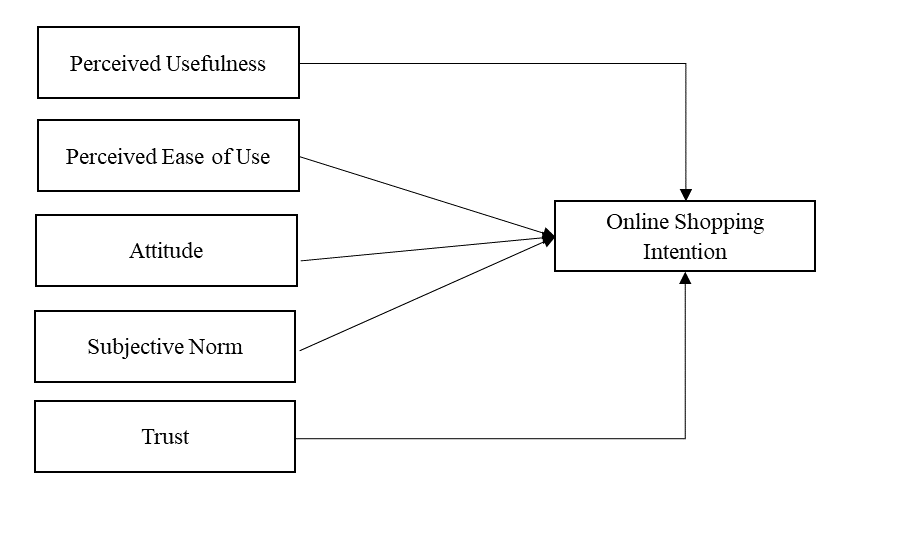
METHODOLOGY
This study's research approach employs a positivist philosophy, focusing on objective measurement and statistical data analysis. This methodology is appropriate for the quantitative aspect of the research, which seeks to examine the online spending behaviours of university students in Labuan, aged 19-26, representing Generation Z, active participants in online shopping. A deductive methodology is utilised, commencing with hypotheses on the determinants of these behaviours and evaluating them through the acquisition and analysis of survey data. A mono-method approach is employed, concentrating exclusively on the survey method to maintain a cohesive and focused methodology. The study is cross- sectional, gathering data at a singular moment to reflect the present condition of online hopping behaviour.
In this study, participants were selected using a purposive sampling strategy, focusing specifically on undergraduate students from Universiti Malaysia Sabah International Campus, Labuan (UMSKAL). This approach was deemed appropriate given the study’s objective to explore digital consumption behaviours among individuals who are actively engaged in online purchasing. Inclusion criteria required participants to have prior experience with online transactions, access to internet-enabled devices, and regular interaction with social media platforms for e-commerce purposes. Purposive sampling offers several distinct advantages in this context. Firstly, it ensures relevance and alignment between the sample and the research objectives, allowing for the inclusion of individuals who are most likely to provide meaningful insights into digital spending habits. Secondly, it enables efficient data collection by targeting a population with known characteristics, thereby reducing variability and enhancing the interpretability of findings. Thirdly, it supports contextual depth, as the selected participants reflect a demographic that is both digitally active and representative of emerging consumer trends within higher education settings.
The age range of participants spanned from 21 to 56 years, capturing a broad spectrum of university students with diverse digital experiences. The sample size was determined in accordance with the recommendations by Hair et al. (2018), which suggest a sample-to-variable ratio of 15:1 to 20:1 for robust structural equation modelling. This study employed a ratio of 20 respondents per variable to guarantee rigorous statistical analysis and dependable outcomes. This methodological rigour ensures that the study's findings are credible and applicable to Labuan's wider population of university students.
The questionnaire design was a closed-ended questionnaire, adapted and modified to fit the context of online shopping. It consisted of two sections: demographic information and variables related to online shopping behaviours. The indicators for each measurement item were constructed based on prior research relevant to the variables. Respondents were asked to rate their level of agreement or disagreement with the statements on a Likert scale ranging from “1” (strongly disagree) to “5” (strongly agree). The questionnaire was validated through content and face validity.
The data collection was conducted from October to November 2024, using several digital channels such as Google Forms, WhatsApp, and Telegram to access a wide range of respondents. Two enumerators were employed to aid in the dissemination of the questionnaire, thereby enhancing outreach and participation. The first dataset comprised responses from 227 participants, encompassing several demographic factors including age, gender, ethnicity, academic year, and field of study. After conducting a comprehensive data cleaning process to eliminate incomplete or invalid entries, 210 responses were determined to be valid for analysis.
RESULTS
Table 1 provides an overview of the demographic characteristics of the survey participants. The sample comprises 210 individuals, with 30% male and 70% female participants. Malays students constitute the predominant ethnic group at 47.6%, followed by Indigenous Sarawak at 7.1%. Indian and Chinese participants each represent 1.4% of the sample, while other ethnic groups together comprise 4.3%. Respondents aged 23 years constitute 37.6%, while those aged 22 years account for 26.7%. An examination of the academic year indicates that 50% of the participants are in their fourth year, while the remaining respondents are distributed among the first (13.8%), second (16.2%), and third years (20%). The predominant group of respondents consists of Islamic Finance students, comprising a substantial majority of 78.1%, whereas International Marketing accounts for 4.8%. The findings offer a detailed analysis of the sample's demographic composition, encompassing gender, ethnicity, age, academic year, and Program of study selections.
| Demographic Profile | Frequency | Percentage |
|---|---|---|
| N=210 | % | |
| Gender | ||
| Male | 63 | 30 |
| Female | 147 | 70 |
| Ethnicity | ||
| Malay | 100 | 47.6 |
| Indian | 3 | 1.4 |
| Chinese | 3 | 1.4 |
| Indigenous Sabah | 80 | 38.1 |
| Indigenous Sarawak | 15 | 7.1 |
| Other | 9 | 4.3 |
| Age | ||
| 19 | 1 | .5 |
| 20 | 32 | 15.2 |
| 21 | 30 | 14.3 |
| 22 | 56 | 26.7 |
| 23 | 79 | 37.6 |
| 24 | 9 | 4.3 |
| 25 | 1 | .5 |
| 26 | 2 | 1.0 |
| Year of Study | ||
| 1 | 29 | 13.8 |
| 2 | 34 | 16.2 |
| 3 | 42 | 20.0 |
| 4 | 105 | 50.0 |
| Courses | ||
| UH6342002(International Marketing) | 10 | 4.8 |
| UH6343002 (International Finance) | 9 | 4.3 |
| UH6343003 (International & Offshore Banking) | 6 | 2.9 |
| UH6343004 (International Financial Economics) | 5 | 2.4 |
| UH6343005 (Islamic finance) | 164 | 78.1 |
| UH6481003 (Multimedia Technology) | 12 | 5.7 |
| UH6481004 (Computing Business) | 4 | 1.9 |
Factor Analysis
Factor analysis is an interdependent technique primarily aimed at elucidating the underlying structure among the variables in the analysis (Hair et al., 2010). This study employed the Kaiser–Meyer–Olkin (KMO) and Bartlett’s test to evaluate the suitability of the data set for factor analysis. The analysis results in Table 2 and Table 3 indicate that the KMO for both theories, TAM and TRA, is 0.895 and 0.912, respectively. This value falls within the meritorious category, as Kaiser (1974) recommended. This aligns with Pallant's (2016) study, which stipulates that Bartlett’s Test of Sphericity must have a p-value less than .05 for factor analysis to be considered suitable. It indicates that all the factors are significant to one another.
| KMO and Bartlett’s Test | ||
|---|---|---|
| Kaiser-Meyer-Olkin Measure of Sampling Adequacy | .895 | |
| Bartlett's Test of Sphericity | Approx. Chi-Square | 1087.736 |
| df | 45 | |
| Sig. | <.001 | |
| KMO and Bartlett’s Test | ||
|---|---|---|
| Kaiser-Meyer-Olkin Measure of Sampling Adequacy | .912 | |
| Bartlett's Test of Sphericity | 1199.813 | 3638.711 |
| 45 | 300 | |
| <.001 | <.001 | |
Measurement Model
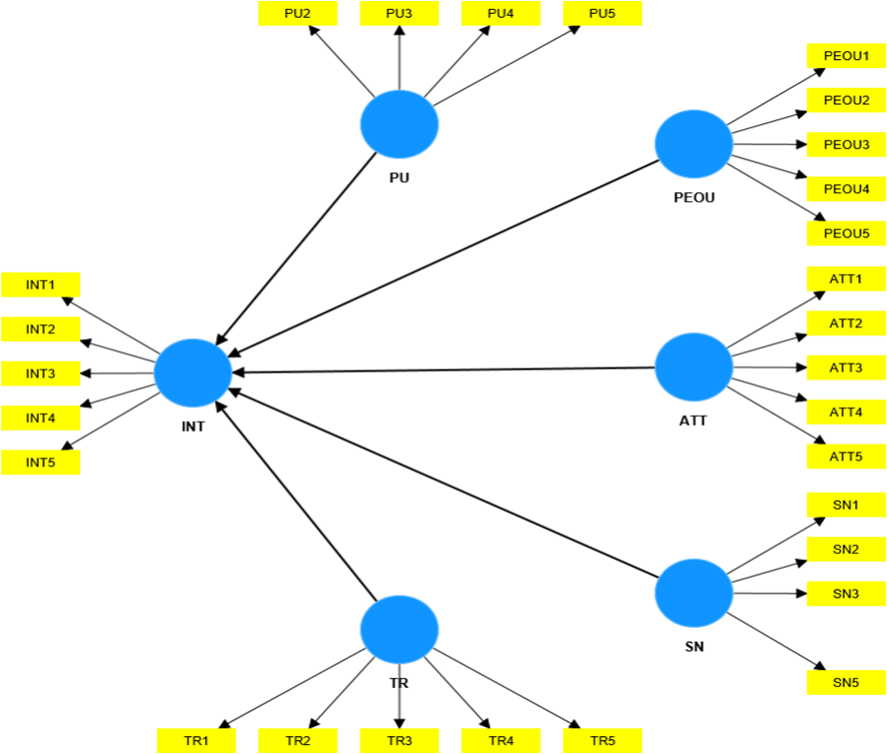
The model depicted in Figure 2 is founded on the theoretical framework established from the examined literature. This research utilised SmartPLS 3 software to forecast essential goal constructions, employing Partial Least Squares Structural Equation Modelling (PLS-SEM) to examine the specified path model. Partial Least Squares Structural Equation Modelling (PLS-SEM) was chosen for this study due to its appropriateness for exploratory research and its ability to accommodate complex models involving multiple constructs and indicators. The research focuses on behavioural variables such as trust, perceived usefulness, and social influence, which are typically represented as latent constructs. PLS-SEM offers a flexible and predictive analytical framework that is well-suited to data that may not meet the assumptions of normality and to studies with relatively modest sample sizes. More importantly, this method aligns with the study’s aim of developing theoretical insights by identifying key determinants of digital consumption. It enables the exploration of emerging behavioural patterns within a context that remains under-researched in the existing literature. The analysis was conducted using SmartPLS 3 as the principal instrument. The preliminary stage of evaluating a reflective measurement model is examining the indicator loadings, which should be above 0.70, according to Hair et al. (2019). Indicators with loadings ranging from 0.40 to 0.70 may be deemed suitable for exclusion. The results of the measurement model depicted in Figure 2 revealed that two items, PU1 and SN4, were omitted due to their loadings falling below the 0.40 criterion (Hair et al., 2017). The final model had 28 components, with loadings between 0.70 to 0.93. Table 4 presents a detailed analysis of these item loadings.
| Latent Constructs and Items | Loadings | Average Variance Extracted (AVE) | Composite Reliability |
|---|---|---|---|
| Intention | |||
| INT1 | 0.779 | 0.650 | 0.903 |
| INT2 | 0.864 | ||
| INT3 | 0.847 | ||
| INT4 | 0.722 | ||
| INT5 | 0.811 | ||
| Perceived Usefulness | 0.620 | 0.867 | |
| PU1 | |||
| PU2 | 0.750 | ||
| PU3 | 0.787 | ||
| PU4 | 0.774 | ||
| PU5 | 0.836 | ||
| Perceived Ease of Use | 0.649 | 0.902 | |
| PEOU1 | 0.795 | ||
| PEOU2 | 0.718 | ||
| PEOU3 | 0.817 | ||
| PEOU4 | 0.874 | ||
| PEOU5 | 0.817 | ||
| Attitude | 0.720 | 0.928 | |
| ATT1 | 0.828 | ||
| ATT2 | 0.829 | ||
| ATT3 | 0.853 | ||
| ATT4 | 0.872 | ||
| ATT5 | 0.861 | ||
| Subjective Norm | 0.665 | 0.888 | |
| SN1 | 0.816 | ||
| SN2 | 0.823 | ||
| SN3 | 0.835 | ||
| SN5 | 0.786 | ||
| Trust | 0.691 | 0.918 | |
| TR1 | 0.841 | ||
| TR2 | 0.853 | ||
| TR3 | 0.850 | ||
| TR4 | 0.793 | ||
| TR5 | 0.818 |
The next stage of the evaluation involves assessing internal consistency reliability, as per the guidelines outlined by Hair et al. (2019). This method offers an estimate of reliability by focusing on the interrelationship among the observed indicator variables (Hair et al., 2017). Composite reliability values from 0.60 to 0.70 are deemed acceptable for exploratory studies. As detailed in Table 5, the composite reliability for each latent construct in this research ranged from 0.867 to 0.928, indicating robust internal consistency reliability (Hair et al., 2011).
| Composite Reliability (rho_c) | |
|---|---|
| ATT | 0.928 |
| INT | 0.903 |
| PEOU | 0.902 |
| PU | 0.867 |
| SN | 0.888 |
| TR | 0.918 |
The third step in evaluating the reflective measurement model is assessing convergent validity. A concept demonstrates satisfactory convergent validity when its Average variance extracted (AVE) is 0.50 or above, signifying that it accounts for a minimum of 50% of the variation in its indicators (Hair et al., 2019). Table 6 indicates that all constructs in the current study attained AVE scores of 0.50 or above, confirming adequate convergent validity.
| Average variance extracted (AVE) | |
|---|---|
| ATT | 0.720 |
| INT | 0.650 |
| PEOU | 0.649 |
| PU | 0.620 |
| SN | 0.665 |
| TR | 0.691 |
Discriminate validity assesses the degree to which a construct is distinct from other constructs, especially regarding its relationships with them (Hair et al., 2010). Various methodologies are employed for this evaluation, including the Fornell-Larcker criterion, cross-loadings, and the Heterotrait- monotrait (HTMT) ratio of correlations (Hair et al., 2017). The preliminary evaluation frequently includes cross-loadings, wherein an indicator's outer loading on its assigned construct, as illustrated in
| Latent Constructs and Items | Loadings | Average Variance Extracted (AVE) | Composite Reliability |
|---|---|---|---|
| Intention | |||
| INT1 | 0.779 | 0.650 | 0.903 |
| INT2 | 0.864 | ||
| INT3 | 0.847 | ||
| INT4 | 0.722 | ||
| INT5 | 0.811 | ||
| Perceived Usefulness | 0.620 | 0.867 | |
| PU1 | |||
| PU2 | 0.750 | ||
| PU3 | 0.787 | ||
| PU4 | 0.774 | ||
| PU5 | 0.836 | ||
| Perceived Ease of Use | 0.649 | 0.902 | |
| PEOU1 | 0.795 | ||
| PEOU2 | 0.718 | ||
| PEOU3 | 0.817 | ||
| PEOU4 | 0.874 | ||
| PEOU5 | 0.817 | ||
| Attitude | 0.720 | 0.928 | |
| ATT1 | 0.828 | ||
| ATT2 | 0.829 | ||
| ATT3 | 0.853 | ||
| ATT4 | 0.872 | ||
| ATT5 | 0.861 | ||
| Subjective Norm | 0.665 | 0.888 | |
| SN1 | 0.816 | ||
| SN2 | 0.823 | ||
| SN3 | 0.835 | ||
| SN5 | 0.786 | ||
| Trust | 0.691 | 0.918 | |
| TR1 | 0.841 | ||
| TR2 | 0.853 | ||
| TR3 | 0.850 | ||
| TR4 | 0.793 | ||
| TR5 | 0.818 |
offers an alternative approach for assessing discriminant validity, indicating that the Average Variance Extracted (AVE) should be 0.5 or above (Hair et al., 2017). Consequently, according to these evaluation criteria, the measures in this study exhibit adequate discriminant validity, in accordance with the standards established by Fornell and Larcker (1981).
| Construct | ATT | INT | PEOU | PU | SN | TR |
|---|---|---|---|---|---|---|
| ATT | 0.849 | |||||
| INT | 0.853 | 0.806 | ||||
| PEOU | 0.809 | 0.813 | 0.806 | |||
| PU | 0.803 | 0.835 | 0.785 | 0.787 | ||
| SN | 0.681 | 0.739 | 0.659 | 0.649 | 0.815 | |
| TR | 0.616 | 0.615 | 0.597 | 0.577 | 0.695 | 0.831 |
| **Bold diagonal elements are the square root of AVE (Average Variance Extracted), which should exceed the off-diagonal inter-construct correlations for adequate discriminant validity. | ||||||
**Bold diagonal elements are the square root of AVE (Average Variance Extracted), which should exceed the off-diagonal inter-construct correlations for adequate discriminant validity.
The Heterotrait–monotrait (HTMT) correlations method evaluates discriminant validity by estimating the genuine correlation between two constructs under the assumption of perfect measurement reliability (Hair et al., 2019). The HTMT technique stipulates a recommendation of .90 for conceptually comparable constructs and .85 for conceptually dissimilar constructions. Table 8 falls below the acceptable thresholds, indicating that the constructs in the model are distinct from one another.
| INT | PU | PEOU | ATT | SN | TR | |
| INT | ||||||
| PU | 0.964 | |||||
| PEOU | 0.912 | 0.937 | ||||
| ATT | 0.943 | 1.006 | 0.942 | |||
| SN | 0.779 | 0.867 | 0.775 | 0.798 | ||
| TR | 0.680 | 0.694 | 0.683 | 0.686 | 0.801 |
Multicollinearity refers to the phenomenon where two or more independent variables in a regression model exhibit high correlation (Hair et al., 2013). Elevated Variance Inflation Factor (VIF) values are indicative of significant collinearity or multicollinearity among the independent variables (Hair et al., 2019). A VIF value of 5 or higher points to critical collinearity concerns within formatively measured constructs, while ideally, VIF values should remain at 3 or below (Hair et al., 2019). According to Table 9, all VIF values are under the critical threshold of 5, suggesting that there are no significant collinearity issues among the indicators. However, the VIF values associated with "ATT -> INT," "PEOU -> INT," and "PU -> INT" are above the preferred threshold of 3, implying moderate levels of collinearity among these indicators.
| Label | VIF |
|---|---|
| ATT -> INT | 3.957 |
| PEOU -> INT | 3.544 |
| PU -> INT | 3.399 |
| SN -> INT | 2.529 |
| TR -> INT | 2.116 |
T-values are essential for assessing the relevance of path coefficients in Structural Equation Modelling (SEM). The supplied data encompasses t-statistics, associated p-values, and an evaluation of hypothesis endorsement. Table 10 illustrates robust and statistically significant correlations between ATT, PEOU, PU, and SN with INT, each exhibiting significance at either the 1% or 10% level. These studies indicate that these factors positively affect INT. The association between TR and INT was determined to be non- significant, evidenced by a t-value of 0.357, which is below the 1.65 threshold for statistical significance, showing inadequate evidence to substantiate its effect on INT.
| Path coefficients | T statistics | P values | Supported | |
|---|---|---|---|---|
| ATT > INT | 0.335 | 4.338*** | 0.000 | Yes |
| PEOU > INT | 0.179 | 2.283** | 0.022 | Yes |
| PU > INT | 0.298 | 4.134*** | 0.000 | Yes |
| SN > INT | 0.211 | 3.409*** | 0.001 | Yes |
| TR > INT | -0.017 | 0.357 | 0.721 | No |
| t-values > 1.65* (p < 0.10); t-values > 1.96** (p < 0.05); t-values > 2.58*** (p<0.01). | ||||
t-values > 1.65* (p < 0.10); t-values > 1.96** (p < 0.05); t-values > 2.58*** (p<0.01).
Structural Model
The structural model illustrates the relationship among the measuring models in the study. To assess the structural model, bootstrapping is employed with a minimum of 5,000 bootstrap samples, ensuring the number of cases corresponds to the observations in the original sample, which is appropriate for exploratory analysis. Utilise critical t-values of 1.65 (10 per cent significance level), 1.96 (5 per cent significance level), and 2.58 (1 per cent significance level) for a two-tailed test.
| Influence of the | ||||
|---|---|---|---|---|
| Original sample (O) | T statistics (O/STDEV) | P values | T table | |
| construct | ||||
| ATT > INT | 0.335 | 4.338 | 0.000 | <0.01 |
| PEOU > INT | 0.179 | 2.283 | 0.022 | <0.05 |
| PU > INT | 0.298 | 4.134 | 0.000 | <0.01 |
| SN > INT | 0.211 | 3.409 | 0.001 | <0.01 |
| TR > INT | -0.017 | 0.357 | 0.721 | <0.10 |
The findings demonstrate that the t-statistic for attitude (4.338) surpasses the critical value of 2.58*** (p < 0.01), indicating a highly significant correlation. Thus, the null hypothesis is accepted, confirming that attitude significantly influences intention. The t-statistic for perceived ease of use (2.283) exceeds the crucial criterion of 1.96** (p < 0.05), signifying a statistically significant association. Consequently, the null hypothesis is accepted, substantiating the assertion that perceived ease of use greatly affects intention.
The t-statistic for perceived usefulness (4.134) exceeds the threshold value of 2.58*** (p < 0.01), indicating a highly significant association. This outcome supports the acceptance of the null hypothesis, confirming that perceived usefulness strongly influences intention. The t-statistic for subjective norm (3.409) surpasses the essential threshold of 2.58*** (p < 0.01), signifying a robust and meaningful association. Consequently, the null hypothesis is accepted, affirming that subjective norm strongly affects intention.
The t-statistic for trust (0.357) is below the crucial value of 1.65* (p < 0.10), signifying a lack of statistical significance. Consequently, the null hypothesis is rejected, indicating that trust does not significantly influence intention.
CONCLUSION
This study aimed to examine the influence of the Technology Acceptance Model (TAM) variables, Theory of Reasoned Action (TRA) factors, and trust on online shopping intentions among undergraduate students at University Malaysia Sabah International Labuan (UMSKAL). The results indicated that four hypotheses were validated, but one was dismissed. The acceptable hypotheses included Intention-Perceived Usefulness, Intention-Perceived Ease of Use, Intention-Attitude, and Intention-Subjective Norm. The hypothesis of Trust Intention was rejected. This indicates that UMSKAL undergraduates are more predisposed to participate in online purchasing when impacted by TAM and TRA variables.
Other than that, the other reason for the negative relationship of trust element is about collectivist cultures. Purchasing decisions are often shaped more by social influence than by individual trust evaluations. As Pratesi et al. (2021) highlight, collectivist consumers tend to rely on interpersonal relationships and social endorsement rather than independent trust assessments when making online purchasing decisions. Consequently, UMSKAL students who are embedded in peer-driven online communities may base their purchase decisions more on social proof than on individual perceptions of vendor trustworthiness.
Besides, student online purchases often involve low-cost, low-risk items, where potential losses are minimal. In such contexts, trust becomes a background assumption rather than a decisive factor, as the perceived risk of financial harm is negligible (Anwar et al., 2021). In addition, young consumers’ digital familiarity may reduce their sensitivity to risk. According to Nguyen and Huynh (2023), experienced online users demonstrate risk habituation they develop confidence ([young consumers’ digital familiarity may reduce their sensitivity to risk. According to Nguyen and Huynh (2023), experienced online users demonstrate risk habituation, as they develop confidence]) in their ability to navigate online transactions safely, thereby reducing reliance on trust as a behavioural driver.
Furthermore, student online purchases often involve low-cost, low-risk items, where potential losses are minimal. In such cases, trust becomes a background assumption rather than a crucial factor, as the perceived risk of financial harm is negligible (Anwar et al., 2021). Additionally, young consumers’ familiarity with digital platforms may decrease their sensitivity to risk. According to Nguyen and Huynh (2023), experienced online users show risk habituation and develop confidence in their ability to navigate online transactions safely, thus reducing reliance on trust as a behavioural driver.
Interestingly, Suresh and Sieng (2023) also observed that Malaysian university students tend to avoid high-risk financial behaviours, including speculative investments, despite their high digital exposure. This may explain why trust does not show a strong positive effect in this study, as young consumers in collectivist settings often prioritise perceived safety and peer validation over risk-based trust.
The study’s findings carry both theoretical and practical significance. Theoretically, the observed relationships between behavioural constructs contribute to the evolving discourse on digital consumerism within higher education, particularly by highlighting the nuanced role of trust, whose unexpected negative influence invites further scholarly exploration. Practically, the results offer actionable insights for university administrators, digital platform developers, and policy makers. For instance, understanding the drivers of online spending can inform the design of financial literacy programmes, targeted digital marketing strategies, and institutional policies that promote responsible e- commerce engagement among students. By bridging behavioural theory with real-world application, the study underscores the importance of context-sensitive interventions in shaping digital consumption habits.
Comprehending the elements affecting UMSKAL students' online purchase intentions can guide the development of e-commerce platforms tailored to this group. Platforms may concentrate on attributes that augment perceived utility, user-friendliness, trustworthiness, and favourable perceptions of online purchasing. Marketers focussing on UMSKAL students might utilise the study's findings to customise marketing strategies and communications. Emphasising social impact, confidence in suggested platforms, and secure payment methods can appeal to this demographic and enhance participation. The research may also guide instructional programs at UMSKAL regarding responsible online expenditure, cybersecurity awareness, and the critical assessment of online shopping suggestions. Enhancing financial literacy and understanding of secure online shopping habits can aid students in purchasing online.
The study's findings on online buying challenges UMSKAL students face may advocate for legislation specifically designed for student customers. These policies may encompass instructing students on appropriate digital conduct, equipping them with skills to evaluate online content critically, and protecting them from internet fraud. This instruction enables students to make better-educated decisions regarding online purchases. The study may highlight the imperative for UMSKAL to provide targeted support services for students, including aid with online financial management and advice on secure online shopping habits.
While the findings offer valuable insights into the digital consumption behaviours of university students in Labuan, their generalisability should be approached with caution. The purposive sampling method and the unique socio-economic setting of Labuan, an offshore financial centre with distinct cultural and infrastructural characteristics. This may limit the direct applicability of results to other regions. However, the study’s conceptual framework, grounded in established behavioural theories such as TAM and TRA, provides a transferable foundation that can be adapted to similar educational contexts, particularly in Southeast Asia or other digitally emerging student populations. Future research may replicate the model in varied institutional or geographic settings to assess its broader relevance. Besides, future studies could benefit from a longer data collection period to include more participants and investigate more deeply, ensuring the results are applicable to different contexts.
Additionally, using only an online survey may have excluded potential participants beyond UMSKAL students. Future research could incorporate interviews or real-world observations to enhance the study’s reliability. Moreover, the study primarily focused on established theories like TAM and TRA. Future studies could explore other theories and additional factors such as perceived risk and convenience, to better understand online consumer behaviour. Lastly, the study did not consider demographic factors such as age, gender, and ethnicity. Future research could examine how these factors influence online shopping behaviours among UMSKAL undergraduates.
References
- Abd-ul-Wahid, S., Ahmad, M., & Ijaz, H. (2024). Impact of perceived benefits and perceived risks on online shopping behaviour with mediating role of purchase intention. Bulletin of Business and Economics (BBE).
- Ajzen, I. (1991). The theory of planned behaviour. Organizational Behaviour and Human Decision Processes, 50(2), 179–211. https://doi.org/10.1016/0749-5978(91)90020-T
- Al-Hattami, H. M. (2021). Determinants of intention to continue usage of online shopping under a pandemic: COVID-19. Cogent Business and Management, 8(1). https://doi.org/10.1080/ 23311975.2021.1936368
- Appanaidu, P. (2022). The impact of perceived usefulness, perceived ease of use, perceived value and perceived risk on purchase intention via hypermarket drive-thru among Klang consumers. Kolej Komuniti Journal of Social Sciences and Humanities, 7(1).
- Ariff, M. S., Sylvester, M., Zakuan, N., Ismail, K., & Ali, K. (2014). Consumer perceived risk, attitude and online shopping behaviour: Empirical evidence from Malaysia. IOP Conference Series: Materials Science and Engineering, 58, 012007.
- Anwar, M., Talib, N. B., & Ahmad, R. (2021). The influence of perceived risk and trust on online shopping behaviour: A study among Malaysian youth. Journal of Asian Finance, Economics and Business, 8(2), 545–554. https://doi.org/10.13106/jafeb.2021.vol8.no2.0545
- Bhatti, A., & Akram, H. (2020). The moderating role of subjective norms between online shopping behaviour and its determinants. International Journal of Social Sciences and Economic Review, 2(2), 1–9. https://doi.org/10.36923/ijsser.v2i2.52
- Chelvarayan, A., Jie, C. S., & Fern, Y. S. (2021). Factors affecting students’ perception of online shopping. International Journal of Entrepreneurship, Business and Creative Economy, 1(1), 13–24. https://doi.org/10.31098/ijebce.v1i1.424
- Ching, K. C., Hasan, Z. R. A., & Hasan, N. A. (2021). Factors influencing consumers in using Shopee for online purchase intention in East Coast Malaysia. Universiti Malaysia Terengganu Journal of Undergraduate Research, 3(1), 45–56.
- Davis, F. D. (1989). Perceived usefulness, perceived ease of use, and user acceptance of information technology. MIS Quarterly, 13(3), 319–340. https://doi.org/10.2307/249008
- Department of Statistics Malaysia. (2023). Malaysia digital economy 2023. https://storage.dosm.gov. my/gdp/digitaleconomy_2022.pdf
- Doan, T.-T. T. (2020). Factors affecting online purchase intention: A study of Vietnam online customers. Management Science Letters, 10(10), 2337–2342. https://doi.org/10.5267/ j.msl.2020.3.001
- Ellitan, L., & Prayogo, C. (2022). Increasing online purchase through perceived usefulness, perceived risk and perceived ease of use. EKOMA: Jurnal Ekonomi, 1(2).
- Fishbein, M., & Ajzen, I. (1975). Belief, attitude, intention, and behaviour: An introduction to theory and research. Addison-Wesley.
- Genoveva, G., & Dharmaatmaja, H. R. (2022). Motives affecting fashion consumers’ behaviour toward online shopping during COVID-19 pandemic. KINERJA, 26(1), 16–31. https://doi.org/10.24002/kinerja.v26i1.4961
- Ha, N. T., Nguyen, T. L. H., Nguyen, T. P. L., & Nguyen, T. D. (2019). The effect of trust on consumers’ online purchase intention: An integration of TAM and TPB. Management Science Letters, 9(9), 1451–1460. https://doi.org/10.5267/j.msl.2019.5.006
- Hair, J. F., Black, W. C., Babin, B. J., & Anderson, R. E. (2019). Multivariate data analysis (8th ed.). Cengage Learning.
- Hair, J. F., Black, W. C., Babin, B. J., & Anderson, R. E. (2018). Multivariate data analysis (8th ed.). United Kingdom: Cengage Learning.
- Hair, J. F., Black, W. C., Barry, B., & Anderson, R. E. (2010). Multivariate data analysis (7th ed.). Pearson Prentice Hall.
- Hair, J. F., Hult, G. T. M., Ringle, C. M., & Sarstedt, M. (2017). A primer on partial least squares structural equation modelling (PLS-SEM) (2nd ed.). SAGE Publications India Pvt. Ltd.
- Hair, J. F., Ringle, C. M., & Sarstedt, M. (2011). PLS-SEM: Indeed a silver bullet. Journal of Marketing Theory and Practice, 19(2), 139–152. https://doi.org/10.2753/MTP1069-6679190202
- Hair, J. F., Ringle, C. M., & Sarstedt, M. (2013). Partial least squares structural equation modelling: Rigorous applications, better results and higher acceptance. Long Range Planning, 46(1–2), 1–12. https://doi.org/10.1016/j.lrp.2013.01.001
- Hanjaya, S. T. M., Kenny, S. K., & Gunawan, S. S. S. E. F. (2019). Understanding factors influencing consumers’ online purchase intention via mobile app: Perceived ease of use, perceived usefulness, system quality, information quality, and service quality. Marketing of Scientific and Research Organizations, 32(2), 175–205. https://doi.org/10.2478/minib-2019-0035
- Jason, L. S. H., & Aishah, S. (2021). Influence of perceived usefulness, perceived ease of use and brand name on online purchase intention among higher learning institution students. Unpublished manuscript.
- Kaiser, H. F. (1974). An index of factorial simplicity. Psychometrika, 39(1), 31–36.
- Kamis, F. F., Ramlee, S. I. F., & Zulkiffli, W. F. W. (2021). Does the theory of planned behaviour and perceived enjoyment give a big impact on online purchase intention among Gen-Y in East Coast Malaysia? AIP Conference Proceedings, 2347. https://doi.org/10.1063/5.0055763
- Le-Hoang, P. V. (2020). Factors affecting online purchase intention: The case of e-commerce on Lazada. Independent Journal of Management & Production, 11(3), 1018–1036. https://doi.org/10.14807/ijmp.v11i3.1088
- Ligaraba, N., Nyagadza, B., Dörfling, D., & Zulu, Q. M. (2023). Factors influencing re-usage intention of online and mobile grocery shopping amongst young adults in South Africa. Arab Gulf Journal of Scientific Research, 41(3), 389–415. https://doi.org/10.1108/AGJSR-06-2022-0088
- Ma’Mun, D. K., Aprillia, R., Riko, R., & Wijaya, L. (2023). Antecedents of online shopping behaviour during the COVID-19 pandemic. Proceedings of the 2023 International Conference on Digital Economy, 9, 86–92. https://doi.org/10.1145/3584816.3584844
- Musa, R., Nasaratnam, S., Rethinam, K., Varatharajoo, P. M., & Shanmugam, A. (2022). A study of factors influencing online shopping behaviour in Malaysia: A structural approach. WSEAS Transactions on Business and Economics, 19, 531–541. https://doi.org/10.37394/23207. 2022.19.48
- Nasir, A. M., Batrisya, N. I., Daud, M. Z. C., Ibrahim, M. S., & Alias, N. Z. I. (2020). The relationship of perceived usefulness, trust and price with consumer purchasing behaviour. Jurnal Evolusi. http://creativecommons.org/licenses/by/4.0/legalcode
- Nguyen, T. H., & Huynh, Q. L. (2023). Digital consumer confidence and online risk habituation: The moderating role of experience. Journal of Retailing and Consumer Services, 71, 103255. https://doi.org/10.1016/j.jretconser.2023.103255
- Othman, N. H., & Sudarmin, S. F. (2022). Measuring subjective norms of online shopping behaviour: Evidence from a developing country. International Journal of Academic Research in Business and Social Sciences, 12(12). https://doi.org/10.6007/ijarbss/v12-i12/15946
- Pratesi, C. A., Lombardi, R., & Festa, G. (2021). Cultural dimensions in online purchase behavior: Evidence from collectivist and individualist societies. Sustainability, 13(7), 3652. https://doi.org/10.3390/su13073652
- Roni, M., Mohamad, S. H., Borhanordin, A. H., Hussin, H., Rashid, I. M. A., & Shafiai, S. (2022). Online food shopping motives during COVID-19 pandemic for improving behavioural intention: Conceptual model and propositions. Webology, 19(1), 2458–2474. https://doi.org/10.14704/web/ v19i1/web19165
- Ru, L. J., Kowang, T. O., Long, C. S., Fun, F. S., & Fei, G. C. (2021). Factors influencing online purchase intention of Shopee’s consumers in Malaysia. International Journal of Academic Research in Business and Social Sciences, 11(1). https://doi.org/10.6007/ijarbss/v11-i1/8577
- Saleem, A., Aslam, J., Kim, Y. B., Nauman, S., & Khan, N. T. (2022). Motives towards e-shopping adoption among Pakistani consumers: An application of the Technology Acceptance Model and Theory of Reasoned Action. Sustainability (Switzerland), 14(7). https://doi.org/10.3390/ su14074180
- Suleman, D., Ali, H., Mukti Ali, M., & Nusraningrum, D. (2019). Perceived ease of use, trust and risk toward attitude and intention in shopping for online fashion products in Indonesia. Archives of Business Research, 7(4), 240–253. https://doi.org/10.14738/abr.74.6482
- Suresh, P., & Sieng, L. W. (2023). Tingkah laku pelajar universiti dalam penggunaan, perbelanjaan dan pelaburan. Journal of Business Management and Accounting, 13(1), 129–152. https://doi.org/10.32890/jbma2023.13.1.6
- Teng, T. Y. (2018). Factors influencing Malaysian youth consumers’ online purchase intention of travel products [Unpublished undergraduate thesis or manuscript].
- Udayana, I., & Ramadhan, D. (2019). Pengaruh perceived usefulness, perceived ease of use, dan subjective norm terhadap purchase intention melalui attitude sebagai mediasi (Studi kasus pada konsumen Gudang Digital Online Yogyakarta). Jurnal Ekonomi dan Bisnis, 10(2). (Note: Add journal name if available.)
- Wang, M., Chen, C., Chang, S., & Yang, Y. (2007). Effects of online shopping attitudes, subjective norms and control beliefs on online shopping intentions: A test of the Theory of Planned Behaviour. The International Journal of Management, 24, 296–302. (Note: Add issue number or page range if available.)
- Wang, X. (2023). Effect of perceived usefulness and perceived ease of use on university students’ willingness for online purchase. SHS Web of Conferences, 165, 02017. https://doi.org/10.1051/ shsconf/202316502017
- Wen, T. S., Satar, N. H. M., Ishak, N. A., & Ating, R. (2020). Consumer intention towards online shopping in Malaysia. International Journal of Accounting, 5(27). (Note: Confirm volume/issue formatting.)
- Zhao, J. (2023). Factors influencing online purchase intention among students in SEGI University. Academic Journal of Business & Management, 5(7), 67–77. https://doi.org/10.25236/ AJBM.2023.050711