Exploring Personal Resources and Its Relationship with Work Engagement: A Systematic Review
- Kulliyah of Economics and Management Sciences, International Islamic University Malaysia
- Institute of Islamic Banking and Finance, International Islamic University Malaysia
Journal of Business Management and Accounting 14(2) (2024) · https://doi.org/10.32890/jbma2024.14.2.3
Abstract
This systematic review of 55 empirical studies explores the relationship between personal resources and work engagement in various work environments. Its contribution is threefold: first, to identify the constructs that illustrate the ability of personal resources; second, to analyse current methods for studying personal resources and highlighting their limitations in theoretical generalisation; and third, to examine the role of personal resources to influence work engagement. The review identifies notable gaps in existing research and offers valuable perspectives to promote employee engagement in different professional settings. Findings highlight the need for cultural and sector-specific research to understand diverse responses to job demands and resources. It suggests the integration of emerging constructs like growth mindset and emotional intelligence into these models and emphasises the need for a more varied methodological approach, including longitudinal and qualitative studies. Additionally, it highlights the need to explore the impact of social, cultural, and technological factors in this relationship. An implication from this study is that organisations can improve job satisfaction, reduce turnover intentions, and enhance overall performance by creating a supportive environment that encourages personal resources. This can be achieved through offering training and development programmes, fostering a positive work culture, and ensuring a balance between job demands and resources.
Keywords: Systematic review, personal resources, work engagement, JD-R theory
INTRODUCTION
In today’s VUCA (Volatile, Uncertainty, Complex, Ambiguous)
business environment, work engagement stands out as a critical factor of employee well-being and performance. It is defined as a fulfilling cognitive and emotional condition characterised by vigour, dedication, and absorption in one’s role (Bakker et al., 2023; Bakker & de Vries, 2021; Macey & Schneider, 2008; Schaufeli et al., 2002). Work engagement has a significant impact on both individual and organisational outcomes, specifically positive aspects such as job satisfaction, lower turnover intentions, and higher employee performance, while disengagement has negative consequences such as absenteeism and burnout (Bakker & de Vries, 2021; Bakker & Demerouti, 2017; Kahn, 1990; Schaufeli & Taris, 2014).
Despite the extensive research on work engagement and its known importance for productivity and high performance, there is a high level of disengagement globally, as shown by reports that only 21% of employees worldwide are engaged at work (Gallup, 2022, 2023; Keating & Heslin, 2015). The fact that the concept of work engagement is very complex and influenced by many factors is the reason why there are many in-depth studies (Kooij et al., 2020; Okun
& Arun, 2020; Peláez Zuberbühler et al., 2021; Rashid & Harif, 2016; Saleem et al., 2022; Schaufeli, 2021). On the other hand, there is also a great need for a review to identify the weaknesses and gaps in this rapidly growing literature.
Work engagement is a multidimensional phenomenon that can be
influenced by a variety of factors. However, the JD-R theory, which is accepted by researchers and mostly used to explain their models of work engagement, provides a clear and useful explanation of the antecedents of work engagement, namely job demands, job resources, and personal resources (Bakker, 2011; Bakker & Demerouti, 2008, 2017; Schaufeli & Taris, 2014). Job demands refer to the various aspects of a job, whether they involve physical, psychological, social, or organisational elements that require continuous effort and come at a cost, such as extended working hours, dealing with a fussy customer, and the need to manage multiple tasks simultaneously (Bakker, 2011; Bakker et al., 2023; Bakker & Demerouti, 2007, 2008, 2014). On the other hand, various job resources such as performance feedback, rewards, teamwork, and support from superiors mitigate the impact of job demands. These resources not only make it easier to deal with work-related pressure but also enable individuals to achieve their work goals and promote their personal growth (Bakker & Demerouti, 2017; Brenninkmeijer et al., 2010; Demerouti et al., 2001; Xanthopoulou et al., 2012).
Personal resources refer to psychological or cognitive attributes associated with the capacity to effectively influence one’s environment (Bakker et al., 2023; Schaufeli & Taris, 2014). The emphasis of the Job Demands-Resources (JD-R) model on the role of personal resources alongside job resources and job demands in predicting work engagement shows how important they are in well-being research (Bakker et al., 2014; Bakker & Demerouti, 2017; Tummers & Bakker, 2021). Furthermore, meta-analyses suggest that personal resources have a stronger correlation with work engagement compared to other factors (Mazzetti et al., 2021, 2023). Therefore, there is a need for an integrated synthesis of existing research that explores the details of this relationship, focusing in particular on how changing work environments might impact this relationship. This study aims to systematically review the literature, particularly regarding personal resources and work engagement, to identify critical gaps, update recent developments, and provide actionable insights to promote employee engagement in a rapidly changing work landscape.
This paper systematically reviews 55 empirical studies that focus on personal resources and their impact on work engagement. This study aims to make three contributions. First, it aims to identify the constructs that demonstrate the capacity for personal resources. Second, to examine the current methodological approach to personal resources and its shortcomings in generalising into theories. Third, the role of personal resources in relation to work engagement will be explored, e.g., whether they are independent, mediating, or moderating.
The introductory section details the components of the article and the aim of the study. The next section addresses the literature review by examining personal resources and discussing their definition, relevance, and impact on work engagement in different theoretical contexts. Following this, the techniques of the systematic review are explained in detail, including search strategies and selection criteria. The review critically analyses the impact of personal resources on work engagement, considering various moderating and mediating factors. The discussion offers practical strategies for organisations to improve work engagement through personal resources while highlighting avenues for future research. The conclusion summarises the key findings of the study and highlights the critical role of personal resources in increasing work engagement.
LITERATURE REVIEW
Work Engagement and Theories Used in Work Engagement Studies
Work Engagement is defined as a positive state of mind about the work, and characterised by vigour, dedication, and absorption (Bakker, 2011, 2017; Schaufeli, 2017; Schaufeli & Salanova, 2007). Vigour is about the energy you feel when you think about your work, such as when you wake up, you feel energised about your work (Schaufeli & Bakker, 2004). Dedication is simply something about finding value in your work. Within the context of work engagement, dedication is described as a feeling of importance, excitement, pride, and a sense of challenge (Schaufeli et al., 2002), such as deriving a profound sense of fulfillment from contributing to meaningful projects or experiencing genuine enthusiasm for overcoming professional challenges. Absorption, the final dimension of work engagement, is distinct by complete concentration, a sense of enjoyment in tasks, a perception that time passes rapidly, and challenges in separating yourself from work (Schaufeli & Bakker, 2010). This characteristic of work engagement is the most accepted one in the literature and is used by many researchers.
Although many theories in the literature explain work engagement, some theories such as Job Demands-Resources (JD-R) theory, Conservation of Resources (COR) theory, Self-Determination theory (SDT), Self-Cognitive theory (SCT) are mostly used by researchers, and this reveals a complex understanding of the factors influencing employee well-being and performance. The JD-R model posits that work engagement is a result of the interplay between job demands and resources, and personal resources, emphasizing the role of personal and environmental factors (Bakker & Demerouti, 2017; Tummers & Bakker, 2021; Xanthopoulou et al., 2007, 2012). Similarly, COR theory underscores the significance of resource dynamics, positing work engagement as a process of resource gain and preservation (Halbesleben et al., 2014; Hobfoll et al., 2018). Both theories converge in recognising the crucial role of job resources in fostering work engagement, aligning with the shared idea that a resource-rich environment contributes to employee well-being.
On the other hand, Self-Determination Theory (SDT) and Social Cognitive Theory (SCT) bring unique perspectives to the concept of work engagement. SDT highlights the importance of intrinsic motivation and psychological needs, asserting that employees are more engaged when they experience autonomy, competence, and relatedness (Bakker & van Woerkom, 2017; Deci & Ryan, 2002; Ryan & Deci, 2000). SCT, rooted in observational learning and social influences, underscores the impact of role models and social support on work engagement (Bandura, 1989, 1999; Lyons & Bandura, 2021). While both SDT and SCT share the common ground of emphasizing the individual and social aspects of engagement, they diverge from JD-R and COR in their theoretical roots and focus, offering complementary insights into the psychological and social dimensions of work engagement.
As these theories are essential in explaining work engagement, researchers have conducted various studies on work engagement, highlighting its significance for employee well-being, performance, satisfaction, and turnover intention, among other factors (Firzly et al., 2022; Karatepe & Karadas, 2015; Rich et al., 2010; Şahin & Çankır, 2018; Singh, 2018). In these studies, the countries and sectors examined are remarkably diverse, ranging from Pakistan to Chile and encompassing sectors such as telecommunications and healthcare. For instance, research conducted on a sample of healthcare employees in the Netherlands revealed that work engagement is mediated by self-leadership, performance, and commitment with the explanation grounded in the self-leadership concept within self- determination theory (van Dorssen-Boog et al., 2021). Furthermore, a study by Lupsa et al. (2020) found that in Romanian public and private sector employees, work engagement serves as a mediator between psychological capital, organizational justice, and health, and the motivational process outlined in the JD-R theory explained the relationships in this study.
Personal Resources and Their Relationship with Work Engagement
Personal resource is a concept related to aspects of individuals’ capacity to actively shape their environment rather than passively existing in the workplace. These elements, linked to resilience, are essential components of one’s identity, reflecting the individual’s perception of their ability to influence and effectively manage their surroundings (Hobfoll et al., 2003). Similar to job resources, personal resources are essential in promoting personal growth and development, contributing significantly to the accomplishment of business objectives. These resources are integrated into the JD-R model through five ways (Schaufeli & Taris, 2014). Initially, as Bakker et al. (2010) demonstrated, personal resources directly impact well- being. Secondly, they act as moderators in the relationship between job characteristics and well-being, (Brenninkmeijer et al., 2010; van den Broeck et al., 2011). Thirdly, they mediate the relationship (Xanthopoulou et al., 2007), and fourthly, they are used to shape perceptions of job characteristics (Judge et al., 2000). And, finally, the JD-R model posits that personal resources serve as a third variable (Bakker et al., 2010).
Similar to the JD-R theory, the COR theory also uses personal resources and explains several research models related to work engagement. This theory is grounded in the idea that individuals possess a fixed amount of personal resources, and their decisions to preserve or enhance these resources are influenced by motivational factors (Hobfoll, 1989). The quantity of personal resources an individual keeps at any given moment is believed to positively impact their ability to invest in a given situation (Alessandri et al., 2018). The literature gives examples of personal resources, such as psychological capital (PsyCap), and their relation to work engagement. Thus, the absolute level of PsyCap (referring to the individual’s reported score at a specific moment) is an indicator of the personal resources available for investment in one’s professional endeavours (Alessandri et al., 2018). Individuals with high PsyCap levels are more likely to be committed, channeling more energy into their work, and enhancing their dedication to achieving goals. This leads to deeper involvement in their work (Alessandri et al., 2018; George et al., 2022; Rozkwitalska et al., 2022).
In recent literature, personal resources and work engagement have been extensively studied, with certain constructs acknowledged as personal resources. These include PsyCap, self-efficacy, strength use, self-leadership, resiliency, self-esteem, psychological ownership, optimism, mindfulness, emotional intelligence, religiosity, intrinsic motivation, growth mindset, psychological detachment, and numerous others (Abualigah et al., 2023; Amponsah-Tawiah et al., 2023; Brennan et al., 2023; Ghosh et al., 2020; Hamel et al., 2023; Inam et al., 2021; Matsuo, 2022; Naeem et al., 2020; Nandini et al., 2022; Nehra, 2023; Saleem et al., 2022; Schilbach et al., 2023; Su et al., 2022). Notably, research in 2024 suggests personal resources predict work engagement and positive outcomes such as adaptation (Vincent et al., 2024). These personal resources have demonstrated their significance in influencing work engagement and other potential positive workplace outcomes across various sectors and countries, as evidenced by studies. Studies show that personal resources play roles in reducing the effects of job demands and enhancing the impact of job resources. For instance, in some studies, PsyCap and intrinsic motivation were found to mitigate the effects of job demands, resulting in increased work engagement (Ghosh et al., 2020; Lupsa et al., 2020; Peláez Zuberbühler et al., 2021). Additionally, other studies indicated that personal resources act as enhancers of job resources; employees with personal resources tend to make better use of job resources, leading to a heightened sense of engagement at work (Matsuo, 2022; Mubashar & Harzer, 2023).
METHODOLOGY
A systematic review was carried out to examine and detail the existing empirical studies on the relationship between personal resources and work engagement in work settings. This review followed the methodology outlined by Denyer & Tranfield (2009). The process involved searching through a scientific database using specific keywords Research papers were selected based on established criteria, and their content was thoroughly evaluated and analysed. The insights were then categorized and presented in a coherent and structured manner.
Search Strategy
In order to find relevant research for the analysis, an electronic search was conducted based on an abstract screening. This search was carried out using two prominent databases: Scopus and Web of Science. The term ‘work engagement’ (WE) was expanded to include its other commonly used names, such as ‘employee engagement’ (Amponsah- Tawiah et al., 2023; Ghosh et al., 2020; Nehra, 2023; Rashid & Harif, 2016), and ‘job engagement’ (Ojo et al., 2021), these terms were also included in the search. The search was conducted using a combination of keywords: “personal resource” AND “work engagement” OR “employee engagement” OR “ job engagement”.
Selection Criteria
To be included in the review, studies had to meet the following six requirements:
1) It had to be published in English 2) In a peer-reviewed academic journal 3) Within the last five years, from 2018 to 2023, which has seen an increase in empirical research on the topic 4) The research had to involve participants from the workforce, thus excluding reports on sports, clinical or academic groups 5) The relationship between personal resources and work engagement (WE) had to be explored 6) The study had to analyse current empirical evidence.
There was no exclusion based on the type of research method, so studies could be either quantitative or qualitative. They could include different designs such as case studies, cross-sectional analyses, and quasi-experimental approaches. However, literature reviews, editorials, and studies of a purely theoretical nature were excluded as they did not meet the following criteria.
Data Abstraction and Synthesis
The researcher narrowed the search within the selected online databases by applying specific selection criteria:
1) Language 2) Year of publication 3) Peer-reviewed scientific journals
The initial search returned 239 records from Scopus and 59 from Web of Science. The researcher then reviewed the abstracts to remove duplicates, which refined the set of articles for a more thorough examination of their full texts. The researcher used the Mendeley desktop application to manage, organise, and categorise these articles. After applying the remaining criteria—4 (sample), 5 (subject area), and 6 (empirical study)—the researcher included a total of 55 studies published between 2018 and 2023 in the review. Figure 1 illustrates the search and selection process as a flowchart.
RESULTS AND DISCUSSIONS
Results
After conducting extensive and detailed examinations, 55 papers were included in the analysis. After a thorough reading, analysis, and integration of these articles, four primary themes relevant to the objectives of the review emerged. The text outlines the following aspects:
1)   Study characteristics
2)   Theoretical underpinnings
3)   Methods used
4)   The relationship between personal resources and Work Engagement
     (WE).
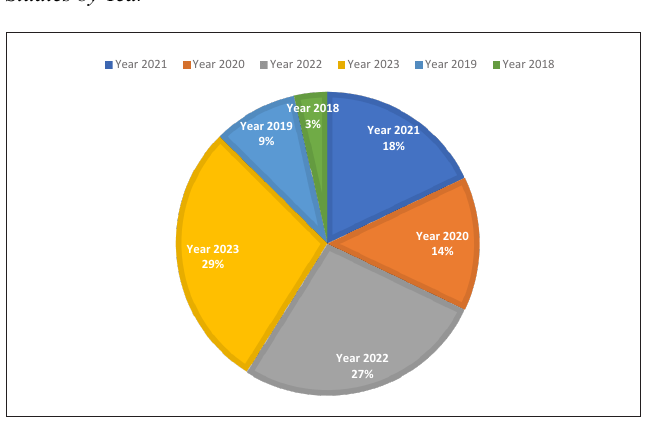
Theoretical underpinnings Methods used The relationshipJournal of Business between Management personal and Accounting, resources and Work Vol. 14,Engagement Number 2 (July) 2024, (WE). 237-275 ure 1 Figure 1 y Selection Flowchart Study Selection Flowchart me 1: Study Characteristics Theme 1: Study Characteristics review of the The55review research of articles the 55 shows researchthat studiesshows articles were that conducted studies across were a diverse rang inents and countries: conducted across a diverse range of continents and countries: Asia South and N Asia (25 studies), Europe (18 studies), Africa (7 studies), erica (3 studies), (25 Australia (1 study), studies), Europe (18and Multiple studies), countries Africa (1 study). (7 studies), SouthChina and India had the hig and North ber of contributions, Americaeach accounting (3 studies), for five Australia (1 studies. study), The distribution and Multiple of studies countries (1 over the years study). China and India had the highest number of contributions, each accounting for five studies. The distribution 6 of studies over the years is as follows: 2018 (2 studies), 2019 (3 studies), 2020 (4 studies), 2021 (12 studies), 2022 (18 studies), and 2023 (16 studies). The studies covered various sectors, with 11 of them focusing on multiple sectors. follows: 2018 (2 studies), 2019 (3 studies), 2020 (4 studies), 2021 (12 studies), 2022 (18 studies), and 2023 Other noteworthy sectors were public, education, and healthcare. (16 studies). The studies covered various sectors, with 11 of them focusing on multiple sectors. Other noteworthy sectors were public, education, and healthcare.
The figure itself is in the PDF version.
The figure itself is in the PDF version.
| Authors (Citation) | Country of the Study/Sector | Variable as Personal Resource and Its Role | Unit of Analysis | Hypothesis between PR and WE | Theory Used | Method and Analysis | Sample/ Study Design | |
|---|---|---|---|---|---|---|---|---|
| 1 | Inam et al. (2021) | Pakistan/Telecom | Self-Leadership- Independent | Individual | Accepted | 1. Social Cognitive Theory 2. Intrinsic Motivation Theory | Quantitative- SEM | 318 middle-level manager- 2 wave data collection/ Non-experimental |
| 2 | Chan et al. (2020) | Hong Kong/Education | Self-Efficacy- Independent | Individual | Accepted | 1. Social Cognitive Theory 2. Self-Determination Theory | Quantitative -PLS- SEM | 292 Teaching assistant/ Cross-sectional |
| 3 | Pakistan/Manufacturing | Self-Efficacy- Independent | Individual | Accepted | 1. Social Cognitive Theory | Quantitative- SPSS PROCESS MACRO model | 373 employees working in different manufacturing organizations - 2 wave data collection/ Non-experimental | |
| 4 | Saleem et al. (2022) | Malaysia/Construction | PsyCap-Independent | Individual | Accepted | 1. Social Cognitive Theory | Quantitative- SEM | 345 construction workers/ Cross-sectional |
| 5 | Zhu et al. (2022) | China | Self-Efficacy-Independent | Individual | Accepted | 1. Social Cognitive Theory 2. Cognitive Appraisal Theory | Quantitative- SEM LISREL | Cross-sectional - Quasi experimental |
| Italy/ | 1219 employees/ | |||||||
| 6 | Giancaspro et al. (2022) | Mix Sectors (private and public) | PsyCap- Independent | Individual | Accepted | 1. JD-R Theory 2. COR Theory 3. Social Cognitive Theory | Quantitative- SEM | Cross-sectional |
| Japan/ | Study 1- 459 nurses Study 2- 248 nurses 3 wave data collection | |||||||
| 7 | Healthcare | Strength Use, and Mindfulness- Independent | Individual | Accepted | 1. Self-Determination Theory | Quantitative- SEM | Non-experimental | |
| India/ | 324 employees in automobile sector/ | |||||||
| 8 | Automotive | Self-Leadership- Independent | Individual | Accepted | 1. Self-Determination Theory 2. Broaden and Build Theory | Quantitative- SPSS PROCESS MACRO model | Cross-sectional | |
| 9 | Nehra (2023) | India/ IT | Psychological Detachment- Independent Spirituality, Intrinsic Motivation - Mediating | Individual | Accepted | 1. Self-Determination Theory 2. Broaden and Build Theory | Quantitative- SEM | 408 employees - 3 wave data collection. Non-experimental |
| France/ | 120 employees - 3 wave data collection/ | |||||||
| 10 | Roussillon Soyer et al. (2022) | Beverage | Autonomous Motivation- Independent | Individual | Accepted | 1. Self-Determination Theory | Quantitative- SPSS PROCESS MACRO model | Longitudinal study design |
| Netherlands/ | 195 health care professionals - 3 wave/ | |||||||
| 11 | van Dorssen-Boog et al. (2021) | Healthcare | Self-Leadership- Independent | Individual | Accepted | 1. Self-Determination Theory 2. Self-Leadership Theory | Quantitative- Logistic Regression | Longitudinal study design |
| Japan/ | 288 employees/ | |||||||
| 12 | Ghosh et al. (2020) | Multiple Sectors | Intrinsic Motivation | Individual | Accepted | 1. Self-Determination Theory 2. Unconscious thought theory 3. JD-R Theory | Quantitative- first stage moderated mediation model | Cross-sectional |
| Poland/ | 495 Polish office employees/ | |||||||
| 13 | Rozkwitalska et al. (2022) | Manufacturing and Service Industry | PsyCap - Independent | Individual | Accepted | 1. JD-R Theory 2. COR Theory | Quantitative- SEM | Cross-sectional |
| Nigeria/ | 528 Public sector employees/ | |||||||
| 14 | George et al. (2022) | Public | Emotional Intelligence- PsyCap - Independent | Individual | Accepted | 1. COR Theory 2. The cognitive–motivational– reactional theory | Quantitative - a serial mediation model | Cross-sectional |
| Romania/ | 193 social workers/ | |||||||
| 15 | Lupsa et al. (2020) | Public and Private | PsyCap - Independent | Individual | Accepted | 1. JD-R Theory 2. COR Theory | Quantitative- SEM | Cross-sectional |
| Italy/ | 420 white-collar employees/ | |||||||
| 16 | Alessandri et al. (2018) | Multiple Sectors | PsyCap - Independent | Individual | Accepted | 1. COR Theory | Quantitative- SEM | Cross-sectional |
| Ghana/ | 274 full‒time frontline employees - 2 wave data collection/ | |||||||
| 17 | Ampofo (2021) | Hotel | Psychological Contract - Independent | Individual | Accepted | 1. COR Theory | Quantitative- SEM | Non-experimental |
| United Kingdom/ | 348 entrepreneurs- 1002 employees- 4-wave data collection/ | |||||||
| 18 | Multiple Sectors | PsyCap - Mediating | Individual | Accepted | 1. JD-R Theory 2. Work Recovery Approach | Quantitative- SEM | Non-experimental | |
| Spain and Latin American Countries/ | 252 employees/ | |||||||
| 19 | Service Sector | PsyCap - Mediating | Individual | Accepted | 1. JD-R Theory 2. COR Theory | Quantitative- SEM | Cross-sectional | |
| India/ | 530 salespeople/ | |||||||
| 20 | Gupta et al. (2022) | B2B Sales | PsyCap - Independent | Individual | Accepted | 1. Social Cognitive Theory 2. JD-R Theory | Quantitative- SEM | Cross-sectional |
| Greece/ | 1011 employees/ | |||||||
| 21 | Katou et al. (2022) | Multiple Sectors | Personal Resource- Independent | Individual | Accepted | 1. JD-R Theory | Quantitative- Multilevel SEM | Cross-sectional |
| Germany/ | 1145 manufacturing employees/ | |||||||
| 22 | Döbler et al. (2022) | Manufacturing | Personal Resource- Moderating | Individual | Accepted | 1. JD-R Theory | Quantitative- SEM | Cross-sectional |
| Türkiye/ | 416 employees/ | |||||||
| 23 | Koroglu & Ozmen (2022) | Multiple Sectors | Psychological Well-Being- Independent | Individual | Accepted | 1. JD-R Theory | Quantitative- SEM | Cross-sectional |
| China/ | 276 employees/ | |||||||
| 24 | Su et al. (2022) | Social Services Sector | Psychological Ownership - Mediating | Individual | Accepted | 1. JD-R Theory | Quantitative- SEM | Cross-sectional |
| Netherlands/ | 9,465 employees/ | |||||||
| 25 | Borst et al. (2019) | Public | Personal Resource- Independent | Individual | Accepted | 1. JD-R Theory | Quantitative- Mplus SEM | Cross-sectional |
| Indonesia/ | Study 1 - 185 employees/survey Study 2 - 17 managers/semi-structured interview | |||||||
| 26 | Nandini et al. (2022) | Digital Start-up | Self-Efficacy, and growth mindset - Independent | Individual | Accepted | 1. JD-R Theory | Mixed Method- Semi Structured Interview, content analysis and SEM | Cross-Sectional |
| India/ | 630 Indian school teachers/ | |||||||
| 27 | Pathardikar et al. (2023) | Education | Self-Esteem - Independent | Individual | Accepted | 1. JD-R Theory 2. Social cognitive career theory | Quantitative- SEM | Cross-Sectional |
| Pakistan/ | 202 top managers/ | |||||||
| 28 | Mubashar & Harzer (2023) | Banking | Signature Strength Use - Independent | Individual | Accepted | 1. JD-R Theory | Quantitative- SEM | Cross-Sectional |
| Ghana/ | 482 bank employees/ | |||||||
| 29 | Amponsah-Tawiah et al. (2023) | Banking | Emotional Intelligence - Independent | Individual | Accepted | 1. Appraisal Theory | Quantitative- SEM | Cross-Sectional |
| Jordan/ | 338 telecom employees/ | |||||||
| 30 | Abuaigah & Koburtay, (2023) | Telecom | Religiosity - Independent | Individual | Accepted | 1. JD-R Theory | Quantitative -PLS- SEM | Cross-Sectional |
| Tanzania/ | 202 public schools’ employees- 3-wave data collection/ | |||||||
| 31 | Jiang et al. (2023) | Private and Public Sector | Career Adaptability - Mediating Variable | Individual | Accepted | 1. JD-R Theory | Quantitative- CFA | Non-experimental |
| Saudi Arabia/ | 306 employees in Government organisations/ | |||||||
| 32 | Alamri (2023) | Public | Public Service motivation - Moderating | Individual | Accepted | 1. Self-regulatory theory 2. Public Service Motivation Theory | Quantitative- SPSS PROCESS MACRO model | Cross-Sectional |
| India/ | 284 HR managers/ | |||||||
| 33 | Kataria et al. (2023) | IT | PsyCap- Moderating | Individual | Accepted | 1. Social Exchange Theory | Quantitative- SEM | Cross-Sectional |
| Nigeria/ | 233 nurses/ | |||||||
| 34 | Balogun (2023) | Healtcare and Public | Self-Efficacy, and resilience - Moderating | Individual | Accepted | 1. COR Theory | Quantitative- Moderated Regression | Cross-Sectional |
| U.S./ | 850 employees- 3-wave/ | |||||||
| 35 | Etzel et al. (2023) | IT | compassionate goal orientation - mediating | Individual | not accepted | 1. Egosystem-Ecosystem theory of social motivation | Quantitative-random intercepts cross-lagged panel model | Longitudinal study design |
| Ireland / | Study 1- 279 employees- 3-wave data collection Study 2- 46 supervisors/ | |||||||
| 36 | Public | optimism - Moderating | Individual | Accepted | 1. COR Theory | Quantitative- Hierarchical linear regression | Longitudinal and Cross sectional | |
| Jordan/ | 367 telecom employees/ | |||||||
| 37 | Abualigah et al. (2023) | Multiple Sectors | Religiosity - Moderating | Individual | Accepted | 1. JD-R Theory | Quantitative -PLS- SEM | Cross-sectional |
| Palestine/ | 423 employees/ | |||||||
| 38 | Abukhalifa et al. (2023) | Non-Profit Sector | PsyCap - Moderating | Individual | Accepted | 1. JD-R Theory 2. Broaden and Buiild theory | Quantitative- SEM | Cross-sectional |
| Nigeria/ | 139 lecturers/ | |||||||
| 39 | Edokpolor et al. (2022) | Public Education Sector | Self-Efficacy- Independent | Individual | Accepted | 1. JD-R Theory | Quantitative- Simple linear regression | Cross-sectional |
| Romania/ | 87 employees- 5-daysdata collection/ | |||||||
| 40 | Multinational Company | Stength Use - Moderating | Individual | Accepted | 1. JD-R Theory 2. COR Theory | Quantitative -Hierarchical Linear Modeling | Daily diary studies | |
| Netherlands/ | 144 employees/ | |||||||
| 41 | van Gelder et al. (2022) | Multiple Sectors | 1. Work-life segmentation preference, and 2. digital leadership- Moderating | Individual | 1. Accepted 2. Not accepted | 1. JD-R Theory | Quantitative- CFA | Cross-sectional |
| Poland/ | 450 knowledge workers/ | |||||||
| 42 | Wojtczuk-Turek (2022) | Multiple Sectors | Personal Values- Moderating | Individual | Accepted | 1. JD-R Theory | Quantitative- CFA | Cross-sectional |
| Australia/ | 401 nurses / | |||||||
| 43 | Grover et al. (2018) | Healthcare | PsyCap - Independent Psychological Well-Being - Mediating | Individual | Accepted | 1. JD-R Theory | Quantitative- SEM | Cross-sectional |
| China/ | 97 employees- 2-days study | |||||||
| 44 | Service Sector | Personal resources at home and at work - Independent and mediating | Individual | Accepted | 1. COR Theory | Quantitative -Hierarchical Linear Modeling | Daily diary studies | |
| Russia/ | 141 bank employees- 3-wave data collection | |||||||
| 45 | Karatepe et al. (2019) | Banking | Self-Efficacy- Independent | Individual | Accepted | 1. JD-R Theory 2. COR Theory 3. Social Information Processes | Quantitative- SEM | Non-experimental |
| Brazil/ | 451 teachers/ | |||||||
| 46 | da Silva et al. (2021) | Education | Self-Efficacy- Independent | Individual | Accepted | 1. JD-R Theory | Quantitative- SEM | Cross-sectional |
| South Africa/ | 353 teachers/ | |||||||
| 47 | Education | PsyCap, and emotional intelligence - Independent | Individual | Accepted | 1. JD-R Theory | Quantitative- SEM | Cross-sectional | |
| Vietnam / | 602 employees / | |||||||
| 48 | Truong et al. (2021) | SME | Personal Resources - Independent | Individual | Accepted | 1. JD-R Theory 2. Social exchange theory | Quantitative -PLS- SEM | Cross-sectional |
| Netherlands/ | 1,048 employees- 2-wave data collection/ | |||||||
| 49 | Public Service Agency | Optimism, efficacy, resiliency, and flexibility - Mediating | Team and Multilevel | Accepted | 1. Self-determination theory | Quantitative- SEM | Longitudinal study design | |
| Finland/ | 396 academic engineers and architects/ | |||||||
| 50 | Multiple Sectors | PsyCap - Independent | Individual | Accepted | 1. COR Theory | Quantitative- SEM | Cross-sectional | |
| Indonesia/ | 782 employees / | |||||||
| 51 | Zulkarnain et al. (2023) | Palm Oil Sector | Personality Character | Individual | Accepted | 1. Work Engagement Theory | Quantitative- Hierarchical Regression | Cross-sectional |
| China/ | 358 employees/ | |||||||
| 52 | Yin (2023) | Multiple Sectors | Paradox Mindset | Individual | Accepted | 1. JD-R Theory | Quantitative- SEM | Cross-sectional |
| France/ | 472 employees/ | |||||||
| 53 | Hamel et al. (2023) | Multiple Sectors | Secure Workplace attachment | Individual | Accepted | 1. JD-R Theory | Quantitative- SPSS PROCESS MACRO model | Cross-sectional |
| Chile/ | 200 employees/ | |||||||
| 54 | Textile industry | psychological empowerment | Individual | Accepted | 1. JD-R Theory | Quantitative- SPSS PROCESS MACRO model | Cross-sectional | |
| Malaysia/ | 259 employees/ | |||||||
| 55 | Ojo et al. (2021) | Knowledge-based sector | Resilience - Independent | Individual | Accepted | 1. COR Theory | Quantitative -PLS- SEM | Cross-sectional |
1Social Cognitive Theory
          Chan et al.     Hong Kong/       Self-Efficacy-                                                      Quantitative -PLS-    292 Teaching assistant/
      2                                                     Individual Accepted     2. Self-Determination
          (2020)          Education        Independent                                                         SEM                   Cross-sectional
                                                                                    Theory
                                                                                                                                     373 employees working
                                                                                                               Quantitative- SPSS    in different manufacturing
          Naeem et al.    Pakistan/     Self-Efficacy-
      3                                                     Individual Accepted     1. Social Cognitive Theory PROCESS MACRO         organizations - 2 wave data
          (2020)          Manufacturing Independent
                                                                                                               model                 collection/
                                                                                                                                     Non-experimental
          Saleem et al.   Malaysia/        PsyCap-                                                                                   345 construction workers/
      4                                                     Individual Accepted     1. Social Cognitive Theory Quantitative- SEM
          (2022)          Construction     Independent                                                                               Cross-sectional
                                                                                    1. Social Cognitive Theory Quantitative- SEM      Cross-sectional - Quasi
          Zhu et al.      China            Self-Efficacy-                                                      LISREL                experimental
      5                                                     Individual Accepted     2. Cognitive Appraisal
          (2022)                           Independent
                                                                                    Theory
              Authors     Country of the     Personal      Unit of                                                                          Sample/
                                                                      between PR         Theory Used         Method and Analysis
             (Citation)   Study/Sector     Resource and    Analysis                                                                       Study Design
                                                                        and WE
                                             Its Role
                          Italy/
                                                                                   1. JD-R Theory
          Giancaspro et   Mix Sectors      PsyCap-                                                                                 1219 employees/
      6                                                    Individual Accepted     2. COR Theory              Quantitative- SEM
          al. (2022)      (private and     Independent                                                                             Cross-sectional
                                                                                   3. Social Cognitive Theory
                          public)
                                           Strength                                                                                Study 1- 459 nurses
                        Japan/             Use, and                                1. Self-Determination                           Study 2- 248 nurses
      7   Matsuo (2022)                                    Individual Accepted                               Quantitative- SEM
                        Healthcare         Mindfulness-                            Theory                                          3 wave data collection
                                           Independent                                                                             Non-experimental
1Self-Determination
                                           Self-                                                             Quantitative- SPSS    324 employees in
          Jnaneswar &     India/                                                   Theory
      8                                    Leadership-     Individual Accepted                               PROCESS MACRO         automobile sector/
          Ranjit (2023)   Automotive                                               2. Broaden and Build
                                           Independent                                                       model                 Cross-sectional
                                                                                   Theory
                                           Psychological
                                           Detachment-
                                           Independent                             1. Self-Determination
                                                                                                                                   408 employees - 3 wave
                          India/                                                   Theory
      9   Nehra (2023)                                     Individual Accepted                               Quantitative- SEM     data collection.
                          IT               Spirituality,                           2. Broaden and Build
                                                                                                                                   Non-experimental
                                           Intrinsic                               Theory
                                           Motivation -
                                           Mediating
         Roussillon                        Autonomous                                                        Quantitative- SPSS    120 employees - 3 wave
                          France/                                                  1. Self-Determination
      10 Soyer et al.                      Motivation-     Individual Accepted                               PROCESS MACRO         data collection/
                          Beverage                                                 Theory
         (2022)                            Independent                                                       model                 Longitudinal study design
              Authors      Country of the      Personal     Unit of                                                                              Sample/
                                                                       between PR         Theory Used           Method and Analysis
             (Citation)    Study/Sector      Resource and   Analysis                                                                           Study Design
                                                                         and WE
                                               Its Role
         van Dorssen-                       Self-                                   1. Self-Determination                              195 health care
                           Netherlands/                                                                         Quantitative-
      11 Boog et al.                        Leadership-     Individual Accepted     Theory                                             professionals - 3 wave/
                           Healthcare                                                                           Logistic Regression
         (2021)                             Independent                             2. Self-Leadership Theory                          Longitudinal study design
                                                                                    1. Self-Determination
                                                                                                                Quantitative- first
                           Japan/                                                   Theory
         Ghosh et al.                       Intrinsic                                                           stage moderated        288 employees/
      12                   Multiple                         Individual Accepted     2. Unconscious thought
         (2020)                             Motivation                                                          mediation              Cross-sectional
                           Sectors                                                  theory
                                                                                                                model
                                                                                    3. JD-R Theory
                           Poland/
                                                                                                                                       495 Polish office
         Rozkwitalska      Manufacturing PsyCap -                                   1. JD-R Theory
      13                                                    Individual Accepted                                 Quantitative- SEM      employees/
         et al. (2022)     and Service   Independent                                2. COR Theory
                                                                                                                                       Cross-sectional
                           Industry
                                         Emotional                                  1. COR Theory
                                                                                                                                        528 Public sector
           George et al.   Nigeria/      Intelligence-                              2. The cognitive–           Quantitative - a serial
      14                                                    Individual Accepted                                                         employees/
           (2022)          Public        PsyCap -                                   motivational–               mediation model
                                                                                                                                        Cross-sectional
                                         Independent                                reactional theory
                           Romania/
           Lupsa et al.                     PsyCap -                                1. JD-R Theory                                     193 social workers/
      15                   Public and                       Individual Accepted                                 Quantitative- SEM
           (2020)                           Independent                             2. COR Theory                                      Cross-sectional
                           Private
                           Italy/
           Alessandri et                    PsyCap -                                                                                   420 white-collar employees/
      16                   Multiple                         Individual Accepted     1. COR Theory               Quantitative- SEM
           al. (2018)                       Independent                                                                                Cross-sectional
                           Sectors
              Authors      Country of the     Personal      Unit of                                                                          Sample/
                                                                       between PR         Theory Used         Method and Analysis
             (Citation)    Study/Sector     Resource and    Analysis                                                                       Study Design
                                                                         and WE
                                              Its Role
                                                                                                                                    274 full‒time frontline
                                            Psychological
         Ampofo            Ghana/                                                                                                   employees - 2 wave data
      17                                    Contract -      Individual Accepted     1. COR Theory             Quantitative- SEM
         (2021)            Hotel                                                                                                    collection/
                                            Independent
                                                                                                                                    Non-experimental
                           United                                                                                                   348 entrepreneurs- 1002
1JD-R Theory
         Obschonka et      Kingdom/         PsyCap -                                                                                employees- 4-wave data
      18                                                    Individual Accepted     2. Work Recovery          Quantitative- SEM
         al. (2023)        Multiple         Mediating                                                                               collection/
                                                                                    Approach
                           Sectors                                                                                                  Non-experimental
                        Spain and
         Peláez         Latin
                                       PsyCap -                                     1. JD-R Theory                                  252 employees/
      19 Zuberbühler et American                            Individual Accepted                               Quantitative- SEM
                                       Mediating                                    2. COR Theory                                   Cross-sectional
         al. (2021)     Countries/
                        Service Sector
           Gupta et al.    India/           PsyCap -                                1. Social Cognitive Theory                      530 salespeople/
      20                                                    Individual Accepted                                Quantitative- SEM
           (2022)          B2B Sales        Independent                             2. JD-R Theory                                  Cross-sectional
                           Greece/          Personal
           Katou et al.                                                                                       Quantitative-         1011 employees/
      21                   Multiple         Resource-       Individual Accepted     1. JD-R Theory
           (2022)                                                                                             Multilevel SEM        Cross-sectional
                           Sectors          Independent
                                         Personal                                                                                   1145 manufacturing
           Döbler et al.   Germany/
      22                                 Resource-          Individual Accepted     1. JD-R Theory            Quantitative- SEM     employees/
           (2022)          Manufacturing
                                         Moderating                                                                                 Cross-sectional
               Authors      Country of the      Personal      Unit of                                                                             Sample/
                                                                         between PR          Theory Used           Method and Analysis
              (Citation)    Study/Sector      Resource and    Analysis                                                                          Study Design
                                                                           and WE
                                                Its Role
                            Türkiye/         Psychological
           Koroglu &                                                                                                                     416 employees/
      23                    Multiple         Well-Being-      Individual Accepted     1. JD-R Theory               Quantitative- SEM
           Ozmen (2022)                                                                                                                  Cross-sectional
                            Sectors          Independent
                            China/
                                             Psychological
           Su et al.        Social                                                                                                       276 employees/
      24                                     Ownership -      Individual Accepted     1. JD-R Theory               Quantitative- SEM
           (2022)           Services                                                                                                     Cross-sectional
                                             Mediating
                            Sector
                                             Personal
           Borst et al.     Netherlands/                                                                           Quantitative- Mplus   9,465 employees/
      25                                     Resource-        Individual Accepted     1. JD-R Theory
           (2019)           Public                                                                                 SEM                   Cross-sectional
                                             Independent
                                                                                                                                         Study 1 - 185 employees/
                                             Self-Efficacy,                                                        Mixed Method- Semi survey
                            Indonesia/
           Nandini et al.                    and growth                                                            Structured Interview,
      26                    Digital Start-                    Individual Accepted     1. JD-R Theory
           (2022)                            mindset -                                                             content analysis and Study 2 - 17 managers/semi-
                            up
                                             Independent                                                           SEM                   structured interview
                                                                                                                                         Cross-Sectional
                                                                                      1. JD-R Theory
         Pathardikar et     India/           Self-Esteem -                                                                               630 Indian school teachers/
      27                                                      Individual Accepted                                  Quantitative- SEM
         al. (2023)         Education        Independent                              2. Social cognitive career                         Cross-Sectional
                                                                                      theory
                                             Signature
           Mubashar &       Pakistan/                                                                                                    202 top managers/
      28                                     Strength Use - Individual Accepted       1. JD-R Theory               Quantitative- SEM
           Harzer (2023)    Banking                                                                                                      Cross-Sectional
                                             Independent
               Authors      Country of the      Personal      Unit of                                                                            Sample/
                                                                         between PR          Theory Used          Method and Analysis
              (Citation)    Study/Sector      Resource and    Analysis                                                                         Study Design
                                                                           and WE
                                                 Its Role
         Amponsah-          Ghana/           Emotional        Individual Accepted     1. Appraisal Theory         Quantitative- SEM     482 bank employees/
      29 Tawiah et al.      Banking          Intelligence -                                                                             Cross-Sectional
         (2023)                              Independent
         Abuaigah &
                            Jordan/          Religiosity -                                                        Quantitative -PLS-    338 telecom employees/
      30 Koburtay,                                            Individual Accepted     1. JD-R Theory
                            Telecom          Independent                                                          SEM                   Cross-Sectional
         (2023)
                                             Career                                                                                     202 public schools’
                            Tanzania/
         Jiang et al.                        Adaptability                                                                               employees- 3-wave data
      31                    Private and                       Individual Accepted     1. JD-R Theory              Quantitative- CFA
         (2023)                              - Mediating                                                                                collection/
                            Public Sector
                                             Variable                                                                                   Non-experimental
1Self-regulatory theory
                                             Public Service                                                       Quantitative- SPSS    306 employees in
                            Saudi Arabia/
      32 Alamri (2023)                       motivation -   Individual Accepted                                   PROCESS MACRO         Government organisations/
                            Public                                                    2. Public Service
                                             Moderating                                                           model                 Cross-Sectional
                                                                                      Motivation Theory
           Kataria et al.   India/           PsyCap-                                                                                    284 HR managers/
      33                                                    Individual Accepted       1. Social Exchange Theory Quantitative- SEM
           (2023)           IT               Moderating                                                                                 Cross-Sectional
                            Nigeria/         Self-Efficacy,                                                       Quantitative-
           Balogun                                                                                                                      233 nurses/
      34                    Healtcare and    and resilience Individual Accepted       1. COR Theory               Moderated
           (2023)                                                                                                                       Cross-Sectional
                            Public           - Moderating                                                         Regression
                                             compassionate
                                                                                                                  Quantitative-random
           Etzel et al.     U.S./            goal                                     1. Egosystem-Ecosystem                            850 employees- 3-wave/
      35                                                    Individual not accepted                               intercepts cross-
           (2023)           IT               orientation -                            theory of social motivation                       Longitudinal study design
                                                                                                                  lagged panel model
                                             mediating
               Authors      Country of the     Personal       Unit of                                                                          Sample/
                                                                         between PR          Theory Used       Method and Analysis
              (Citation)    Study/Sector     Resource and     Analysis                                                                       Study Design
                                                                           and WE
                                               Its Role
                                                                                                                                      Study 1- 279 employees-
                                                                                                                                      3-wave data collection
                                                                                                               Quantitative-
           Brennan et al.   Ireland /        optimism -
      36                                                      Individual Accepted      1. COR Theory           Hierarchical linear
           (2023)           Public           Moderating                                                                               Study 2- 46 supervisors/
                                                                                                               regression
                                                                                                                                      Longitudinal and Cross
                                                                                                                                      sectional
                            Jordan/
           Abualigah et                      Religiosity -                                                     Quantitative -PLS-     367 telecom employees/
      37                    Multiple                          Individual Accepted      1. JD-R Theory
           al. (2023)                        Moderating                                                        SEM                    Cross-sectional
                            Sectors
                            Palestine/                                                 1. JD-R Theory
           Abukhalifa et                     PsyCap -                                                                                 423 employees/
      38                    Non-Profit                        Individual Accepted      2. Broaden and Buiild   Quantitative- SEM
           al. (2023)                        Moderating                                                                               Cross-sectional
                            Sector                                                     theory
                            Nigeria/
           Edokpolor et     Public           Self-Efficacy-                                                    Quantitative- Simple 139 lecturers/
      39                                                      Individual Accepted      1. JD-R Theory
           al. (2022)       Education        Independent                                                       linear regression    Cross-sectional
                            Sector
                            Romania/                                                                           Quantitative           87 employees- 5-daysdata
           Pap et al.                        Stength Use -                             1. JD-R Theory
      40                    Multinational                     Individual Accepted                              -Hierarchical Linear   collection/
           (2022)                            Moderating                                2. COR Theory
                            Company                                                                            Modeling               Daily diary studies
                                             1. Work-life
                                             segmentation
                            Netherlands/                                 1. Accepted
           van Gelder et                     preference,                                                                              144 employees/
      41                    Multiple                          Individual 2. Not        1. JD-R Theory          Quantitative- CFA
           al. (2022)                        and 2. digital                                                                           Cross-sectional
                            Sectors                                      accepted
                                             leadership-
Moderating
               Authors       Country of the     Personal       Unit of                                                                         Sample/
                                                                          between PR         Theory Used       Method and Analysis
              (Citation)     Study/Sector     Resource and     Analysis                                                                      Study Design
                                                                            and WE
                                                Its Role
                             Poland/          Personal
           Wojtczuk-                                                                                                                  450 knowledge workers/
      42                     Multiple         Values-          Individual Accepted     1. JD-R Theory          Quantitative- CFA
           Turek (2022)                                                                                                               Cross-sectional
                             Sectors          Moderating
                                              PsyCap -
                                              Independent
           Grover et al.     Australia/                                                                                               401 nurses /
      43                                      Psychological    Individual Accepted     1. JD-R Theory          Quantitative- SEM
           (2018)            Healthcare                                                                                               Cross-sectional
                                              Well-Being -
                                              Mediating
                                       Personal
                                       resources at
                                                                                                               Quantitative
         Chen &         China/         home and                                                                                       97 employees- 2-days study
      44                                                       Individual Accepted     1. COR Theory           -Hierarchical Linear
         Fellenz (2020) Service Sector at work -                                                                                      Daily diary studies
                                                                                                               Modeling
                                       Independent
                                       and mediating
                                                                                       1. JD-R Theory
                                                                                                                                      141 bank employees-
           Karatepe et al.   Russia/          Self-Efficacy-                           2. COR Theory
      45                                                       Individual Accepted                             Quantitative- SEM      3-wave data collection
           (2019)            Banking          Independent                              3. Social Information
                                                                                                                                      Non-experimental
                                                                                       Processes
           da Silva et al.   Brazil/          Self-Efficacy-                                                                          451 teachers/
      46                                                       Individual Accepted     1. JD-R Theory          Quantitative- SEM
           (2021)            Education        Independent                                                                             Cross-sectional
                                              PsyCap, and
         (Vermooten et       South Africa/    emotional                                                                               353 teachers/
      47                                                       Individual Accepted     1. JD-R Theory          Quantitative- SEM
         al., 2021)          Education        intelligence -                                                                          Cross-sectional
                                              Independent
               Authors     Country of the     Personal      Unit of                                                                          Sample/
                                                                     between PR          Theory Used          Method and Analysis
              (Citation)   Study/Sector    Resource and Analysis                                                                           Study Design
                                                                       and WE
                                              Its Role
                                          Personal
           Truong et al.   Vietnam /                                              1. JD-R Theory              Quantitative -PLS-    602 employees /
      48                                  Resources -     Individual Accepted
           (2021)          SME                                                    2. Social exchange theory   SEM                   Cross-sectional
                                          Independent
                                          Optimism,
         Mazzetti &        Netherlands/   efficacy,                                                                                 1,048 employees- 2-wave
                                                          Team and                1. Self-determination
      49 Schaufeli         Public Service resiliency, and            Accepted                                 Quantitative- SEM     data collection/
                                                          Multilevel              theory
         (2022)            Agency         flexibility -                                                                             Longitudinal study design
                                          Mediating
                           Finland/                                                                                                 396 academic engineers and
           Toth et al.                    PsyCap -
      50                   Multiple                       Individual Accepted     1. COR Theory               Quantitative- SEM     architects/
           (2023)                         Independent
                           Sectors                                                                                                  Cross-sectional
                           Indonesia/                                                                         Quantitative-
           Zulkarnain et                  Personality                             1. Work Engagement                                782 employees /
      51                   Palm Oil                       Individual Accepted                                 Hierarchical
           al. (2023)                     Character                               Theory                                            Cross-sectional
                           Sector                                                                             Regression
                           China/
                                          Paradox                                                                                   358 employees/
      52 Yin (2023)        Multiple                       Individual Accepted     1. JD-R Theory              Quantitative- SEM
                                          Mindset                                                                                   Cross-sectional
                           Sectors
                           France/        Secure                                                              Quantitative- SPSS
           Hamel et al.                                                                                                             472 employees/
      53                   Multiple       Workplace       Individual Accepted     1. JD-R Theory              PROCESS MACRO
           (2023)                                                                                                                   Cross-sectional
                           Sectors        attachment                                                          model
                           Chile/                                                                             Quantitative- SPSS
           Juyumaya                       psychological                                                                             200 employees/
      54                   Textile                        Individual Accepted     1. JD-R Theory              PROCESS MACRO
           (2022)                         empowerment                                                                               Cross-sectional
                           industry                                                                           model
                           Malaysia/
           Ojo et al.                       Resilience -                                                      Quantitative -PLS-    259 employees/
      55                   Knowledge-                      Individual Accepted    1. COR Theory
           (2021)                           Independent                                                       SEM                   Cross-sectional
                           based sector
Theme 2: Theoretical Underpinnings
Among the 55 studies analysed, all studies employed theoretical frameworks to explore work engagement and personal resources. The most frequent was the JD-R (Job Demands-Resources) theory, which appeared in 31 studies. This theory posits that individuals high in personal resources are more successful in leveraging job resources, effectively dealing with job demands, and thus remaining more engaged in their work (Xanthopoulou et al., 2007). Following closely, the Conservation of Resources (COR) Theory was used in 13 studies. This theory, focusing on the resource caravan principle (‘resources travel in packs’), suggests that individuals with rich personal resources tend to use these resources to acquire others, thereby helping them stay engaged in their work (Hobfoll et al., 2018). Six studies combined JD-R and COR theories to explain their models. Studies that have used both COR and JD-R theories have explained the relationship between personal resources and work engagement, by using the characteristic in the theories that personal resources, when coupled with job resources, contribute synergistically to improved work engagement.
Additionally, several studies proposed diverse models: Ryan & Deci’s (2000) Self-Determination Theory was mentioned eight times, Bandura’s (1999) Social Cognitive Theory seven times, and Fredrickson’s (2001) Broaden-and-Build Theory three times. Other theories, each cited once, include Cognitive Appraisal Theory (Zhu et al., 2022), Unconscious Thought Theory (Ghosh et al., 2020), Social Exchange Theory (Kataria et al., 2023), Intrinsic Motivation Theory (Inam et al., 2021), Cognitive–Motivational–Reactional Theory (George et al., 2022), Appraisal Theory (Amponsah-Tawiah et al., 2023), and Public Service Motivation Theory (Alamri, 2023). Collectively, the variety of theories used could indicate the complexity of the subject matter, or it might suggest evolving perspectives in the field of work engagement and personal resources.
Theme 3: Methods Used
Almost all the articles reviewed used quantitative methods, except for one study that used a mixed method (Nandini et al., 2022). There were no qualitative studies. Structural Equation Modeling (SEM) was used in 27 of the studies, with other quantitative methods including Partial
Least Squares (PLS-SEM) and Hierarchical Linear Modeling. These findings highlight the prevalence of advanced statistical techniques in this research area.
The studies’ sample sizes varied significantly, ranging from 87 in a daily diary study (Pap et al., 2022) to 9,465 participants in the largest study (Borst et al., 2019) The mean sample size was approximately 551 (SD = 1,221.20). To determine the sample size, the researcher considered 57 studies as two of the articles contained two separate studies each (Brennan et al., 2023; Matsuo, 2022).
Of the 54 quantitative studies, 46 were non-experimental and cross- sectional (eight of which collected data in two or more waves), four used a longitudinal study design, including two daily diary studies, four conducted quasi-experimental designs involving pre-post tests, and one was a non-experimental study with data collected at two or more time points. The unit of analysis was predominantly at the individual level, except for one study that assessed both multilevel and team levels (Mazzetti & Schaufeli, 2022).
Theme 4: Relationship Between Personal Resources and Work Engagement
In the studies reviewed, 31 constructs have been identified as personal resources positively related to work engagement. The table below lists these constructs according to their roles as independent, mediating, or moderating variables. The frequency of use varies; some constructs were used only once, others multiple times, and a few were referenced more than five times. Predominantly, these constructs have been examined as independent variables, though their mediating and moderating effects have also been subjected to empirical investigation. This review highlights PsyCap as the most frequently cited personal resource, referenced 14 times, making it the primary construct of interest. Self-Efficacy, a component of PsyCap, has been independently identified 9 times in the reviewed papers. The construct of ‘personal resource’ has been used 4 times. Resilience and Self-Leadership have each been acknowledged 3 times, indicating their perceived importance. Other constructs were mentioned only once or twice. Overall, the data suggests that PsyCap, including its constituent dimensions such as Self-Efficacy, is considered a vital personal resource, mainly due to its positive association with work engagement.
| Personal Resource | Independent | Mediating | Moderating | Total |
|---|---|---|---|---|
| Self-Leadership | 3 | 0 | 0 | 3 |
| Self-Efficacy | 7 | 1 | 1 | 9 |
| PsyCap | 10 | 2 | 2 | 14 |
| Strength Use | 1 | 0 | 1 | 2 |
| Psychological Detachment | 1 | 0 | 0 | 1 |
| Spirituality | 0 | 1 | 0 | 1 |
| Autonomous Motivation | 1 | 0 | 0 | 1 |
| Intrinsic Motivation | 1 | 1 | 0 | 2 |
| Emotional Intelligence | 2 | 0 | 0 | 2 |
| Psychological Contract | 1 | 0 | 0 | 1 |
| Personal Resource | 3 | 1 | 0 | 4 |
| Psychological Well-Being | 1 | 1 | 0 | 2 |
| Psychological Ownership | 0 | 1 | 0 | 1 |
| Growth mindset | 1 | 0 | 0 | 1 |
| Flexibility | 0 | 1 | 0 | 1 |
| Signature Strength Use | 1 | 0 | 0 | 1 |
| Religiosity | 1 | 0 | 1 | 2 |
| Career Adaptability | 0 | 1 | 0 | 1 |
| Public Service motivation | 0 | 0 | 1 | 1 |
| Mindfulness | 1 | 0 | 1 | 2 |
| Resilience | 1 | 1 | 1 | 3 |
| Compassionate goal orientation | 0 | 1 | 0 | 1 |
| Optimism | 0 | 1 | 1 | 2 |
| Work-life segmentation preference | 0 | 0 | 1 | 1 |
| Personal Values | 0 | 0 | 1 | 1 |
| Digital leadership | 0 | 0 | 1 | 1 |
| Personal resources at home and at work | 1 | 1 | 0 | 2 |
| Personality Character | 1 | 0 | 0 | 1 |
| Paradox Mindset | 1 | 0 | 0 | 1 |
| Secure Workplace attachment | 1 | 0 | 0 | 1 |
| Psychological Empowerment | 1 | 0 | 0 | 1 |
| Total | 41 | 14 | 12 | 67 |
As expected, all hypotheses were accepted except for the moderating role of digital leadership in the relationship between job characteristics and work engagement (van Gelder et al., 2022) and the mediating role of compassionate goal orientation in the relationship between job resources and work engagement (Etzel et al., 2023). The results indicate that personal resources are positively related to work engagement. Notably, personal resources are mostly identified as independent variables in relation to work engagement (N=41; Alessandri et al., 2018; Ampofo, 2021; Borst et al., 2019; Katou et al., 2022; Koroglu & Ozmen, 2022; Lupsa et al., 2020; Mubashar & Harzer, 2023; Vermooten et al., 2021), with fewer studies identifying them as mediating variables (N=14; Mazzetti & Schaufeli, 2022; Obschonka et al., 2023; Peláez Zuberbühler et al., 2021). Additionally, some research has recognised personal resources as moderating the relationship between job resources and work engagement (N=12; Abukhalifa et al., 2023; Pap et al., 2022; Wojtczuk-Turek, 2022). These findings mainly focus on the individual level, except for one study that explores both team and multilevel dimensions, including insights from both employees and managers (Mazzetti & Schaufeli, 2022). Both individual-level and multilevel studies have consistently found a positive relationship between personal resources and work engagement.
Discussion on the Findings
Theme 1: Study Characteristics
The interaction between personal resources, work engagement and cultural/sectoral context represents an interesting research landscape. While this analysis offers valuable insights from different countries and sectors, there are notable limitations. Firstly, studies from North, Central and South America and Africa are underrepresented, and a deeper understanding requires sector and culture-specific research. Investigating how cultural backgrounds influence responses to resources, alongside demographic factors such as gender and education, could enrich our understanding. However, it is not evident that there is a strong relationship between sector, country and cultural details that influence the selection and effectiveness of personal resources. For example, while sectors may prioritise resources relevant to their requirements (e.g. negotiation skills for lawyers), few sectoral or cultural nuances were identified. Studies in a Dutch public service agency emphasise resources such as communication skills and emotional intelligence for effective teamwork (Mazzetti & Schaufeli,
2022), while studies in Japan focus on mindfulness alongside self- efficacy, reflecting the cultural emphasis on focus and well-being (Matsuo, 2022). Further research that takes into account cultural, sectoral and demographic context will provide a more comprehensive understanding of the interaction between personal resources and work environments worldwide.
Theme 2: Theoretical Underpinnings
The review shows that the JD-R and COR theories are used in the majority of studies to explain these relationships between personal resources and work engagement. In these theories, personal resources are important factors in benefiting from job resources and effectively coping with job demands in order to be engaged at work. Existing studies on personal resources have predominantly focused on self-efficacy, resilience and optimism, with more recent research emphasising additional constructs such as growth mindset, strength use, emotional intelligence, religiosity, and mindfulness.
In the literature, self-efficacy, resilience, and optimism have been successfully theorised as personal resources, as shown by the JD-R theory (Mazzetti & Schaufeli, 2022; Schaufeli & Taris, 2014). However, while several other concepts have already demonstrated personal resource capabilities in recent studies, there is a lack of theoretical integration of these concepts into models of work engagement. The present study emphasises this gap. If explored in a broader context in the future, other concepts could also be theorised into these models for their personal resource capabilities, similar to how self-efficacy, resilience and optimism have been theorised. By identifying a broad range of personal resources beyond those commonly recognised, this review extends the theoretical understanding of what constitutes personal resources in the workplace.
Theme 3: Methods Used
In this review, with the exception of one study, it is clear that the studies are mostly quantitative, and the data are collected cross-sectionally. The use of cross-sectional studies limits the possibility of establishing causality and generalisability. This necessitates a more diverse methodological approach, including longitudinal studies, qualitative studies, and daily diary methods, to broaden our understanding of these workplace resources. Furthermore, the dominance of quantitative studies points to a gap. Qualitative research is needed to explore why people in countries with very low engagement levels may not be fully engaged in today’s business world. This can help to understand how change in the business world is experienced in terms of employee wellbeing.
Theme 4: Relationship Between Personal Resources and Work Engagement
The results of this study indicate that personal resources have a significant positive influence on work engagement. This systematic review shows that personal resources are primarily seen as independent variables, but their mediating and moderating roles are also recognised. Furthermore, today’s technology-driven business environment and rapidly growing AI technologies may impact the relationship between personal resources and work engagement which is an under-researched area.
As personal resources play an independent and mediating role, some moderating factors can also be explored, such as some social, cultural, and religious factors. These further studies can broaden the understanding of how these factors play a role in this equation of resources and engagement.
CONCLUSION, PRACTICAL IMPLICATIONS, AND LIMITATIONS
This research highlights the multifaceted nature of personal resources in influencing work engagement. It identifies a range of personal resources, with PsyCap being the most prominent. This review implies that recognising and promoting personal resources among employees to increase work engagement is important for productivity and higher performance. Organisations can improve employee engagement by creating a supportive environment that encourages these personal resources. This approach can include offering training and development programmes, creating a positive work culture, and ensuring a balance between job demands and resources. By focusing on personal resources, organisations can potentially increase job satisfaction, reduce turnover intentions, and improve overall performance.
This study makes an important contribution to research by expanding the scope of personal resources considered for work engagement and proposing a more complex interaction model between these resources and engagement. As study characteristics, it is recommended to investigate the role of demographic factors such as gender, age, and education. Theoretically, this study extends the theoretical understanding of what constitutes personal resources in the workplace by identifying a wide range of personal resources beyond those commonly recognised. Methodologically, future research should explore longitudinal and qualitative methods, examine the impact of digitalisation, technology and AI, and consider cross-cultural differences. The studies reviewed rely largely on quantitative research, particularly cross-sectional studies, which limits the ability to establish causal relationships between personal resources and work engagement. Based on the relationship between personal resources and work engagement, this review shows that these resources act not only as independent factors, but also as mediators and moderators, which broadens our understanding of their role in the workplace.
The paper’s scope is limited to peer-reviewed academic journals published in English within a specific timeframe, which may overlook relevant research published in other languages or outside academic channels. This could potentially limit the diversity and comprehensiveness of the findings.
ACKNOWLEDGEMENT
This research received no specific grant from any funding agency in the public, commercial, or not-for-profit sectors. This article is produced from Osman Kelesoglu’s PhD research.
References
- Abualigah, A., Darwish, T. K., Davies, J., Haq, M., & Ahmad, S. Z. (2023). Supervisor support, religiosity, work engagement, and affective commitment: Evidence from a Middle Eastern emerging market. Journal of Asia Business Studies. https://doi.org/10.1108/JABS-11-2022-0394
- Abualigah, A., & Koburtay, T. (2023). Religiosity and turnover intention: The mediating role of work engagement. Journal of Management, Spirituality & Religion, 20(3), 291–307. https://doi.org/10.51327/AGBC9783
- Abukhalifa, A. M. S., Kamil, N. L. M., & Yong, C. C. (2023). Work engagement and turnover intention in the Palestinian nonprofit sector: Do personal resources matter? Journal of Social Service Research, 49(2), 1–18. https://doi.org/10.1080/01488376.2023.2217222
- Alamri, M. (2023). Transformational leadership and work engagement in public organizations: Promotion focus and public service motivation, how and when the effect occurs. Leadership & Organization Development Journal, 44(1), 137–155. https://doi.org/10.1108/LODJ-12-2021-0544
- Alessandri, G., Consiglio, C., Luthans, F., & Borgogni, L. (2018). Testing a dynamic model of the impact of psychological capital on work engagement and job performance. Career Development International, 23(1), 33–47. https://doi.org/10.1108/CDI-11-2016-0210
- Ampofo, E. T. (2021). Do job satisfaction and work engagement mediate the effects of psychological contract breach and abusive supervision on hotel employees’ life satisfaction? Journal of Hospitality Marketing and Management, 30(3), 282–304. https://doi.org/10.1080/19368623.2020.1817222
- Amponsah-Tawiah, K., Baafi, N. K. A., & Mensah, J. (2023). Co-worker incivility and employee engagement among Ghanaian bank workers: Does emotional intelligence matter? African Journal of Economic and Management Studies, 14(3), 490–503. https://doi.org/10.1108/AJEMS-03-2022-0096
- Bakker, A. B. (2011). An evidence-based model of work engagement. Current Directions in Psychological Science, 20(4), 265–269. https://doi.org/10.1177/0963721411414534
- Bakker, A. B. (2017). Strategic and proactive approaches to work engagement. Organizational Dynamics, 46(2), 67–75. https://doi.org/10.1016/j.orgdyn.2017.04.002
- Bakker, A. B., Boyd, C. M., Dollard, M., Gillespie, N., Winefield, A. H., & Stough, C. (2010). The role of personality in the job demands-resources model: A study of Australian academic staff. Career Development International, 15(7), 622–636. https://doi.org/10.1108/13620431011094050
- Bakker, A. B., & de Vries, J. D. (2021). Job Demands–Resources theory and self-regulation: New explanations and remedies for job burnout. Anxiety, Stress and Coping, 34(1), 1–21. https://doi.org/10.1080/10615806.2020.1797695
- Bakker, A. B., & Demerouti, E. (2007). The Job Demands-Resources model: State of the art. Journal of Managerial Psychology, 22(3), 309–328. https://doi.org/10.1108/02683940710733115
- Bakker, A. B., & Demerouti, E. (2008). Towards a model of work engagement. Career Development International, 13(3), 209–223. https://doi.org/10.1108/13620430810870476
- Bakker, A. B., & Demerouti, E. (2014). Job Demands-Resources Theory. In Wellbeing (pp. 1–28). John Wiley & Sons, Ltd. https://doi.org/10.1002/9781118539415.wbwell019
- Bakker, A. B., & Demerouti, E. (2017). Job demands-resources theory: Taking stock and looking forward. Journal of Occupational Health Psychology, 22(3), 273–285. https://doi.org/10.1037/ ocp0000056
- Bakker, A. B., Demerouti, E., & Sanz-vergel, A. (2023). Job Demands – Resources Theory: Ten Years Later. Annual Review of Organizational Psychology and Organizational Behavior, 10, 25–53. https://doi.org/10.1146/annurev-orgpsych-120920-053933
- Bakker, A. B., Demerouti, E., & Sanz-Vergel, A. I. (2014). Burnout and Work Engagement: The JDR Approach. Annual Review of Organizational Psychology and Organizational Behavior, 1, 389–411. https://doi.org/10.1146/annurev-orgpsych-031413-091235
- Bakker, A. B., & van Woerkom, M. (2017). Flow at Work: A Self-Determination Perspective. Occupational Health Science, 1(1–2), 47–65. https://doi.org/10.1007/s41542-017-0003-3
- Balogun, A. G. (2023). Moderating effects of personal resources on work engagement and work-family conflict. SA Journal of Industrial Psychology, 49. https://doi.org/10.4102/sajip. v49i0.2052
- Bandura, A. (1989). Human Agency in Social Cognitive Theory. American Psychologist, 44(9), 1175–1184. https://doi.org/10.1109/SCORED.2002.1033040
- Bandura, A. (1999). Social Cognitive Theory: An Agentic Perspective. Asian Journal of Social Psychology, 2(1), 1–26. http://search. ebscohost.com/login.aspx?direct=true&db=aph&%2338; AN=4369846&%2338;site=ehost-live
- Borst, R. T., Kruyen, P. M., & Lako, C. J. (2019). Exploring the Job Demands–Resources Model of Work Engagement in Government: Bringing in a Psychological Perspective. Review of Public Personnel Administration, 39(3), 372–397. https://doi.org/10.1177/0734371X17729870
- Brennan, A., Garavan, T., Egan, T., O’brien, G., & Ullah, I. (2023). A conservation of resources perspective on public sector employee work engagement. https://doi.org/10.34961/ researchrepository-ul.23904303.v1
- Brenninkmeijer, V., Demerouti, E., le Blanc, P. M., & van Emmerik, I. J. H. (2010). Regulatory focus at work: The moderating role of regulatory focus in the job demands-resources model. Career Development International, 15(7), 708–728. https://doi.org/10.1108/13620431011094096
- Chan, E. S. S., Ho, S. K., Ip, F. F. L., & Wong, M. W. Y. (2020). Self-Efficacy, Work Engagement, and Job Satisfaction Among Teaching Assistants in Hong Kong’s Inclusive Education. SAGE Open, 10(3). https://doi.org/10.1177/2158244020941008
- Chen, I. S., & Fellenz, M. R. (2020). Personal resources and personal demands for work engagement: Evidence from employees in the service industry. International Journal of Hospitality Management, 90. https://doi.org/10.1016/j.ijhm.2020.102600
- da Silva, D. I., Ferreira, M. C., & Valentini, F. (2021). Work Demands, Personal Resources and Work Outcomes: The Mediation of Engagement. Universitas Psychologica, 20. https://doi.org/10.11144/Javeriana.upsy20.wdpr
- Deci, E. L., & Ryan, R. M. (2002). Handbook of Self-determination Research (Softcover Edition). The University of Rochester Press.
- Demerouti, E., Nachreiner, F., Bakker, A. B., & Schaufeli, W. B. (2001). The job demands-resources model of burnout. Journal of Applied Psychology, 86(3), 499–512. https://doi.org/10.1037/0021-9010.86.3.499
- Denyer, D., & Tranfield, D. (2009). Producing a systematic review. In D. A. Buchanan & A. Bryman (Eds.), The Sage handbook of organizational research methods (671–689). Sage Publications.
- Döbler, A. S., Emmermacher, A., Richter-Killenberg, S., Nowak, J., & Wegge, J. (2022). New insights into self-initiated work design: The role of job crafting, self-undermining and five types of job satisfaction for employee’s health and work ability. German Journal of Human Resource Management, 36(2), 113–147. https://doi.org/10.1177/23970022211029023
- Edokpolor, J., Otache, I., & Osifo, K. (2022). Work Self-Efficacy and Engagement of Vocational Business Education Lecturers. Journal of Technical Education and Training, 14(3), 112–124. https://doi.org/10.30880/jtet.2022.14.03.011
- Etzel, L., McGonagle, A. K., Roos, L. G., & Mooney, J. T. (2023). All for one, one for all: Compassionate goal orientation, social support, and work engagement. International Journal of Applied Positive Psychology. https://doi.org/10.1007/s41042-023-00115-4
- Firzly, N., Chamandy, M., Pelletier, L., & Lagacé, M. (2022). An examination of mentors’ interpersonal behaviors and mentees’ motivation, turnover intentions, engagement, and well-being. Journal of Career Development, 49(6), 1317–1336. https://doi.org/10.1177/08948453211039286
- Fredrickson, B. L. (2001). The role of positive emotions in positive psychology: The broaden-and-build theory of positive emotions. American Psychologist, 56(3), 218–226. https://doi.org/10.1037//0003-066x.56.3.218
- Gallup. (2022). State of the Global Workplace 2022 Report: The Voice of the Worlds Employees. In Gallup. https://www.gallup.com/ workplace/349484/state-of-the-global-workplace-2022-report. aspx
- Gallup. (2023). State of the Global Workplace: Global Insights.
- George, O. J., Okon, S. E., & Akaighe, G. (2022). Emotional intelligence and work engagement: A serial mediation model. Journal of Organizational Effectiveness, 9(2), 193–211. https://doi.org/10.1108/JOEPP-02-2021-0025
- Ghosh, D., Sekiguchi, T., & Fujimoto, Y. (2020). Psychological detachment: A creativity perspective on the link between intrinsic motivation and employee engagement. Personnel Review, 49(9), 1789–1804. https://doi.org/10.1108/PR-12-2018-0480
- Giancaspro, M. L., Callea, A., & Manuti, A. (2022). “I Like It like That”: A Study on the Relationship between Psychological Capital, Work Engagement and Extra-Role Behavior. Sustainability (Switzerland), 14(4), 1–17. https://doi.org/10.3390/su14042022
- Grover, S. L., Teo, S. T. T., Pick, D., Roche, M., & Newton, C. J. (2018). Psychological capital as a personal resource in the JD-R model. Personnel Review, 47(4), 968–984. https://doi.org/10.1108/pr-08-2016-0213
- Gupta, B., Singh, R., Puri, S., & Rawat, P. S. (2022). Assessing the antecedents and outcomes of salesperson’s psychological capital. Journal of Business and Industrial Marketing, 37(12), 2544–2558. https://doi.org/10.1108/JBIM-08-2021-0374
- Halbesleben, J. R. B., Neveu, J. P., Paustian-Underdahl, S. C., & Westman, M. (2014). Getting to the “COR”: Understanding the role of resources in conservation of resources theory. Journal of Management, 40(5), 1334–1364. https://doi.org/10.1177/0149206314527130
- Hamel, J. F., Iodice, P., Radic, K., & Scrima, F. (2023). The reverse buffering effect of workplace attachment style on the relationship between workplace bullying and work engagement. Frontiers in Psychology, 14. https://doi.org/10.3389/fpsyg.2023.1112864
- Hobfoll, S. E. (1989). Conservation of Resources: A New Attempt at Conceptualizing Stress. American Psychologist, 44(3), 513–524. https://doi.org/10.1037/0003-066X.44.3.513
- Hobfoll, S. E., Halbesleben, J., Neveu, J. P., & Westman, M. (2018). Conservation of resources in the organizational context: The reality of resources and their consequences. Annual Review of Organizational Psychology and Organizational Behavior, 5, 103–128. https://doi.org/10.1146/annurev-orgpsych-032117-104640
- Hobfoll, S. E., Johnson, R. J., Ennis, N., & Jackson, A. P. (2003). Resource Loss, Resource Gain, and Emotional Outcomes Among Inner City Women. Journal of Personality and Social Psychology, 84(3), 632–643. https://doi.org/10.1037/0022-3514.84.3.632
- Inam, A., Ho, J. A., Sheikh, A. A., Shafqat, M., & Najam, U. (2021). How self leadership enhances normative commitment and work performance by engaging people at work? Current Psychology. https://doi.org/10.1007/s12144-021-01697-5
- Jiang, Z., Newman, A., Schwarz, G., & Le, H. (2023). Perceived Red Tape and Precursors of Turnover: the Roles of Work Engagement and Career Adaptability. Journal of Business and Psychology, 38(2), 437–455. https://doi.org/10.1007/s10869-022-09834-y
- Jnaneswar, K., & Ranjit, G. (2023). Unravelling the role of organizational commitment and work engagement in the relationship between self-leadership and employee creativity. Evidence-Based HRM, 11(2), 158–176. https://doi.org/10.1108/ EBHRM-08-2021-0164
- Judge, T. A., Bono, J. E., Locke, E. A., Tippie, H. B., & Judge, T. A. (2000). Personality and job satisfaction: The mediating role of job characteristics. Journal of Applied Psychology, 85(2), 237–249. https://doi.org/10.1037/0021-9010.85.2.
- Juyumaya, J. (2022). How psychological empowerment impacts task performance: The mediation role of work engagement and moderating role of age. Frontiers in Psychology, 13. https://doi.org/10.3389/fpsyg.2022.889936
- Kahn, W. A. (1990). Psychological conditions of personal engagement and disengagement at work. Academy of Management Journal, 33(4), 692–724. https://doi.org/10.2307/256287
- Karatepe, O. M., & Karadas, G. (2015). Do psychological capital and work engagement foster frontline employees’ satisfaction?: A study in the hotel industry. International Journal of Contemporary Hospitality Management, 27(6), 1254–1278. https://doi.org/10.1108/IJCHM-01-2014-0028
- Karatepe, O. M., Ozturk, A., & Kim, T. T. (2019). The effects of nonwork and personal resources on frontline bank employees’ work engagement and critical job outcomes. International Journal of Bank Marketing, 37(3), 858–879. https://doi.org/10.1108/IJBM-05-2018-0133
- Kataria, A., Rashmi, K., & Rastogi, M. (2023). Fostering change-oriented OCBS: An analysis of India’s IT talent. Journal of Asia Business Studies, 17(1), 57–78. https://doi.org/10.1108/ JABS-03-2021-0135
- Katou, A. A., Koupkas, M., & Triantafillidou, E. (2022). Job demands-resources model, transformational leadership and organizational performance: A multilevel study. International Journal of Productivity and Performance Management, 71(7), 2704–2722. https://doi.org/10.1108/IJPPM-06-2020-0342
- Keating, L. A., & Heslin, P. A. (2015). The potential role of mindsets in unleashing employee engagement. Human Resource Management Review, 25(4), 329–341. https://doi.org/10.1016/j. hrmr.2015.01.008
- Kooij, D. T. A. M., Nijssen, H., Bal, P. M., & van der Kruijssen, D. T. F. (2020). Crafting an interesting job: Stimulating an active role of older workers in enhancing their daily work engagement and job performance. Work, Aging and Retirement, 6(3), 165–174. https://doi.org/10.1093/workar/waaa001
- Koroglu, Ş., & Ozmen, O. (2022). The mediating effect of work engagement on innovative work behavior and the role of psychological well-being in the job demands–resources (JD-R) model. Asia-Pacific Journal of Business Administration, 14(1), 124–144. https://doi.org/10.1108/APJBA-09-2020-0326
- Lupsa, D., Baciu, L., & Virga, D. (2020). Psychological capital, organizational justice and health: The mediating role of work engagement. Personnel Review, 49(1), 87–103. https://doi.org/10.1108/PR-08-2018-0292
- Lyons, P., & Bandura, R. P. (2021). Manager-as-coach: Stimulating engagement via learning orientation. European Journal of Training and Development, 45(8–9), 691–705. https://doi.org/10.1108/EJTD-07-2020-0123
- Macey, W. H., & Schneider, B. (2008). The Meaning of Employee Engagement. Industrial and Organizational Psychology, 1(1), 3–30. https://doi.org/10.1111/j.1754-9434.2007.0002.x
- Matsuo, M. (2022). Linking the effects of mindfulness and strengths use on work engagement: Two three-wave longitudinal studies. Current Psychology, 41(7), 4942–4951. https://doi.org/10.1007/s12144-020-01000-y
- Mazzetti, G., Robledo, E., Vignoli, M., Topa, G., Guglielmi, D., & Schaufeli, W. B. (2021). Work Engagement: A meta-Analysis Using the Job Demands-Resources Model. Psychological Reports, December. https://doi.org/10.1177/00332941211051988
- Mazzetti, G., Robledo, E., Vignoli, M., Topa, G., Guglielmi, D., & Schaufeli, W. B. (2023). Work Engagement: A meta-Analysis Using the Job Demands-Resources Model. Psychological Reports, 126(3), 1069–1107. https://doi.org/10.1177/00332941211051988
- Mazzetti, G., & Schaufeli, W. B. (2022). The impact of engaging leadership on employee engagement and team effectiveness: A longitudinal, multi-level study on the mediating role of personal- and team resources. PLoS ONE, 17(6 June). https://doi.org/10.1371/journal.pone.0269433
- Mubashar, T., & Harzer, C. (2023). It takes two to tango: Linking signature strengths use and organizational support for strengths use with organizational outcomes. Journal of Occupational and Organizational Psychology, 96(4), 897–918. https://doi.org/10.1111/joop.12455
- Naeem, R. M., Weng, Q., Hameed, Z., & Rasheed, M. I. (2020). Ethical leadership and work engagement: A moderated mediation model. Ethics and Behavior, 30(1), 63–82. https://doi.org/10. 1080/10508422.2019.1604232
- Nandini, W., Gustomo, A., & Sushandoyo, D. (2022). The Mechanism of an Individual’s Internal Process of Work Engagement, Active Learning and Adaptive Performance. Economies, 10(7). https://doi.org/10.3390/economies10070165
- Nehra, N. S. (2023). Can employee engagement be attained through psychological detachment and job crafting: the mediating role of spirituality and intrinsic motivation. Journal of Organizational Effectiveness, 10(3), 368–393. https://doi.org/10.1108/JOEPP-05-2022-0129
- Obschonka, M., Pavez, I., Kautonen, T., Kibler, E., Salmela-Aro, K., & Wincent, J. (2023). Job burnout and work engagement in entrepreneurs: How the psychological utility of entrepreneurship drives healthy engagement. Journal of Business Venturing, 38(2). https://doi.org/10.1016/j.jbusvent.2022.106272
- Ojo, A. O., Fawehinmi, O., & Yusliza, M. Y. (2021). Examining the predictors of resilience and work engagement during the covid-19 pandemic. Sustainability (Switzerland), 13(5). https://doi.org/10.3390/su13052902
- Okun, O., & Arun, K. (2020). Relationships between Psychological Resilience and Work Engagement: Field Study in the Geography of Tragedies; Afghanistan Universities. FWU Journal of Social Sciences, 14(3), 88–101.
- Pap, Z., Vîrgă, D., & Lupșa, D. (2022). Bringing our best selves to work: Proactive vitality management and strengths use predicting daily engagement in interaction. Frontiers in Psychology, 13. https://doi.org/10.3389/fpsyg.2022.1015397
- Pathardikar, A. D., Srivastava, A., Seth, P., & Sahu, S. (2023). Role-overload and self-esteem affecting work engagement among school teachers. Management in Education. https://doi.org/10.1177/08920206231176047
- Peláez Zuberbühler, M. J., Coo Calcagni, C., Martínez, I. M., & Salanova, M. (2021). Development and validation of the coaching-based leadership scale and its relationship with psychological capital, work engagement, and performance. Current Psychology. https://doi.org/10.1007/s12144-021-01460-w
- Rashid, S., & Harif, M. A. A. M. (2016). Influential Financial Factors of Employee Engagement Outcomes within SME Business in Malaysia: A Qualitative Study. Journal of Business Management and Accounting, 6(1), 111–125.
- Rich, B. L., Lepine, J. A., & Crawford, E. R. (2010). Job engagement: Antecedents and effects on job performance. Academy of Management Journal, 53(3), 617–635. https://psycnet.apa.org/ doi/10.5465/AMJ.2010.51468988
- Roussillon Soyer, C., Balkin, D. B., & Fall, A. (2022). Unpacking the effect of autonomous motivation on workplace performance: Engagement and distributive justice matter! European Management Review, 19(1), 138–153. https://doi.org/10.1111/ emre.12476
- Rozkwitalska, M., Basinska, B. A., Okumus, F., & Karatepe, O. M. (2022). The effects of relational and psychological capital on work engagement: The mediation of learning goal orientation. Journal of Organizational Change Management, 35(3), 616–629. https://doi.org/10.1108/jocm-07-2021-0222
- Ryan, R. M., & Deci, E. L. (2000). Self-determination theory and the facilitation of intrinsic motivation, social development, and well-being. American Psychologist, 55(1), 68–78. https://doi.org/10.1037/0003-066X.55.1.68 Şahin, S., & Çankır, B. (2018). Psychological Well-Being and Job Performance: The Mediating Role of Work Engagement. Hitit Üniversitesi Sosyal Bilimler Enstitüsü Dergisi, 11(3), 2549–2560. https://doi.org/10.17218/hititsosbil.487244
- Saleem, M. S., Isha, A. S. N., Yusop, Y. M., Awan, M. I., & Naji, G. M. A. (2022). The Role of Psychological Capital and Work Engagement in Enhancing Construction Workers’ Safety Behavior. Frontiers in Public Health, 10(March). https://doi.org/10.3389/fpubh.2022.810145
- Schaufeli, W. (2021). Engaging Leadership: How to Promote Work Engagement? Frontiers in Psychology, 12(October), 1–10. https://doi.org/10.3389/fpsyg.2021.754556
- Schaufeli, W. B. (2017). Applying the Job Demands-Resources model: A ‘how to’ guide to measuring and tackling work engagement and burnout. Organizational Dynamics, 46(2), 120–132. https://doi.org/10.1016/j.orgdyn.2017.04.008
- Schaufeli, W. B., & Bakker, A. B. (2004). Utrecht work engagement scale Preliminary Manual Version 1.1. Occupational Health Psychology Unit Utrecht University, December, 1–60. https://doi.org/10.1037/t01350-000
- Schaufeli, W. B., & Bakker, A. B. (2010). Defining and measuring work engagement: Bringing clarity to the concept. Work Engagement: A Handbook of Essential Theory and Research, 10–24.
- Schaufeli, W. B., & Salanova, M. (2007). Work engagement: An emerging psychological concept and its implications for organizations. Research in social issues in management: Managing social and ethical issues in organizations, 135–177.
- Schaufeli, W. B., Salanova, M., Gonzalez-Roma, V., & Bakker, A. B. (2002). The Measurement of Engagement and Burnout: A two Sample Confirmatory Factor Analytic Approach. Journal of Happiness Studies, 3(1), 71–92. https://doi.org/10.1103/ PhysRevE.63.021114
- Schaufeli, W. B., & Taris, T. W. (2014). A Critical Review of the Job Demands-Resources Model: Implications for Improving Work and Health. Bridging Occupational, Organizational and Public Health: A Transdisciplinary Approach. Springer, Berlin, 43–68. https://doi.org/10.1007/978-94-007-5640-3
- Schilbach, M., Haun, V. C., Baethge, A., & Rigotti, T. (2023). The Challenging and Hindering Potential of Time Pressure: Qualitative Job Demands as Suppressor Variables. Journal of Business and Psychology, 38(5), 1061–1075. https://doi.org/10.1007/s10869-022-09844-w
- Singh, S. (2018). The Impact of employee engagement on organisational performance-a case of an Insurance Brokerage company in Gauteng. IOSR Journal of Business and Management, 20(6), 66–76. https://doi.org/10.9790/487X-2006076676
- Su, X., Wong, V., Kwan, C. K., & Mok, L. (2022). The Impact of Collective Psychological Ownership on Social Workers’ Work Engagement in the Job Demands-Resources Model. Human Service Organizations Management, Leadership and Governance, 46(3), 224–237. https://doi.org/10.1080/2330313 1.2021.2007195
- Toth, I., Heinänen, S., & Kianto, A. (2023). Disentangling the elements of PsyCap as drivers for work, organization and social engagement in knowledge-intensive work. Personnel Review, 52(7), 1936–1952. https://doi.org/10.1108/PR-01-2021-0031
- Truong, T. V. T., Nguyen, H. V., & Phan, M. C. T. (2021). Influences of Job Demands, Job Resources, Personal Resources, and Co-workers Support on Work Engagement and Creativity. Journal of Asian Finance, Economics and Business, 8(1), 1041–1050. https://doi.org/10.13106/jafeb.2021.vol8.no1.1041
- Tummers, L. G., & Bakker, A. B. (2021). Leadership and Job Demands-Resources Theory: A Systematic Review. Frontiers in Psychology, 12(September), 1–13. https://doi.org/10.3389/ fpsyg.2021.722080 van den Broeck, A., van Ruysseveldt, J., Smulders, P., & de Witte, H. (2011). Does an intrinsic work value orientation strengthen the impact of job resources? A perspective from the Job Demands-Resources Model. European Journal of Work and Organizational Psychology, 20(5), 581–609. https://doi.org/10.1080/13594321003669053
- van Dorssen-Boog, P., van Vuuren, T., de Jong, J. P., & Veld, M. (2021). Facilitating health care workers’ self-determination: The impact of a self-leadership intervention on work engagement, health, and performance. Journal of Occupational and Organizational Psychology, 94(2), 259–281. https://doi.org/10.1111/joop.12352
- van Gelder, M., Veldhoven, M., & van de Voorde, K. (2022). Wellbeing in line managers during mandatory working from home: How work and personal factors combine. Frontiers in Psychology, 13(104192), 01–12.
- Vermooten, N., Malan, J., Kidd, M., & Boonazier, B. (2021). Relational dynamics amongst personal resources: Consequences for employee engagement. SA Journal of Human Resource Management, 19(12), 1–12. https://doi.org/10.4102/sajhrm
- Vincent, M. K., Holliman, A. J., & Waldeck, D. (2024). Adaptability and Social Support: Examining Links with Engagement, Burnout, and Wellbeing among Expat Teachers. Education Sciences, 14(1). https://doi.org/10.3390/educsci14010016
- Wojtczuk-Turek, A. (2022). Who needs transformational leadership to craft their job? The role of work engagement and personal values. Baltic Journal of Management, 17(5), 654–670. https://doi.org/10.1108/BJM-04-2022-0170
- Xanthopoulou, D., Bakker, A. B., Demerouti, E., & Schaufeli, W. B. (2007). The role of personal resources in the job demands-resources model. International Journal of Stress Management, 14(2), 121–141. https://doi.org/10.1037/1072-5245.14.2.121
- Xanthopoulou, D., Bakker, A. B., Demerouti, E., & Schaufeli, W. B. (2012). A diary study on the happy worker: How job resources relate to positive emotions and personal resources. European Journal of Work and Organizational Psychology, 21(4), 489–517. https://doi.org/10.1080/1359432X.2011.584386
- Yin, J. (2023). Effects of the paradox mindset on work engagement: The mediating role of seeking challenges and individual unlearning. Current Psychology, 42(4), 2708–2718. https://doi.org/10.1007/s12144-021-01597-8
- Zhu, Z., Chen, X., Wang, Q., Jiao, C., & Yang, M. (2022). Is shooting for fairness always beneficial? The influence of promotion fairness on employees’ cognitive and emotional reactions to promotion failure. Human Resource Management, 61(6), 643–661. https://doi.org/10.1002/hrm.22110
- Zulkarnain, Z., Rahmadani, V. G., Novliadi, F., & Nasution, A. (2023). Work Engagement, Work-Family Conflict and Personality Traits: Study Among Oil Palm Plantation Officers. Quality - Access to Success, 24(194), 361–367. https://doi.org/10.47750/ QAS/24.194.40