Corporate Tax Compliance and Mediating Role of Personal Tax Compliance Among Malaysian In-House Tax Professionals
- Universiti Malaysia Sarawak, Sarawak
Journal of Business Management and Accounting 13(2) (2023) · https://doi.org/10.32890/jbma2023.13.2.4
Abstract
Studies relating to tax compliance disclose that there is much likelihood of the corporate tax compliance behaviour getting influenced by the tax compliance behaviour of the in-house tax professionals. However, no studies have investigated the nexus between the personal tax compliance and the corporate tax compliance so far. Therefore, this study aims at investigating the link between the above two tax compliance behaviours and the mediating effect of the personal tax compliance behaviour of the in-house tax professionals on their corporate tax compliance behaviour. A sequential explanatory design is chosen to collect data from 392 in-house tax professionals through a survey questionnaire, and the findings obtained from the survey are supported further by the supplementary findings made by nine (9) tax experts from the tax authority, tax agency, and tax scholars of the institutions in Malaysia. Structural equation modelling is used to analyse the data taken from the findings that reveal that the factors that contribute to the tax compliance behaviour have strong influence on the personal tax compliance of the in-house tax professionals. Interestingly, their tax compliance behaviour strongly influences their corporate tax compliance as well. Further, the bootstrapping test reveals that personal tax compliance behaviour has a significant indirect effect on the corporate tax compliance. The empirical findings give a clue to the tax authorities to identify the root cause for the corporate tax non-compliance by investigating the decision makers’ tax compliance pattern. The researchers of the future studies are encouraged to follow the same method of data collection, along with the sequential explanatory design, and to consider the moderation effect of the financial constraints on the tax compliance behaviour.
Keywords: Corporate tax, personal tax, in-house tax professionals, sequential explanatory design, IRBM
INTRODUCTION
Background
Taxation is a mechanism established as an obligatory Act of law in the constitution of a country for levying taxes on the earnings of a business and on the wages of personnel in the country (Kasipillai, 2002). Malaysia’s financial sustainability is primarily derived from the collection of direct tax revenue from corporate taxes, individual taxes, real estate taxes, petroleum taxes, and stamp duties, all of which account for nearly 65 percent of the national cumulative economy, according to the Annual Budget 2020 (Ministry of Finance Malaysia, 2019a; Sritharan et al., 2022a). The Malaysian government plays a vital role in raising money from these two sources to offer economic and social benefits and facilities to the people of the nation by means of a statutory income tax act (Tax Act No. 47 of 1967, amended Act No. 53 of 1971, section 103) in its constitution (Sritharan & Salawati, 2019a). Failure to comply with any of the aforementioned taxes is deemed a societal devastation, jeopardising the unwavering flow of Malaysia’s national revenue and weakening the economic strength
and its stability by promoting cheating and fraud to take place in
cumulative
the country economy, accordingettoal.,
(Al-Ttaffi the 2020).
Annual This Budgetstudy 2020 is (Ministry
concerned of Finance
with Malaysia,
the
2019a; Sritharan
cumulative economy, et al., 2022a). The
according to Malaysian
the Annual government
Budget 2020 plays
(Ministrya vitalofrole in raising
Finance money
Malaysia,
system of taxation, practiced in Malaysia.
from these
2019a; two et
Sritharan sources to offer
al., 2022a). Theeconomic
Malaysian and social benefits
government playsand facilities
a vital role intoraising
the people
moneyof
the nation
from by means
these two sources of atostatutory income and
offer economic tax act (Taxbenefits
social Act No.and 47 facilities
of 1967, amended
to the people Act No.
of
the Referring
53 nation
of 1971,by section
means to Figure
103)
of in 1itsand
a statutory 2, Malaysia’s
constitution
income act (Taxoverall
tax(Sritharan No.gross
& Salawati,
Act national
47 of2019a).
1967, Failure
amended incometoAct
comply
No.
with
53 any ofsection
of(GNI)
1971, the aforementioned
has been
103) inconsistently taxes is
its constitution deemed a&societal
increasing
(Sritharan over the
Salawati, devastation,
last two
2019a). jeopardising
Failure decades
to comply the
unwavering
with any of flow
the of Malaysia's national
aforementioned taxes revenue
is deemed anda weakening
societal the economic
devastation, strength andthe
jeopardising its
(Worldpromoting
stability byflow
Bank, 2020). Asand claimed
cheatingnational fraud
by theplace
to take
people of a country,
in the country
the et
(Al-Ttaffi
‘GNI’
al.,and
2020).
unwavering of Malaysia's revenue and weakening the economic strength its
Thisisstudy
stability the total
is
by promoting domestic
concerned cheating and
with the and international
system
fraudof totaxation, production,
take place practiced consisting
in Malaysia.
in the country (Al-Ttaffiofet grossal., 2020).
domestic
This study product
is concerned with(GDP)
the system andofexcluding non-resident
taxation, practiced in Malaysia. income (World
Referring
Bank,to2020). Figure Meanwhile,
1 and 2, Malaysia's the income overall ofgross national derived
Malaysia income (GNI) from has tax been
consistently increasing over2,the last two decades (Worldnational
Bank, 2020). As claimed
Referring
has beento Figure
people of a increasing
1 and
steadily'GNI'
country, theover
falling Malaysia's
down over overall gross
the and
lastinternational
two decades income (GNI) Bank,by
(World consisting has beenthe
consistently theis last
the total
two domestic
decades (World Bank, 2020). production,
As claimed by theof
gross
people2018).
domestic
of Theproduct
a country, increase (GDP)
the 'GNI' in GNI
is theand and
total the decrease
excluding
domestic non-resident in tax
and international revenue
income (World
production, highlight
Bank, 2020).
consisting of
gross Malaysia’s
Meanwhile,
domestic severe
theproduct
income of tax gap,
Malaysia
(GDP) indicating
and derived
excluding from a loss
tax has been
non-resident in income
the national
steadily fallingrevenue
(World down over
Bank, 2020).the
last from
two decades
Meanwhile, the
the income(World
collection of Bank,
Malaysia 2018).
of tax andTheafrom
derived increase
realtax
costin GNI
has isbeen and
imposed the decrease
steadily on thedown
falling in taxover
society revenue
the
highlight
last two Malaysia's
decades (World severe
Bank,tax gap, The
2018). indicating
increasea inlossGNIinand thethe national
decrease revenue
in tax from
revenue the
(Devos,
collectionMalaysia's
2013).
of tax and severea real cost
highlight taxisgap,imposed on the asociety
indicating loss in (Devos, 2013). revenue from the
the national
collection of tax and a real cost is imposed on the society (Devos, 2013).
Figure
The figure itself is in the PDF version.
The figure itself is in the PDF version.
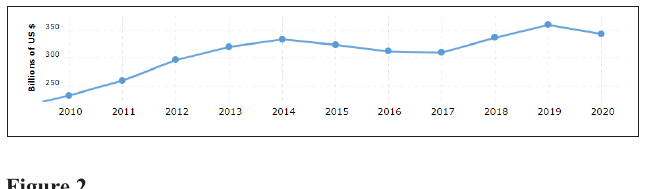
primary causes for the existence of the tax gap (Sritharan & Salawati, 2019b). Even though the
2019b). The noncompliance behaviour of the taxpayers is one of the primary causes for the existence of the tax gap (Sritharan & Salawati, 2019b). Even though the revenue derived from the corporate income tax remains the most significant source of contribution among all the other forms of taxes, the tax planning of a firm or an organization is carried out by an individual on behalf of the firm or the organization (Soon et al., 2019; Sritharan et al., 2022b). Individuals have a proclivity to not to comply with the above tax system while the corporations have the proclivity to do the same. The basis of the tax gap, that is the noncompliance of the residents, slows down the efforts taken by the government in the operation of activities and developments since the national revenue is largely assigned for the operational expenditure instead of the developmental expenditure, forcing the government to borrow more and more money from other sources (Sritharan et al., 2020). As a result, a need to study the link between the personal tax compliance and the corporate tax compliance has arisen (Baghdad, 2017). This study intends investigating the factors that make an impact on the personal tax compliance of the tax affairs officers of the Malaysian businesses; this study also investigates the factors of the personal tax compliance, including their mediating effect, that exert their influence on their corporate tax compliance.
No study on the factors that examine the association between personal taxation and corporate taxation has yet been published. Further, no study has been conducted so far to evaluate the impact of the personal taxation on the corporate taxation. This research satisfies the need mentioned above, filling the existing research gap.
Therefore, this study draws the following research objectives:
• To examine the impacts of the “factors” on the “personal tax compliance” of the officers who manage the tax affairs of Malaysian Businesses, • To examine the impacts of the “personal tax compliance” on their “corporate tax compliance”, and • To investigate the mediating impacts of “personal tax compliance” between the “factors” and the “corporate tax compliance” of the officers who manage the tax affairs of Malaysian Businesses.
The following sections present the literature review, the research methodology, results and discussion, and the conclusion of this study.
LITERATURE REVIEW

Theory Theory
Kelman (1958) proposed that an individuals’ attitude, action, beliefs, and subsequent behavioural Kelman (1958) proposed that an individuals’ attitude, action, beliefs, reactions are influenced by the referral of other people, who are associated with the individual over and subsequent three stages: ‘Compliance’,behavioural reactions ‘Identification’, are influenced and ‘Internalization’. The by the deals theory referral with social influenceofandother people, highlight that it who are that is the idea associated people arewith greatlythe individual influenced by theover three thoughts and actions of others.stages: It leads ‘Compliance’, to behaviour change, or directly createsand ‘Identification’, behaviour change. An influencing ‘Internalization’. The agent specifies how it affects the target by creating attitude change (Kelman, 2006). Compliance occurs theory deals with social influence and highlight that it is the idea when an individual starts to accept the external influence. As such, the external social factors such as that people the Government are greatly of a country, influenced Peer groups, by the or the relevant thoughts authorities highlyand actions determine of an individual’s others. (Venkatesh decision-making It leads to behaviour & Davis, 2000). change, or directly creates behaviour change. An influencing agent specifies how it affects the target by Factors that Impact Upon Personal Tax Compliance creating attitude change (Kelman, 2006). Compliance occurs when an Accordingindividual starts to Alm et al., to accept (2017), the external tax compliance influence. behaviour As such, of an individual the external is strongly affected by the tax compliance social behaviour of theasindividual’s factors such neighbours, the Government of aorcountry, by the people Peerwith whomorthethe groups, individual frequently interacts (Sritharan et al., 2022c). In some specific situations, when an individual comes to relevant authorities highly determine an individual’s decision-making know or believe that the people who are around the individual, especially those who are in association with the (Venkatesh & Davis, individual disclose 2000). and report their income to the IRBM, the individual himself follows suit. This scenario may occur vice versa, that is, when the neighbours of an individual dodge taxes, the possibility for the individual Factors that impact to dodge upontaxespersonal is high. According to an experiment conducted in a study, tax compliance ‘Two-Treatment Setting’ was made for the participation of two groups of respondents in the experiment. In one ‘Treatment Setting’, a group of respondents was informed that their neighbours According had complied with thetotaxAlm et inal.,the(2017), system; tax another other setting, compliance behaviour group of respondentsofwas aninformed that theirindividual is strongly affected by the tax compliance behaviour of the neighbours had been audited and that they had paid their taxes with penalties. In conclusion, the above experiment neighbours, individual’s illustrates that or thebybehaviour the peopleof anwith individual whomisthe impacted and changed individual significantly and differently by the behaviour of other people with regard to tax compliance. Obaid et al. (2020) discuss that there are individuals who do not associate with other people at all to be influenced by them on tax compliance, and for such people, the theory of ‘Peer Influence’ cannot be applied to be a factor to determine their tax compliance behaviour.
frequently interacts (Sritharan et al., 2022c). In some specific situations, when an individual comes to know or believe that the people who are around the individual, especially those who are in association with the individual disclose and report their income to the IRBM, the individual himself follows suit. This scenario may occur vice versa, that is, when the neighbours of an individual dodge taxes, the possibility for the individual to dodge taxes is high. According to an experiment conducted in a study, ‘Two-Treatment Setting’ was made for the participation of two groups of respondents in the experiment. In one ‘Treatment Setting’, a group of respondents was informed that their neighbours had complied with the tax system; in the other setting, another group of respondents was informed that their neighbours had been audited and that they had paid their taxes with penalties. In conclusion, the above experiment illustrates that the behaviour of an individual is impacted and changed significantly and differently by the behaviour of other people with regard to tax compliance. Obaid et al. (2020) discuss that there are individuals who do not associate with other people at all to be influenced by them on tax compliance, and for such people, the theory of ‘Peer Influence’ cannot be applied to be a factor to determine their tax compliance behaviour.
Regarding the tax compliance behaviour of a business, the
determination and the decision taken by the manager of a business are subjected to the probability of audit (Ayers et al., 2018). The study made by DeBacker et al. (2013) places a different opinion, claiming that legal enforcement such as audit increases tax aggressiveness among the corporate sectors, making them reduce their tax payment following an audit, and then increase their tax payment sharply. Businesses comply with the tax system more when they have the probability of their businesses being audited by the tax authority, and soon after the audit, they revert to the state of being noncompliant with the tax system. Such a pattern of their behaviour in their businesses is called ‘U-Shaped Impact’. In the meantime, D’Agosto et al. (2017) state that there is a positive and a significant relationship between tax audit and tax compliance. Audits of different types and styles are carried out by different tax authorities in different countries; in Italy, depending on the types of cases of tax non-compliance handled by the tax authority, the level of tax compliance among the taxpayers of the country gets improved significantly. Besides, the adoption of ‘On-Site’ and ‘Desk-Audit’ has been noticed to be much effective on tax compliance.
Exerting strong influence on the tax compliance behaviour of the taxpayers, the tax socialization performs its role as the service quality of the tax authority (Tan et al., 2019; Supriyono et al., 2021). Service Quality must be upheld by the tax authority because the taxpayers frequently face difficulties in calculating, paying, and reporting their taxes. The tax authority is obliged to improve its Service Quality in terms of knowledge, skills, and other facilities and extend their best maximum services towards the taxpayers, guiding them to comply with the tax system voluntarily (Sritharan et al., 2022d). The Indonesian taxpayers reveal that they fail to comply with the tax system due to the fact that they are ignorant of the expectations of the tax authority from them, the rules and regulations governing the tax system and the procedure to fill their tax returns, etc., for which they have to depend on the services of the tax authority. Similar argument was presented by Alm et al. (2017) that the ‘Service Paradigm’ for the tax administration, for which the tax officers act as facilitators and share their services, could increase the level of the tax compliance.
The collected tax is directed to the treasury of the federal government, and the flow of cash is expected to be transparent to the public (Doerreng, 2015). Further, being the taxpayers of a country, the citizens of the country take note of their money contributed to the Government that is expected to be used for good purposes and developments in the country; if the citizens of the country perceive that the expenditures made by the government of the country are not so worthwhile and fruitful to the nation as they expect, they realize that their money is wasted by the Government, thereby determining not to comply with the tax system (Braithwaite et al., 2009). With similar argument, Mohani (2001) rationalizes that the people who pay additional taxes to the government monitor the government diligently when it handles the taxpayers’ money. An empirical study made by Alasfour et al. (2016) reveals that the people of Jordan have the tendency not to comply with the tax system of the country due to the negative impression they have formed in their minds that the Government is hit heavily by corruption. Having estimated the corruption perception index, the Transparency International (2018) has highlighted that Jordan is remaining 59th corrupt country out of the 180 countries. Meanwhile, the Transparency International (2021) has ranked Malaysia as the 57th corrupt country out of the 180 countries, letting the variable ‘Satisfaction on the Government Spending’, to be an important determinant for the personal tax compliance.
Therefore, H1: There is a positive association between the factors and the level of personal tax compliance.
A business entity is referred to as an “Artificial personality”, or a “Separate Legal Entity” (Pickering, 1968). Certain roles and duties in a business entity are assigned to the employees of the business entity to be performed on behalf of the business entity. The revenue collected by the ‘Inland Revenue Board of Malaysia’ (IRBM) from the corporate sectors, through direct taxation, is the main source of income contributed to the tax cluster (Sritharan et al., 2021). Although the contributed revenue becomes higher and higher, the decisions made on the tax affairs are decided by a natural person. According to Bagdad et al. (2017), “The companies’ non-tax compliance decisions were influenced by their managers who also evade their personal income taxes. Future research should focus on the tax non-compliance behavior among the self-employed or individual taxpayers as there was evidence to show that the business may have a potential to evade taxes if the managers also evade their personal income taxes”. As per the ‘Utility Maximizing Theory’, the personal tax compliance behaviour significantly impacts on the decisions taken on the Corporate Tax Compliance Behaviour.
Therefore, H2: There is a positive association between personal tax compliance and corporate tax compliance.
It was hypothesized above that “There is a positive association between the factors and the level of personal tax compliance” as “H1”. Meanwhile, it is also hypothesized above that “There is a positive association between personal tax compliance and corporate tax compliance” as “H2”. Further, the link between personal tax compliance level and corporate compliance level also underlined by Bagdad et al. (2017). As per the utility maximizing theory the personal tax compliance behaviour significantly impacts on the decision taken on the corporate tax compliance. These established hypotheses H3 express the support for level of personal tax compliance to be a mediator between factors of tax compliance and level of corporate tax compliance.
Therefore, H3: Level of personal tax compliance mediates the relationship between the factors of personal tax compliance and the level of corporate tax compliance.
METHODOLOGY
Research Design
Nearly all the research studies made on Tax Compliance Behaviour at the doctoral degree level have employed Mixed Method Approach to arrive at a clear and accurate conclusion. Tax compliance is a behaviour of the taxpayers that is subject to change, depending on the perception of the tax system in the taxpayers’ minds. A survey method of data collection is the best tool chosen to collect the taxpayers’ perception on the selected variables. Apart from this, the officers dealing with individual taxpayers and corporate taxpayers such as tax agents, officers of the ‘Inland Revenue Board of Malaysia’ (IRBM), and other related officers must have come across more than one taxpayer to be dealt with during the period of their services; the above officers’ opinion towards the perception of the taxpayers could strengthen the accuracy of the analysis. This kind of ‘Explanatory Sequential Design’ method is necessary to be adopted for the interdisciplinary studies as on taxation, which, being a weak part of the survey outcome, may be strengthened by the opinions shared by the officers who deal with taxpayers. Further, the quality of this research gets improved under the Mixed Method Approach. Also, this method enables the researcher to start analysing the outcomes separately and to merge both findings for discussion to be debated on the ‘Common Outcomes’ and on the ‘Different Outcomes’ from both methods. Meanwhile, the interviews conducted with the officers who deal with taxpayers supplement additional information for the outcome made from the survey method. The overall reliability and the validity of the research could be increased as long as this kind of Mixed Method Approach from different phases are adopted.
Sample
The sample in this study are the individuals who handle the tax affairs of other people in their businesses (this survey is to be completed by an individual who handles tax affairs in a business). The purposive sampling method is adopted for the purpose of performing the sampling first. Related research studies suggest performing the snowballing sampling to increase the responses from the respondents. Since both fall under the Non-Probability sampling technique, the respondents chosen to participate in the purposive sampling are requested to forward invitation to their known individuals, who handle a sort of tax affairs in their businesses, to the survey. Nearly 1 (one) million (97.5%) businesses in Malaysia are Small and Medium Size Enterprises. Krejce and Morgan (1970), proposed a suitable sample number at 95 % confidence level based on the population. If the population is greater than seventy-five (75) thousand, a sample size of three hundred eighty-four (384) is considered to be reasonable.
This study inclines to collect supplementary data from tax experts who have gained experience in dealing with tax matters in their businesses. Certain findings from the survey questionnaire may require further explanations, which are expected to be recorded through conducting an interview session with tax officers who have handled tax matters of individuals and business entities. Having an interview session about the study sample with officers who deal with tax affairs in businesses is not possible since discussing topics like taxation is a sensitive issue for the officers. Interviewing officers who deal with tax affairs in businesses about the study sample is not possible since discussing topics such as ‘Taxation’ is a sensitive issue for the officers. Therefore, conducting an interview session with the tax specialists about their experience in dealing with taxpayers is possible on condition that their identities are not disclosed.
The qualitative sampling and the quantitative sampling are not the same process of analysis, and the purpose of the investigations into both are to obtain rich data, as well as the understanding of the social phenomena. This study selects the purposive sampling for the interview session since the researcher of this study purposely chooses the respondents for the interview session. As mentioned earlier, the purpose of conducting the interview session with the tax officers who have gained experience in dealing with the taxpayers is to collect in-depth understanding of the survey findings. Therefore, the participants of the interview session are the officers who have gained experience in working and dealing with the taxpayers in Malaysia. The ‘Quantitative Method’ focuses on numbers, whereas the ‘Qualitative Method’ focuses on the richness of information in order to establish a meaningful understanding. Bryman and Bell (2011) point out that the qualitative representation is less important than the quantitative representation. Patton (1990) justifies that there are no specific criteria to determine the sample size for the qualitative inquiry. Guest el at. (2006) estimate that a minimum sample of 12 participants could be sufficient to serve the purpose. The studies in the literature adopt 10 interviews as suggested by Creswell (1998). Therefore, this study contains a minimum of 10-15 samples for the interview sessions. A semi-structured interview is one of the common approaches adopted in many behavioural studies. The findings from the survey questionnaire reveal what relationship exists among the variables. At the same time, semi-structured interviews will help the researcher to explain the findings with the questions ‘Why’, and ‘How’ (Saunders et al., 2003).
Construct Measurement
Tax compliance behaviour is measured by two dimensions, namely the ‘Voluntary Compliance’, and the ‘Enforced Compliance’. Likewise, Non-Compliance has two measurements, ‘Tax Avoidance’, and ‘Tax Evasion’ (Sritharan et al., 2022c), all of which are modified to suite the context of the study. The items under each dimension are anchored on a seven-point Likert scale, ranging from ‘Completely Disagree = 1’ to ‘Completely Agree = 7’.
Data Analysis
Survey
Structural equation models are often used to assess unobservable ‘Latent’ constructs. The usage of the term ‘SEM’ in research studies is commonly justified in Social Sciences because of its ability to impute relationships between ‘Unobserved Constructs’ (latent variables) and ‘Observable Variables’. Therefore, the SEM allows the researcher to diagnose which observed variables are the good indicators of the latent variables. Various methods in ‘Structural Equation Modelling’ are used in sciences, businesses, and in other fields of study. While researchers agree that large sample sizes are required to provide sufficient statistical power, as well as precise estimates using SEM, there is no general consensus found on the appropriate method for determining an adequate sample size. The set of models is then interpreted so that claims about the constructs can be made, based on the best fitting model. In the confirmatory technique, each individual construct is validated at the measurement model level. In the measurement model, the validity and reliability of measures in each construct are ensured before proceeding to the structural model. Hair et al. (2019) explains that an absolute threshold or a benchmark for factor loading, which is the correlation coefficient between observed variables and latent common factors in the PLS model, is not established. As per the previous studies, a cut-off loading of 0.5 is sufficient (Sritharan et al., 2022d).
Interview
An unstructured interview might be used to bring some preliminary findings to the table so that the researcher can evaluate which elements require more in-depth investigation. Sequential explanatory design generally indicates the commencement of data measurement with quantitative approach and then followed with qualitative approach (Liem, 2018). As respondents deliver their opinions, the researcher takes notes, and the same questions will be asked of everyone in the same way. The first step taken in data analyzing is the reduction of data, which refers to the process of selecting, coding, and categorizing the recorded qualitative data. Normally this is done for a large amount of qualitative data. The next step is the displaying of the data, which refers to the presentation of data. The research transcripts the recorded interview, checks the transcript again and again, and compares the transcript with the recording to ensure its reliability. Whereas the validity in the qualitative studies explains how accurate and reliable the collected data is (Creswell & Miller, 2000). This process could be performed by requesting the interviewees to confirm their responses given at the interview. The participants’ agreement ensures the validity of the data. Researchers usually utilize quotes, matrix, graphs, or charts to present data meaningfully and explicitly, ensuring plausibility, reliability, and validity of the data presented. In this study, the researcher decided to choose quotes, which is narrative to analyse the findings.
RESULTS AND DISCUSSION
Descriptive Statistics
| Type of Profile | Items | Frequency | Percent |
|---|---|---|---|
| Industry Retail | 73 | 18.62 | |
| Food and Beverage | 179 | 45.66 | |
| Digital Technology | 35 | 8.93 | |
| Construction | 11 | 2.81 | |
| Business Services | 15 | 3.83 (continued) | |
| Type of Profile Items | Frequency | Percent | |
| Manufacturing | 47 | 11.99 | |
| Trade | 4 | 1.02 | |
| Automotive | 12 | 3.06 | |
| Financial Services | 8 | 2.04 | |
| Education | 8 | 2.04 | |
| Micro | 12 | 3.06 | |
| Business Size Small | 194 | 49.49 | |
| Medium | 163 | 41.58 | |
| Large (MNC) | 23 | 5.87 | |
| Negeri Sembilan | 56 | 14.29 | |
| Johor | 35 | 8.93 | |
| Penang | 67 | 17.09 | |
| Selangor | 92 | 23.47 | |
| Business Location | |||
| Kuala Lumpur | 72 | 18.37 | |
| Malacca | 12 | 3.06 | |
| Perak | 30 | 7.65 | |
| Sarawak | 28 | 7.14 | |
| Accountant | 100 | 25.51 | |
| Respondents’ Manager | 55 | 14.03 | |
| Position Managing director | 31 | 7.91 | |
| Other | 206 | 52.55 | |
| Male | 285 | 72.70 | |
| Respondents’ Gender | |||
| Female | 107 | 27.30 | |
| 31-40 | 244 | 62.24 | |
| 41-50 | 55 | 14.03 | |
| Respondents’ Age 19-30 | 66 | 16.84 | |
| 51-60 | 23 | 5.87 | |
| Above 60 | 4 | 1.02 | |
| Diploma | 95 | 24.23 | |
| Bachelor’s Degree | 179 | 45.66 | |
| Education Level Professional | |||
| Qualification | 87 | 22.19 | |
| Other | 31 | 7.91 | |
| Islam | 146 | 37.24 | |
| Respondents’ Buddhism | 124 | 31.63 | |
| Religion Christianity | 75 | 19.13 | |
| Hinduism | 47 | 11.99 | |
| Malay | 130 | 33.16 | |
| Respondents’ Chinese | 187 | 47.70 | |
| Ethnicity Indian | 63 | 16.07 | |
| Other Bumiputras | 12 | 3.06 |
Since the data was collected from the in-house tax professionals of the Malaysian businesses, the questionnaire contained nine sub-elements of the respondents’ profile, such as the workplaces where the officers work, the size of the business, the location of the businesses, the respondents’ positions, the respondents’ gender, the respondents’ age, the respondents’ educational level, the respondents’ religious beliefs, and finally the respondents’ ethnicity. The collection of business demographic information, as well as the in-house tax professionals’ demographic information, eventually helps the researcher to create profiles for both the businesses and the in-house tax professionals of Malaysia. To be very specific, most of the in-house tax professionals who substantially participate in this survey questionnaire are Chinese: 47.7%; Males: 72.70%; Professionals’ age: between 31 and 40 - 62.24%; working in the food and beverage sector: 45.66%; and Professionals participated from Selangor: 23.47%. Nevertheless, the officers of other ethnicities also take part in considerable number.
| Code | Mean Standard Deviation Excess Kurtosis | Skewness | ||
|---|---|---|---|---|
| CTAX1 | 3.212 | 1.358 | 0.313 | 1.144 |
| CTAX 2 | 3.263 | 1.544 | 0.253 | 1.104 |
| CTAX 3 | 3.490 | 1.532 | 0.127 | 0.919 |
| CTAX 4 | 3.061 | 1.429 | 0.599 | 1.124 |
| CTAX 5 | 3.523 | 1.357 | 0.163 | 0.726 |
| CTAX 6 | 3.148 | 1.520 | 0.036 | 0.974 |
| PTAX1 | 3.222 | 1.443 | 0.060 | 0.851 |
| PTAX 2 | 3.281 | 1.520 | -0.007 | 0.862 |
| PTAX 3 | 3.268 | 1.664 | 0.114 | 1.051 |
| PTAX 4 | 3.291 | 1.574 | -0.078 | 0.852 |
| PTAX 5 | 3.316 | 1.373 | -0.289 | 0.735 |
| PTAX 6 | 3.222 | 1.455 | 0.032 | 0.887 |
| PTAX 7 | 3.191 | 1.654 | 0.070 | 1.020 |
| PTAX 8 | 3.367 | 1.536 | -0.103 | 0.877 |
| PTAX 9 | 3.145 | 1.551 | 0.064 | 0.984 |
| PTAX 10 | 3.268 | 1.516 | 0.005 | 0.916 |
‘Table 2’ shows a descriptive analysis of the outcome of the respondents, regarding personal tax compliance and corporate tax compliance. Based on the table of the normality test outcome, where the values of skewness and kurtosis are found within the benchmark level of 3 and 10, ensuring that the data is normally distributed. According to the above table, most of the respondents comply with the corporate tax system within the required time frame’ (CTAX5), with an average of 3.523 (out of 7). At the same time, most of the respondents comply less with the corporate tax system relating to the ‘Deduction of the withholding taxes from the professional fees and remitting them to the IRBM on time’ (CTAX4), with an average of 3.061, out of 7. Meanwhile, most of the respondents agree highly with their opinion on their personal tax compliance, which states that they agree with ‘underreporting of their personal taxes, if any of the portion of the money collected is wasted by the government’, with an average of 3.367 (out of 7). The least respondents report their opinion as ‘Making a tax payment as little as possible is important, with an average of 3.145 (out of 7).
Measurement Model
| Constructs | Loading | Weight | AVE | CR |
|---|---|---|---|---|
| Satisfaction on government spending | ||||
| SATS1 | 0.745 | |||
| SATS2 | 0.871 | 0.596 | 0.854 | |
| SATS3 | 0.702 | |||
| SATS4 | 0.762 Service Quality of Tax Authority | |||
| SERV1 | 0.661 | |||
| SERV2 | 0.731 | |||
| SERV3 | 0.712 | 0.711 | 0.843 | |
| SERV4 | 0.705 | |||
| SERV5 | 0.664 | |||
| SERV6 | 0.656 | |||
| Peers’ Compliance | ||||
| PEER1 | 0.616 | |||
| PEER 2 | 0.512 | |||
| PEER 3 | 0.645 | 0.719 | 0.817 | |
| PEER 4 | 0.629 | |||
| PEER 5 | 0.618 | (continued) | ||
| Constructs | Loading | Weight | AVE | CR |
| PEER 6 | 0.525 | |||
| PEER 7 | 0.621 | |||
| PEER 8 | 0.617 | |||
| Personal Compliance | ||||
| PTAX1 | 0.628 | |||
| PTAX 10 | 0.627 | |||
| PTAX 2 | 0.623 | |||
| PTAX 3 | 0.523 | |||
| PTAX 4 | 0.638 | 0.680 | 0.816 | |
| PTAX 5 | 0.615 | |||
| PTAX 6 | 0.515 | |||
| PTAX 7 | 0.615 | |||
| PTAX 8 | 0.619 | |||
| PTAX 9 | 0.512 | |||
| Corporate Tax Compliance | ||||
| CTAX1 | 0.740 | |||
| CTAX 2 | 0.821 | |||
| CTAX 3 | 0.795 | 0.642 | 0.915 | |
| CTAX 4 | 0.824 | |||
| CTAX 5 | 0.795 | |||
| CTAX 6 | 0.830 | |||
| Audit Probability | ||||
| PROB1 | 0.793 | |||
| PROB2 | 0.849 | 0.747 | 0.922 | |
| PROB3 | 0.867 | |||
| PROB4 | 0.848 | |||
The above analytical outcome explains the strength of the
measurement model. Table 3 exhibits the outer loading of the reflective constructs, and the outer weight of the formative constructs. The resulting outcome of the analysis of the above mentioned reflective and formative constructs are higher than the benchmark level 0.6, except indicators PEER2, PEER6, PERT3, PERT6, and PERT9. In the meantime, Table 3 also explains the composite reliability (CR), which shows the indication of the indicators on the latent variables, ranging between 0.816 and 0.922, and highlighting the value above the benchmark level of 0.7. The average variance extracted (AVE) of the factors are reported to be between the range of 0.596 and 0.747, exceeding the recommended benchmark level of 0.5.
Structural Model
| Constructs R Square R Square Adjusted |
| Corporate Tax Compliance 0.860 0.859 |
| Constructs Corporate Tax Compliance |
| Personal Tax Compliance 0. 372 |
| Hypothesis | Path | Standard t-value p-value | Results | ||
|---|---|---|---|---|---|
| Path | |||||
| Coefficient Deviation | |||||
| Direct Effect | |||||
| Factors → | H1 | 0.117 | 0.055 | 2.128 0.024** Supported | |
| PTC | |||||
| PTC → CTC | H2 | 0.455 | 0.210 | 2.166 0.018** Supported | |
| Indirect Effect | |||||
| Factors → | H3 | 0.073 | 0.041 | 1.780 0.031** Supported | |
| PTC → CTC | |||||
The interpretation of the relationship between the ‘Factors’ among the in-house tax professionals of Malaysian businesses and the ‘Corporate tax compliance behaviour’ can be explained by 86 percent of the variance studied. Moreover, the effect size (f-square) results more than 0.2, which is the indication of a significant effect on the construct and validity of the model.
Supplementary Results
| Tax Authority Tax Agent Tax Scholar | |||
|---|---|---|---|
| Constructs Time (Minutes) | |||
| (TAT) | (TAG) | (TSC) | |
| Participant 1 3.00 | √ | ||
| Participant 2 12.00 | √ | ||
| Participant 3 15.00 | √ | ||
| Participant 4 21.00 | √ | ||
| Participant 5 16.00 | √ | ||
| Participant 6 25.00 | √ | ||
| Participant 7 18.00 | √ | ||
| Participant 8 25.00 | √ | ||
| Participant 9 15.00 | √ | ||
The researcher approaches the officers who are attached to the tax authority, tax agents, and tax scholars to gather supplementary data to the primary findings. Initially, the researcher aims at collecting at least ten (10) to fifteen (15) responses from the above-mentioned groups. However, the researcher is physically unable to meet the officers of the ‘Inland Revenue Board of Malaysia due to their busy schedules. Therefore, the number of participants taking part in the survey interview from the Inland Revenue Board is only limited to two (2) participants, while the participants taking part in the survey interview from other groups are more than two (2). A total of nine (9) officers from different groups are involved, and among them, two (2) officers are males, and seven (7) officers are females. Most of the interviewees were work for a tax accounting firm (4 officers) and the rest were from the tax authority and tax scholars (2 and 3 respectively). Though the target interviews are equally from three different designations, most of the officer’s designation is in the middle level. These interview sessions range between 3 minutes and 25 minutes, in which the Participant No.1 from the tax authority neither shares information nor comments on the preliminary findings. Since the time given is too little and the information gathered from Participant No. 1 is not enough, this interviewee is subject to elimination from further supplementary analysis. This study moves further with the contributions from the rest of the eight (8) participants in order to analyse the preliminary findings.
Only one officer who participates in the interview has more than ten (10) years of work experience relating to tax matters, while five (5) officers have work experience between five to ten years. The other three (3) officers have work experience of less than three (3) years, relating to tax matters. Also two (2) tax agents are from sole practitioners, and two (2) are from small tax consulting firms. The other three (3) tax scholars are the educators who have been mainly teaching taxation and occasionally teaching tax related subjects for some time. The participants of mixed work background are expected to contribute their shares to supplement the findings made from the questionnaire.
“Overall, as far as I know, tax compliance means how a person or a company follow the rules and regulation established by the government. But when I look at each question under corporate and personal tax compliance, I don’t see questions related to following the tax laws of the country. I only see questions talking about filing the tax and deduct the taxes on time, and then some questions about under- reporting income. But yes, filing on time and avoid under-reporting can be a part of following tax laws.”. (Participant No.3, TAG)
“Most of the people think that tax compliance means paying the taxes on time. You just shown me that most of the corporate taxpayers responded as I pay my taxes within the required time frame. But paying taxes on time is enough to be a good citizen? No right. We should ask whether are we reporting our right income to the government and filing the taxes on time. I think that is important. When looking at their responses to the personal tax compliance, the first five highly mentioned answers are related to under-reporting their income”. (Participant No.6, TAG)
“Looking at the personal tax compliance, I see the higher average on statement which is as Under-reporting my income will not hurt the society as a whole. Meanwhile, least ranking given to statement which talks as I feel that I have made a positive contribution to my country by fully reporting all of my income. I think tax payers still in a position to think how they could under-report their income than at least pays their taxes”. (Participant No.5, TAG)
“Yes, mostly the clients of mine are referred by an existing client. Generally, what our Malaysian taxpayers do is just following what their peers do. I think it’s because of our culture. We tend to have a close relationship with our peers in discussing personal and professional matters including tax planning”. (Participant No.6, TAG)
“It doesn’t matter who are important to a taxpayer. A taxpayer normally spent much time discuss things which are new to him or her with peers. Maybe we could say their friends. Here in Malaysia, finding a job, choosing an e wallet, shopping, and other personal things are the topic friends closely discuss. Tax compliance also a part of it. I would say, taxpayer start discussing this during their tax payment due date. A serious conversation will be touching how to under-report their income or over-stating their expenses among peers, so that they could enjoy limited tax payments. Meaning to say, negative influence impact individual tax compliance intention”. (Participant No.9, TSC)
“In an average conversation between peers through a social media or in an actual meeting, at least 20 percent of their conversation covers political, government, and other common things. Most of their conversation are related to their workplace, studies, or entrainment. Talking about tax compliance commonly come out on their discussion during the time of tax compliance. When they have a positive or encouraging peer who genuinely participate in government duties, then his or her behaviour influence the other peer. I would say the tax payer will be motivated to comply with the tax system because his or her peer also comply with the tax system right”. (Participant No.7, TSC)
The above comments presented by tax experts reveal the opinion they have on the definition of ‘Tax Compliance’. However, most of the tax experts criticized the constructs of the measures, which limitedly cover the measures for tax compliance. They also state that it should have been elaborated in another way to cover the tax law of adherence. However, at the ‘The fourth IMF-Japan High-Level Tax Conference convened for for Asian Countries, the ‘Inland Revenue Board of Malaysia’ (IRBM) presented its objective to achieve a better tax compliance, defining it explicitly. At the conference, it was suggested that an individual could be registered at the IRBM as a taxpayer to meet certain criteria of the IRBM such as submitting tax returns on or before the due date, paying tax liability on or before the due date, and reporting tax liability correctly by declaring the income, expenditure, tax relief, etc. without incurring penalty (Hilary Dom, 2013). Meanwhile, IRBM also define tax non-compliance as; Failure to register with tax authority by any potential taxpayer, non- submission of tax return after the due date, Non-payment/partial payment of tax liability after the due date, and Incorrect declaration/ assessment of tax liability in the submitted tax return. Having restate the definition of tax compliance mentioned by IRBM confirms that the researcher of this study has wisely measured the tax compliance. The definition mentioned by IRBM has no way correlates with the tax expert’s suggestion, which intends to involve the adherence of tax law to measure tax compliance.
“I think it normally deal by my boss. I don’t directly receive any calls from LHDN regarding any of our clients. But I know that our boss handles the communication on behalf of clients. When I work for clients, I do understand that they fear of audit by LHDN. This is why they wanted to keep all accounts and fillings comply with the system. So that no penalty will impose by LHDN if they were chosen for an audit”. (Participant No.6, TAG)
The chronological events of a taxpayer in his critical moment highlight that the IRBM has a clear version of arrangement to handle such tax matters that lead the taxpayers to noncompliance behaviour. Taxpayers are notified of the proposed and intended tax field audit carried out by IRBM on the financial records of the taxpayers in the taxpayers’ premises. The message about the audit is normally conveyed to the intended taxpayers through email communication or via a telephone call from a local IRBM office. It is mentioned that the IRBM takes approximately 2 weeks (14 business days) to accomplish this field audit on the taxpayers, or in the taxpayers’ premises. Upon completion of the tax audit, or upon failure of achieving success in audit, due to lack of cooperation from the taxpayers in the tax audit field, the IRBM releases a tax computation between 3 weeks’ to 6 months’ time frame. This time frame is considered a critical event for the Malaysian taxpayers. Based on the findings from the supplementary results, the taxpayers with critical events take initiative to face the IRBM arrangements and reach out the local, or the nearest tax agents for their assistance. The Participant No. 6 confirms the scenario based on the real experience so that most taxpayers fear for the tax audit by the IRBM and for the number of contacts reached the tax agencies after such incidents have occurred to the individual taxpayers, or to the business taxpayers. The authority controls the entire scenario with a fixed time frame and demands the taxpayers to furnish the claim by highlighting the rights they have in the constitution. This association is further supported by the Allingham and Sandmo model, in which the theory emphasizes, “The higher the fear of an individual to face a legal action, the greater the level of tax compliance of an individual to engage with”.
“Not just for corporate taxes, also for other taxes, the taxpayers trust our organization. Hasil always serves for the best interest of the country. Means, its here to help people on paying their taxes. Of course, we do have our enforcement. LHDN does not fail to collect customer satisfaction. You can check our website. The e survey feedback form allows the people to express their satisfaction on the overall performance by a LHDN branch office. Our management frequently review the feedback and take necessary action to enhance the service quality. We serve the people both ways face-to-face and through online. As you said our assistance provided to them increases their intention to comply with the tax system. People may get scared with taxes. But they get motivated by the help we do to them to comply with the tax system. We explain them the consequences of being not to pay taxes and the benefit of making payment make them understand their obligation. I believe our role strongly influence people’s decision to pay their taxes in an honest manner”. (Participant 2: TAT)
The tax authority of Malaysia work consistently to maintain the service quality offered to their clients and to their future potential clients. During the ‘Covid-19’ pandemic period, the Inland Revenue Board of Malaysia’s functions had been severely affected. In such a period, in accordance with the Movement Control Order (MCO) implemented by the government of Malaysia, the physical visit to the local branch had been temporarily suspended and the authority had carried out their operations via online. A special arrangements and resource allocations had been made in accordance with the new normal procedures brought to the Government departments of Malaysia to serve the people of the country. However, the restrictions on physical visits had been lifted and the normal activities had been restored in the later days; the authority had taken precaution fully to stop the spread of the Corona virus by following the ‘Safety Operational Procedures’ (SOP). The Respondent No. 2 from the tax authority confirms that a significant rise in the compliance pattern could be noticeable whenever the tax authority provides its better service to the taxpayers, assisting them in completing procedures in tax compliance.
“Inland Revenue Board has its own system to run its operations. You can see how it functions here. It means, for each and every case it has its separate regulations to handle the operations. It easy to read how long Hasil take to work on each issue. For example, if there is an appeal against assessment and application for relief, form JA will issue, and this form will be served to taxpayer roughly within a week. Failing to comply may subject to the violation of S.103 of income tax act, in which 10 percent penalty will be imposed before 30 days. These are the critical moments for a taxpayer. Taxpayers can appeal for tax assessment with Form Q actually. Failing all these may result to the violation income tax regulation and the LHDN may proceed with civil proceedings at the court under S. 106 and may impose travel restriction to the taxpayer under S. 104 of income tax act”. (Participant 2: TAT)
“The role of government through tax authority is strongly impact the tax collection. In Malaysia there is a tax investigation framework between the tax authority and taxpayers to adhere. The tax investigation frame aimed to inform each taxpayer about the LHDN’s tax investigation procedures. The role performed by LHDN is very essential on collecting taxes especially dealing with companies with under-reporting their income”. (Participant 3: TAG)
For the understanding of the taxpayers, the tax investigation framework is an explanation of the IRBM’s tax investigation procedures. The existed tax framework had been replaced with the latest framework to be put into practice from the year 2013 onwards. The framework clearly articulates its purpose, and what is about to serve the people better. The tax investigation frame of Malaysia highlights the constitutional rights that an officer of the IRBM has towards a taxpayer. This tax investigation framework also translates a taxpayer’s obligation towards the tax authority and the nation. According to the ‘Inland Revenue Board of Malaysia’, the agency acts promptly for the sake of the nation, adopting various strategies under tax investigation framework such as risk analysis, extracting information from informer, reviewing of income tax return form (ITRF), collecting intelligence information and information from other law enforcement agencies.
“Tax payment is an accrual-based approach. What I mean is we pay taxes for the last year. Though, there are many facilities available to follow Pay As You Earn model, most of us accrue our tax liabilities. The problem is the taxpayer’s financial condition on that particular tax payment time period. Many occasions may alter the taxpayer’s financial condition on their taxpayment time. For example, Taxpayer is honest, and he is a good citizen. But the problem is he does not have money at that time, making him not pay. This is one example. There might be several examples that might create the same scenario, right?”. (Participant 4: Tax Agent)
Financial constraint is a situation wherein an individual or a business does not pose sufficient cash to settle an outstanding debt, or to complete a financial / non-financial transaction; the financial constraint of an individual or a business is mostly influenced by the type of accounting basis they adopt. The differences between ‘Cash Basis’ and ‘Accrual Basis’ are defined based on the revenue recognition time frame. The reporting of financial performance in the ‘Cash Basis’ is performed by tracking the cash flow, whereas in the ‘Accrual Basis’, it is performed by tracking the Receivables, Payables, and the Inventory movement. Roughly 55 countries have started to adopt the ‘Accrual Basis’ of accounting, whereas another 55 countries are still adopting the ‘Cash Basis’ accounting (ACCA Global, 2022). In the meantime, 27 other countries, including Malaysia, are currently in the phase of transition from the ‘Cash Basis’ to the Accrual Basis’. This transition may pose difficulties to the entrepreneurs who are still adopting the ‘Accrual Basis’ because their revenue is earned earlier before the actual cash is deposited into their account. Dealing with multiple clients and suppliers who adopt different types of accounting in their businesses is troubling the Malaysian entrepreneurs, and leading them to financial constraint finally.
The interpretation of hypothesis test and the path coefficient clearly articulate that there is a positive association between ‘Peer Tax Compliance’ and ‘Personal Tax Compliance’. This outcome correlates with the outcome of the previous studies made by Alm et al. (2017), and Obaid et al. (2020) by confirming that the impact is actually on the decision-making of ‘Personal Tax Compliance’ by peers. Participant number 6 from the tax agency and participant number 9 from the institution acknowledge the findings and highlight that the decision-making of an individual is impacted by those who are around the individual and are in association with the individual, leading the individual to apply the same decision to the decision making of the individual on tax compliance.
The analysis further reveals that there is a positive association between the ‘Probability of Tax Audit’ and the ‘Personal Tax Compliance’. This outcome parallels with the finding of Ayers et al. (2018) and D’Agosto et al. (2017), and participant number 6 from the tax agency justify that taxpayer begin to organise their tax process once they realise the probability of getting audited by the authority.
Further assessment showcases that there is a positive association existing between the Service Quality of the tax authority and the Personal Tax Compliance. Previous studies have no mixed conclusion on this finding, especially the studies of Alm et al. (2017). Supriyono et al. (2021) state the same conclusion, justifying that the ‘Service Paradigm for Tax Administration’, where the tax officers act as facilitators and share their services, increases the level of tax compliance. Participant number 2 from the tax authority also acknowledges that their services motivate the taxpayers to comply with the tax system than get scared of it.
Meanwhile, there is a positive association between the ‘Satisfaction with the Government Spending’ and the ‘Personal Tax Compliance’. The studies made by Alasfour et al. (2016), Braithwaite et al. (2009), and Mohani (2001) had similar findings and shared their findings with the researchers, providing them insights into the manner how the taxpayers’ contribution (income) made to the Government is handled and spent by the Government. Therefore, hypothesis H1: There is a positive association between the factors of personal tax association compliance between theand the of factors level of personal personal tax compliance tax compliance and the is supported, level of personal tax comp supported, where (ꞵ=0.117, ( =0.117, p<0.05).
Further, the direct effect shows that there is a positive and significant association exists personal tax compliance of in-house tax professionals and their corporate tax compliance. T H2: There is a positive association between personal tax compliance and corporate tax comp
Further, the direct effect shows that there is a positive and significant
association exists between personal tax compliance of in-house tax
professionals and their corporate tax compliance. Therefore, H2:
association
There is a positive association between between
personal taxthe factors ofand
compliance personal tax compl
supported, where
corporate tax compliance is supported, where (ꞵ=0.117,
( =0.455, p<0.05).
p<0.05).
Certain roles in business are assigned to employees to perform duties
on behalf of the entity. AlthoughFurther, the direct
the contribution of effect
revenue shows that there is a posi
becomes
higher and higher, the decisions made on tax affairs are decided by a tax professional
personal tax compliance of in-house
H2: There
natural person. According to Bagdad et al.is(2017),
a positive“Theassociation
companies’ between personal
non-tax compliance decisions weresupported,
influencedwhere (ꞵ=0.455,
by their managersp<0.05).
who Certain roles in
also evade their personal income duties
taxes.onFuture
behalfresearch
of the entity.
shouldAlthough
focus the contribu
decisions made on tax
on the tax non-compliance behavior among the self-employed or affairs are decided by a natural
companies’ non-tax compliance
individual taxpayers as there was evidence to show that the business decisions were influ
personal income taxes. Future
may have a potential to evade taxes if the managers also evade their research should focus
self-employed or individual
personal income taxes”. As per Kelmen’s social influencing theory, taxpayers as there was
potentialsignificantly
the personal tax compliance behaviour to evade taxes if the on
impacts managers
the also evade
social influencing
decision taken on the corporate tax compliance. theory, the personal tax compliance
taken on the corporate tax compliance.
Interestingly, bootstrap test results reveal that the personal tax
Interestingly, bootstrap test results reveal that th
compliance of in-house tax professionals has a significant indirect
professionals has a significant indirect effect on their
effect on their corporate tax compliance. Therefore, H3: level of
of personal tax compliance of in-house tax profession
personal tax compliance of in-house tax professionals mediates the
and their corporate tax compliance is supported, wher
association
relationshipbetween
betweenthe
thefactors
factors of
andpersonal tax compliance
their corporate and the is
tax compliance level of personal t
supported, where (ꞵ=0.117,
( =0.073, p<0.05).
CONCL
Further, the direct effect shows that there is a positive and significant association
personal tax compliance of in-houseCONCLUSION tax professionals and their corporate tax compl
This is the first study that a testing is carried out to pr
H2: There is a positive association between personal tax compliance and corporate t
the ‘Personal Tax Compliance’ of the in-house tax pr
supported,
This is the where (ꞵ=0.455,
first study that ap<0.05).
testing isCertain
carriedroles in
to business
outThere produce are
freshassigned to emplo
Decision-making’. are couple of limitations for
duties on behalf of the entity.
empirical evidence for the effects Although the contribution of revenue becomes highe
the of the when
time ‘Personal Tax Compliance’
the Covid-19 ‘Malaysian Movement
decisions made tax
of the in-house on tax affairs are on
professionals decided
theirtimeby a naturalTax
‘Corporate person. According to Bagdad e
specific frame posedCompliance
a hassle to the residents of
companies’ non-tax compliance
Decision-making’. There are couple decisions were
of difficult influenced
limitations thisby their managers who
extremely for for
almost allstudy.
the citizens of the co
personal income taxes. Future
First, this study collected data the research
during should
the time focus on
wheninthe the tax non-compliance beh
normal situation theCovid-19
life of the people of th
self-employed or individual
‘Malaysian Movement Control Order’ taxpayers as
(MCO) there was evidence
hadcountry.
been in force. to show that the busin
This
condition in the The next study is about t
potential to evade taxes if
specific time frame posed a hasslethe managers also
to the residents evade their
of Malaysia personal income taxes”. A
interview: This study invited thesince in-house tax profes
social influencing theory, the personal tax compliance behaviour significantly impact
the earning of income had beenthe extremely
respondents difficult for almost
to forward thealllink
the of the questionn
taken on the corporate tax compliance.
citizens of the country. Therefore, the findings
within may not represent
their professional circle andtheperform the same
normal situation in the life of them the people of the country,
to participate but moreInstead of the in-
in the interview.
Interestingly, bootstrap test results reveal that the personal tax compliance
towards the new normal condition dealinwith tax affairs
the country. Theinnext theirstudybusinesses
is in Malays
professionals has a significant indirect effect on their corporate tax compliance. The
about the respondents who participated responded in tothethe questionnaire.
survey interview: This
of personal tax compliance of in-house tax professionals mediates the relationship be
study invited the in-house tax professionals to take
and their corporate tax compliance is supported, where (ꞵ=0.073, part in the survey p<0.05).
This study directs the future researchers with few
254 influencing theory, future researcher may investigat
compliance, satisfaction with government spending, a
CONCLUSION
audit to look for the overall impact made on in-ho
and requested the respondents to forward the link of the questionnaire to other officers known to them, who are within their professional circle and perform the same duties as they perform in their offices, inviting them to participate in the interview. Instead of the in-house tax professionals, the officers who do not deal with tax affairs in their businesses in Malaysia might have participated in the survey and responded to the questionnaire.
This study directs the future researchers with few directions. First, considering Kelman’s social influencing theory, future researcher may investigate how other external forces such as peers’ tax compliance, satisfaction with government spending, and service quality of tax authority along with tax audit to look for the overall impact made on in-house tax professionals’ personal tax compliance behaviour. The factors that determine their personal taxes influence their corporate tax compliance as well, where their personal tax compliance decision- making functions as a mediator between the factors and their corporate tax compliance. However, some supplementary findings from tax experts highlight that some variables may twist the strength of the relationship between factors and their personal tax compliance. For example, participant number 4 from the tax agency emphasis that financial constraints may twist the decision-making of tax compliance of taxpayers. Therefore, the future researcher may undertake a fresh study testing financial constraints as a moderator with a similar methodology, a sequential explanatory study, to investigate the moderating effect on in-house tax professionals’ personal tax compliance level. Further, participant number 3, participant number 5, and participant number 6 emphasise that measurement of corporate and personal tax compliance should not be limited to under- reporting income or overstating expenses. The measurement of both tax compliance and also should test the initiatives to adhere to the existing tax laws in the country. Therefore, future researchers may design a new measurement to measure the personal and corporate tax compliance covering tax laws.
ACKNOWLEDGMENT
The authors wish to thank Ministry of Higher Education for funding this research through the Fundamental Research Grant Scheme (F01/ FRGS/2030/2020).
References
- ACCA Global. (2022). Accruals adoption: OECD countries could do better | ACCA Global. ACCA Global. Retrieved September 1, 2022, from https://www.accaglobal.com/crsh/en/member/ discover/cpd-articles/corporate-reporting/oecd-cpd.html
- Alasfour, F., Samy, M., & Bampton, R. (2016). The determinants of tax morale and tax compliance: Evidence from Jordan. Advances in Taxation, 125–171. https://doi.org/10.1108/s1058-749720160000023005
- Alm, J., Bloomquist, K. M., & McKee, M. (2017). When You Know Your Neighbour Pays Taxes: Information, Peer Effects and Tax Compliance. Fiscal Studies, 38(4), 587–613. https://doi.org/10.1111/1475-5890.12111
- Al-Ttaffi, L. H. A., Bin-Nashwan, S. A., & Amrah, M. R. (2020). The influence of tax knowledge on tax compliance behaviour: A case of Yemeni individual taxpayers. Journal of Business Management and Accounting, 10(2), 15–30. https://doi.org/10.32890/jbma2020.10.2.2
- Ayers, B. C., Seidman, J. K., & Towery, E. M. (2018). Tax reporting behavior under audit certainty. Contemporary Accounting Research, 36(1), 326–358. https://doi.org/10.1111/1911-3846.12439
- Bagdad, M. A., Noor, R. M., Hamid, N. A., & Aziz, R. A. (2017). Factors affecting tax gap: Evidence from tax audit cases. Governance and Sustainability of Global Business Economics, 17(1), 149–156. https://doi.org/10.33369/gsgbe.11.1.33-52
- Braithwaite, V. (2009), Defiance in taxation and governance: Resisting and dismissing authority in a democracy. Edward Elgar Publishing, Cheltenham, UK.
- D’Agosto, E., Manzo, M., Pisani, S., & D’Arcangelo, F. M. (2017). The effect of audit activity on tax declaration. Public Finance Review, 46(1), 29–57. https://doi.org/10.1177/1091142117698035
- DeBacker, J., Heim, B. T., Tran, A., & Yuskavage, A. (2015), ‘Legal enforcement and corporate behavior: An analysis of tax aggressiveness after an audit’, The Journal of Law and Economics, 58(2), pp. 291-324.
- Devos, K. (2013). The impact of tax professionals upon the compliance behaviour of Australian individual taxpayers. Revenue Law Journal, 22(1), 31–56. https://search.informit.org/doi/10.3316/ informit.222562025313806
- Doerrenberg, P. (2015), ‘Does the use of tax revenue matter for tax compliance behavior?’, Economics Letters, 128(1), pp. 30-34.
- Hair, J. F., Risher, J. J., Sarstedt, M., & Ringle, C. M. (2019), ‘When to use and how to report the results of PLS-SEM’, European Business Review, 31(1), 2-24
- Hilary Dom, J. (2013). Enforcement Trend and Compliance Challenges: Malaysia’s Experience in IMF. Inland Revenue Board, Malaysia. https://www.imf.org/external/np/seminars/ eng/2013/asiatax/pdfs/malaysia2.pdf
- Kasipillai, J. (2002). Investigations and Tax Audit Under the Self-Assessment System. The Chartered Secretary Malaysia, 16(22), 5-7.
- Kelman, H. C. (1958). Compliance, identification, and internalization three processes of attitude change. Harvard University, 2(1). https://doi.org/10.1177/002200275800200106
- Kelman H. C. (2006). Interests, relationships, identities: Three central issues for individuals and groups in negotiating their social environment. In: In S. T. Fiske, A. E. Kazdin, & D. L. Schacter (Eds.), Annual Review of Psychology, 57(1), 1-26.
- Liem, A. (2018). Interview schedule development for a sequential explanatory mixed method design: Complementary-alternative medicine (CAM) study among Indonesian psychologists. International Journal of Social Research Methodology, 21(4), 513–525. https://doi.org/10.1080/13645579.2018.1434864
- Ministry of Finance Malaysia. (2019a). Budget 2019. The Budget Speech Text. Retrieved from https://www1.treasury.gov.my/ pdf/budget/speech/bs19.pdf
- Ministry of Finance Malaysia. (2019b). Budget 2020. Government of Malaysia. https://phl.hasil.gov.my/pdf/pdfam/Budget_2020.pdf
- Mohani, A. (2001), Personal income tax noncompliance in Malaysia, PhD thesis, Victoria University, Melbourne.
- Obaid, M. M. A., Ibrahim, I., & Udin, N. M. (2020). An Investigation of the Determinants of Tax Compliance Among Yemeni Manufacturing SMEs Using the Fisher Model. International Journal of Psychosocial Rehabilitation, 24(04), 1809–1824. https://doi.org/10.37200/ijpr/v24i4/pr201289
- Pickering, M. A. (1968). The company as a separate legal entity. The Modern Law Review, 31(5), 481–511. https://doi.org/10.1111/j.1468-2230.1968.tb01206.x
- Salawati, S., Sritharan, N., Sheung, S. C. C., & Mohamed, A. S. (2021). Does Tax Knowledge Motivate Tax Compliance in Malaysia? Research in World Economy, 12(1), 238–251. https://doi.org/10.5430/rwe.v12n1p
- Saunders, M., Lewis, P., & Thornhill, A. (2003). Research Methods for Business Students (Fifth Edition) [E-book]. Pearson Education.
- Sritharan, N., & Salawati, S. (2019). Examining the moderating effect of tax knowledge on the relationship between individual factors and income tax compliance behaviour in Malaysia. International Journal of Academic Research in Accounting, Finance and Management Sciences, 9(3), 160–172. https://doi.org/10.6007/ijarafms/v9-i3/6355
- Sritharan, N., Salawati, S., & Choy-Sheung Cheuk, S. (2021). How social factor determine individual taxpayers’ tax compliance behaviour in Malaysia? International Journal of Business and Society, 21(3), 1444–1463. https://doi.org/10.33736/ ijbs.3363.2020
- Sritharan, N., & Salawati, S. (2019). Economic factors impact on individual taxpayers’ tax compliance behaviour in Malaysia. International Journal of Academic Research in Accounting, Finance and Management Sciences, 9(2), 172–182. https://hrmars.com/papers_submitted/6166/1Economic_Factors_ Impact_on_Individual_Taxpayers_Tax_Compliance_ Behaviour_in_Malaysia.pdf
- Sritharan, N., Sahari, S., & Sharon, C. C. S. (2022). A systematic literature review on tax evasion: Insights and future research agenda. International Journal of Academic Research in Accounting Finance and Management Sciences, 12(2), 84-105.
- Supriyono, A., Utami, I., & Muktiyanto, A. (2021). Exploration of tax compliance determination on micro, small and medium enterprise. Jurnal Akuntansi, 11(1), 1–20. https://doi.org/10.33369/j.akuntansi.11.1.33-52
- Tan, S. K., Mohd Salleh, M. F., & Md Kassim, A. A. (2020). The mediating effect of ethical perception on the relationship between tax service and tax compliance behavior using Baron and Kenny and Bootstrapping Method. Journal of Business Management and Accounting, 9(2), 41–49. https://doi.org/10.32890/jbma2019.9.2.8724 Transparency International 2018, Corruption Perceptions Index 2017, Berlin. Transparency International 2021, Corruption Perceptions Index 2020, Berlin.
- World Bank. (2018). Malaysia: Tax Revenue. World Tax Database. Retrieved from https://data.worldbank.org/indicator/ GC.TAX.TOTL.GD.ZS?end=2018&locations=MY&start=199 6&view=chart
- World Bank. (2020). Gross National Income, Malaysia. Current International Income Database. Retrieved from https://data.worldbank.org/indicator/NY.GDP.PCAP.PP.CD? locations=MY