Understanding the Relationship between a Small & Medium Enterprise (SME) and its Suppliers: A Case Study of a Food Industry SME Company in Kedah, Malaysia
- Tunku Puteri Intan Safinaz School of Accountancy, Universiti Utara Malaysia, Sintok, Kedah
Journal of Business Management and Accounting 10(1) (2020) · https://doi.org/10.32890/jbma2020.10.1.4
Abstract
Small and Medium Enterprises (SMEs) are aware of the need to implement proper supply chain management practices, especially to maintain good relationships with their suppliers. Previous studies indicated that a close relationship between SME owner-managers and suppliers can avail various benefits, such as operations and performance improvement, smooth delivery of goods and services to final destinations, and better negotiation of price and delivery schedule. Thus, this paper presents an understanding of the relationship between an SME in the food industry and its suppliers. By employing the Social Exchange Theory (SET) as the underlying theory, this study highlighted the importance of SMEs in managing relationships with suppliers. This study also revealed the roles that factors, such as trust, communication, commitment, and bargaining power, play in the SME-supplier relationship. By employing qualitative methodology and single case study method, this study indicated that this SME is aware that maintaining a good relationship with suppliers can lead to the survival of the business for a longer period of time, and enable them to benefit in terms of cost, quality, and services in the future. Among all factors, loyalty under the commitment factor is considered to be not unduly important to maintain the relationship with the suppliers by the SME owner-manager. However, trust and communication are the most crucial factors to maintain this relationship.
Keywords: Buyer-supplier relationship (BSR), supply chain management (SCM), small and medium enterprises (SMEs), social exchange theory (SET)
Introduction
Several studies were conducted in various countries to examine the role of partnership between organisations and suppliers. However, most of these studies focused more *
Email: mohdrosni@uum.edu.my, nurulnajiahsued@gmail.com on large organisations rather than small and medium enterprises (SMEs). In order to improve business performance and stay competitive, most of the previous studies have agreed that it is essential for a business to have a good buyer-supplier relationship (BSR). Besides enhancing firm’s performance, a good BSR can also help to reduce the total cost and inventory levels, as well as improve the quality of goods (Khan, Liang, & Shahzad, 2015). A close relationship between these two parties can also enable quick delivery of products and services to the final destinations as delivery schedules can be easily arranged and negotiated (Matsoso & Benedict, 2014). Over the past few years, SMEs have rapidly evolved and contributed to innovation, economic growth, and flexibility of developing countries as well as most industrialised nations (Chin, Hamid, Rasli, & Baharun, 2012). According to Syed, Ahmadani, Shaikh, & Muhammad Shaikh (2012), the SME abbreviation has been widely used by countries in the European Union as well as others, including the World Bank, World Trade Organisation (WTO), and the United Nations. Despite various opportunities and benefits provided to SMEs, Kannan (2016) showed that most SMEs are potentially suffering from high failure rates, resulting from insufficient management and financial resources, besides poor business planning and technology. This however, can be remedied if the SMEs start to enforce an effective supply chain management (SCM) system and practices (Paik, 2011), including having a good relationship with suppliers (Matsoso & Benedict, 2014). Despite the number of benefits offered by SMEs as recognised worldwide, including increasing employment opportunities, economic growth, and innovation, SMEs also face many barriers and constraints. The SMEs in Northern Thailand, as reported by Pongwiritthon and Awirothanon (2015), have been found to have insufficient knowledge regarding managerial accounting and operating costs. Khan et al. (2014) discovered a few constraints faced by SMEs in Malaysia and Pakistan, including lack of entrepreneurs, and financing and training programmes in both countries, besides the energy crises in Pakistan. A few factors which affected the growth of SMEs in Malaysia were identified as financial barriers, as well as institutional, social, and external barriers (Alam, Jani, Senik, & Domil, 2011). It is well acknowledged that most SMEs tend to rely on the owners to run the business within the limited capacity of management, finance, technology, and knowledge on SCM, as well as lack of good interaction with local and international businesses (Omar, Arokiasamy, & Ismail, 2009; Chin et al., 2012; Muhammad, Char, Yasoa’, & Hassan, 2010). The need to further understand issues encountered by SMEs in Malaysia has been raised by Chin et al. (2012), indicating that many SMEs are still having insufficient knowledge regarding SCM, resulting in them ignoring the benefits of adopting SCM practices in daily operations. One of the benefits mentioned by Chin et al. (2012) is an intimate BSR that may help SMEs to overcome the barriers faced. This is in tandem with the findings of Pakir Mohamed, Omar, and Chin Wei (2015) that the alliance level among SME manufacturers is quite low, thus making it complicated to get relational advantages from close supply chain relationships. Thus, this paper identifies the issues faced by one SME in managing and maintaining the relationship with its suppliers, as well as its knowledge on SCM practices. By adopting the Social Exchange Theory (SET) to support the study and to gain deeper understanding into this complex business relationship, this paper delves into the role of BSR and why it is important to maintain the relationship with suppliers, which may have been overlooked by the SMEs, specifically in Malaysia. Furthermore, trust, communication, commitment, and bargaining power were selected as the constructs studied under the SET. The remainder of this paper focuses on the review of studies on SCM, trust, communication, commitment, bargaining power, relationship between SME and suppliers, as well as the SET. Next, the study objectives, method employed, and background of the case are briefly explained. Lastly, the findings and discussion, as well as conclusions drawn from the analysis are presented.
Literature Review Definitions and Concepts of Supply Chain Management (SCM)
Since the term was first introduced in 1981, common definitions or descriptions of the SCM concept can be found in most related studies. The concept of SCM originated from the value chain, which connects the activities that create value for both products and services (Porter, 1985). This term is further described as a tool that improves a business, links partners, including suppliers, manufacturers, distributors and retailers, to form an innovative and better supply network (Poirier, 1999). As defined by Kolenko (2014), SCM is a practice employed by firms to enhance their supply chain economic performance by gathering social, environmental, and economic goals into enhanced inter-business processes. From the view of Malaysian authors, SCM is a relationship, comprising a company, its suppliers and customers that involves a process of operations, starting from the raw material suppliers to the final users (Mohd Jamal & Tayles, 2010). To support this statement, Nik Mohd Masdek and Othman (2014) stated that SCM involves a two-way movement and coordination of goods, services, finances, and information, and how it is managed, from the raw material until the final user stages. Sukati, Hamid, Baharun, Tat, and Said (2011) referred to SCM as the main basis for competitive advantage among organisations that creates a maximum overall value for the firm by offering better utilisation and deployment of resources. Khalid (2009) explained that SCM practices are crucial for companies as it integrates all activities in the supply chain process.
Nik Mohd Masdek and Othman (2014) found that SCM practices have been moderately adopted among food processing SMEs despite its direct impact on competitive advantage. Although most prior works have found a positive impact of SCM practices on SMEs, Rezaei, Ortt, and Trott (2015) reported that SMEs do not get benefits from implementing SCM practices, in terms of production, marketing and sales, purchasing and logistics, as well as finance. Meanwhile, it has been undeniably acknowledged that a successful BSR can provide benefits and may lead to enhanced performance of a business. This is proven in a study by Harland (1996) that the core of SCM success of a firm is a good BSR. This relationship may include collaborations on business operations, research and development (R&D), purchasing, and quality (Tanskanen, 2015). Various authors and practitioners have shown interest to explore this issue and have discussed it widely; nonetheless, extant studies have thus far focused more on larger firms and not SMEs. While the majority of the previous studies have explained how a successful BSR can offer benefits to large firms, Matsoso and Benedict (2014) have a different perception, where SMEs are found to be at a disadvantage. This is due to the non-existence of negotiating power, which is caused by their small-scale orders, compared to large corporations. In addition, Quayle (2003) revealed that SMEs could not obtain benefits from such partnerships due to lack of flexibility in adapting SCM practices effectively. Rezaei et al. (2015) explained that SMEs only benefit from R&D partnerships over other functional areas. Therefore, due to insufficient resources, gaining competitive advantage through partnerships may be difficult for SMEs, which largely requires specific resources. 2.2
Trust and Relationship between SMEs and Suppliers
Trust can be defined as a belief that one party can rely on a word or promise given by another party, and it can also help to develop or maintain a relationship between the two parties (Salam, 2011). It enables two parties to depend on each other, hence driving them to achieve long-term benefits. A study by Viera, Paiva, Finger, and Teixeira (2013) has shown that trust is positively related to the partnership of buyer and supplier based on several aspects, including openness of communications with suppliers. The level of trust of a firm in its supply chain partner would be improved by information sharing since it can possibly reduce the partner’s uncertain behaviour (Kwon & Suh, 2005). Vermeulen, Niemann, and Kotze (2016) found that trust is among three constructs tested that was found to be an antecedent of effective relationship and closer collaboration between manufacturers and suppliers.
Communication and Relationship between SMEs and Suppliers
Effective communication between partners will help in improving quality, capacities and capabilities, and reduce costs (Ackerman & Bodegraven, 2007). A survey done by Gupta and Narain (2012) shows that an organisation can build long-term relationships with suppliers as a result of collaborative partnership, use of matching resources, and loyalty. These factors have led to better communication between both parties, especially when it comes to improvement in performance. The authors added that these long-term relationships are also influenced by trust, honesty, reliability, commitment, ethics, and integrity shown by suppliers. From the perspective of a few Malaysian researchers, a closer relationship between customers and suppliers has resulted from a competitive global marketplace that focuses on cost, quality, technology, flexibility, and delivery. This relationship comprises constructs, such as communication, trust, information sharing, involvement, knowledge acquired, and business understanding (Abdul Rahman, 2008). 2.4
Commitment and Relationship between SMEs and Suppliers
Commitment is a promise or pledge between customer and supplier to be consistently dedicated to the relationship (Vermeulen et al., 2016). The authors also described commitment as having a direct relationship with the ability of a business to collaborate with its supply chain partners. In a BSR, the highest level of trust and commitment, as well as frequent communication, helps the buyer and supplier involved in the business relationship to exchange valuable knowledge, thus increasing the level of innovation (Morsy & Ibrahim, 2014). It has also been reported that increased trust and commitment can improve BSR, enhance organisational performance, and reduce management cost (Holthausen, 2013). 2.5
Bargaining Power of Buyers and Relationship between SMEs and Suppliers
One of the Porter’s Five Forces, namely the bargaining power of buyer, is the pressure that buyers can put on businesses in order to get better customer services and higher quality products at lower costs (Wilkinson, 2013). From the perspective of Oakden (2016), the higher the power of the buyer, the greater the competition in the market, hence this can potentially result in improved business collaboration with suppliers. This is aligned with the finding by Viera et al. (2013) that involvement of suppliers in improvement or new product development processes is influenced by the high power of buyers. Contrary to the previously mentioned findings, Martadisastra, Daryanto, Arifin, and Sa’id (2014) found that buyer power has an insignificant and weak effect on BSR. The authors clarified that business relationship will only be affected by power of buyers when high cost burden is imposed on the buyers.
Underlying Theory
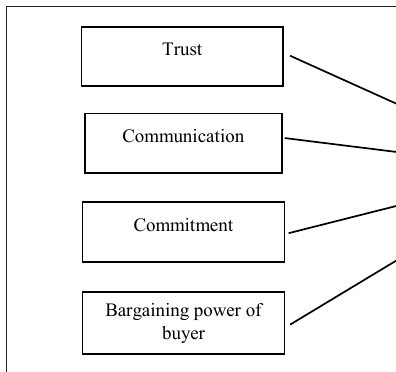
Basically, SET is a theory that provides theoretical insights into the understanding of complex business relationships (Aminoff & Tanskanen, 2013). Homans (1958) developed this theory in 1958 and defined it as the exchange of tangible or intangible activity between a minimum of two parties that can be either advantageous or disadvantageous. Emerson (1976) explained the SET is a concept of basic motivation for interaction that aims for rewards and the avoidance of penalties. An example is given by Griffith, Harvey, and Lusch (2006) based on the supply chain relationship concept, where a supplier contributes to its distributor through its SCM policies with an expectation of receiving a contribution by the distributor in the future. The distributor who receives the contribution has to obligate and respond to it with appropriate behaviour and attitude. Various constructs have been adopted by different authors to study this theory on various relationships, including trust, adaptation, commitment, flexibility, business performance, perceived value, attractiveness, power, communication, and so on (Kingshott, 2006; Tanskanen, 2015; Ambrose, Marshall, & Lynch, 2010; Raskovic, Brencic, Fransoo, & Morec, 2012). Kingshott (2006) suggested that trust and commitment are among the essential factors to develop and maintain business relationships. Ambrose et al. (2010) found that both buyers and suppliers have different perceptions of relationship success drivers, where buyers emphasise on adaptation and credibility, while suppliers emphasise more on commitment and communication. Based on the above discussion, Figure 1 below depicts the research framework of this study.
Trust
Communication
Relationship between SMEs and suppliers
Commitment
Bargaining power of buyer
Objectives of the Study
This paper provides more insights into the benefits obtained by SMEs in the Malaysian food industry via having successful partnerships with their suppliers. Using SCM measurements, such as trust, communication, commitment, and bargaining power of the buyer, this study initially formulated the main objectives, which are: • • • • • to understand the importance of maintaining a relationship between one SME and suppliers; to understand the importance of trust in maintaining a relationship between one SME and suppliers; to understand the importance of communication in maintaining a relationship between one SME and suppliers; to understand the importance of commitment in maintaining a relationship between one SME and suppliers; and to understand the importance of bargaining power of buyers in maintaining a relationship between one SME and suppliers.
Methodology
The qualitative research method is primarily used in this study as it is the most appropriate method to address the main concern of this study, which is to comprehend the selected SME’s relationship with its suppliers. The main reason for employing this method is because no numerical data was involved as the findings only rely on the opinions, interpretation, and experiences from the daily business processes of the SME owner-manager. To achieve the objectives of this study, the SME owner-manager was interviewed to gather her views on the importance of managing the relationship with suppliers, as well as how the factors of trust, commitment, communication, and bargaining power of buyer can help in strengthening their relationship. Besides that, this method was also used to discover whether or not the theory used fits the purpose of this study. This study employed a single case study to understand the supply chain environment in a local food industry, specifically on how this SME develops and maintains relationships with the suppliers. This approach can provide a better comprehension on the application of supply chain activities in a single organisation as only one issue is given a thorough investigation and no comparison is made among SMEs. Although the researchers employed a single case study in this research, the findings were observed to be in tandem with previous studies and the research objectives had been achieved satisfactorily.
This study employed semi-structured interview, participants’ observation, and document review for data collection methods. For the semi-structured interview, the questions prepared for the participants were open-ended, comprising how the SME manages its supply chain activities, performs supplier selection, and maintains the relationship with its suppliers. Semi-structured interview is a suitable method because the questions asked were not restricted according to the prepared list of questions and the participants can freely express their views on the questions. Apart from the ownermanager as the main participant, the SME’s supplier was also interviewed to gauge opinions of the SME, which is vital to support the main participant’s views. Besides the semi-structured interview, participants’ observation and document review were also performed to support and strengthen the evidence obtained. Generally, the participants’ observation method enables the researcher to witness and explore the real situations and practices at the setting. As for document review, the researchers accessed various secondary sources, including journal articles, conference proceedings, reports, books, and websites, to enhance knowledge, specifically on this issue. This paper could draw conclusions from the analysis of data obtained from the semistructured interview conducted with the SME’s owner-manager, together with the supplier as well as participant observation. The data from the interview were analysed using the thematic analysis method based on several criteria and steps to ensure the credibility of the findings. Firstly, the interview was recorded for the purpose of data structuring and coding. Data coding helped the researchers to classify the initiatives taken by the SME to strengthen the relationship with suppliers. The coded data were then used for the write-up, where the views of the SME owner-manager and the suppliers were quoted and included in the findings section. Finally, the researchers identified appropriate themes and produced the report. As for the observation, the data were analysed from several simple notes of what was observed at the setting. The notes were jotted down during the observation before being reorganised into a digital form As a qualitative study, there are four criteria that need to be fulfilled to increase the trustworthiness of the methodology of this study, as mentioned by Shenton (2004). Guba (1981) listed the criteria by employing the terms of credibility, transferability, dependability, and confirmability.
Background of the Case
This study selected one of the food industries in Kedah, a northern state in Peninsular Malaysia. The reason for choosing the food industry is because despite the impressive development, SMEs in the food industry in Malaysia are still lagging behind in terms of awareness and knowledge regarding the adoption of SCM and its benefits to their business (Chin et al., 2012). One of the crucial components of SCM that most SMEs are unaware of is a good BSR (Matsoso & Benedict, 2014). The main participant of this study was a local manufacturer and supplier of baked goods, such as cakes and pastries. The company, which was founded in 2010, also distributes traditional chips and cookies produced by local entrepreneurs. Prior to business expansion in 2015, the SME initially managed its production in a small factory located at the owner’s home. With the aid from Muda Agricultural Development Authority (MADA), this SME has managed to operate its own outlet, in which 50% of the capital was funded by the government. This SME employs seven workers in total for both its factory and outlet, and shows a progressive growth with monthly total sales ranging from RM 25,000 to RM 30,000. As a family-owned bakery, the structure of the SME is quite simple, in which the ownermanager herself is responsible for controlling and making decisions on management activities, including the supplier selection process as well as making deals with them on purchasing activities. As a small-scale business, this SME also manually manages its daily supply chain activities using manual methods since it does not have a specific supply chain department with a fully integrated system.
Findings and Discussion
Despite the deficient knowledge and awareness on having an adequate SCM system, the SME owner-manager is eager to prioritise her relationship with the suppliers, which is considered as one of the most vital parts of SCM. The results indicated that this relationship is important to ensure the SME’s long-term survival and to gain other benefits during business interactions, such as cost reduction, improved quality of products, and better after-sales services in the future. The owner-manager added that a close relationship between them can be a win-win situation for both parties because they need each other to survive and succeed. This relationship also helps to link this SME to other factors, such as commitment and higher bargaining power of buyer. This is supported by the following statement recorded during the interview with the SME owner-manager. “As a relationship-driven company, we will ensure to keep our wellperforming suppliers. To survive in this industry, a close relationship with the suppliers really matters for us, and this can be derived from continuous engagements with them. A good relationship can be advantageous and valuable for both of us because we are relying on each other, for instance, our suppliers provide our company with lower cost of goods purchased, improved product quality, better after-sales services and information regarding quality of products and prices while our company is the source of suppliers’ profitability” – Owner-manager Among the important factors of the relationship that had been taken into consideration by the owner-manager are trust, communication, commitment, and bargaining power of buyer. Basically, all factors studied were indicated by the respondent as important for the relationship between the SME and its suppliers, except for loyalty, which is one of the sub-factors of commitment. 6.1
Trust
To understand the role of trust in the relationship, the SME owner-manager said that business ethics is the first factor to be taken into consideration when dealing with suppliers as it promotes a high level of trust in business transactions. To retain a good business reputation and performance, dealings with unethical suppliers will be permanently terminated and substituted by better suppliers. The owner-manager clarified that supplier substitution is important because it is impossible for the company to deal with and trust the suppliers who take their customers for granted. This was evidently so as stated by the SME owner-manager during the interview. “When we trust our suppliers, it means we are confident enough to build a business relationship with them; however, it all depends on how good they are in serving us. To be able to trust them, we prioritise good business ethics, integrity, and transparency throughout our business transactions. Considering these criteria, there were a few suppliers that had to be substituted with new suppliers due to their resistance to provide a satisfying service, besides their obliviousness to our complaints” – Owner-manager 6.2
Communication
The owner-manager stated that continuous interaction and frequent communications have helped this SME to create a closer relationship with suppliers, thus having the advantage of having provided with information that is crucial for business planning and operations. Continuous communication with suppliers is important as this SME needs to deal with them on the products and services provided by the suppliers. This is reflected in the following statement captured during the interview with the SME owner-manager. “We have been actively engaged with our suppliers; so this has helped in enhancing our dealings, hence improving our business planning. This continuous engagement gives us benefits, including disclosure of information regarding products with best value and quality. Besides that,
IT tools also play a key role in connecting us and these tools enable our suppliers to keep us updated on availability of stocks and suggestions of products in accordance with their price and quality. We also benefit from the communication with our suppliers as they sometimes provide information on our competitors, thus enabling us to enhance our product innovation and create competitive advantage” – Owner-manager 6.3
Commitment
Regarding the loyalty factor that has previously been mentioned to be insignificant, only suppliers who provide good service, better offerings in terms of price and quality, as well as listening and taking actions to any complaint, would be retained by this SME. As a business that is moderately growing, it is important to consider factors, such as cost, quality, and performance, when choosing suppliers, especially those who are able to cater to the demand according to their budget, as supported by the following statement provided by the SME owner-manager. “It is good to have more supplier options as an alternative in case our current suppliers run out of stocks or stocks are unavailable during peak seasons. Furthermore, these options enable us to choose the supplier who can offer us the best value and quality of products. This is because we are still growing, and we need to choose offerings that match our cost range, and at the same time, fulfil our quality standards” – Owner-manager 6.4
Bargaining Power of Buyer
Last but not least, is the level of bargaining power of buyer from the perspective of this SME. As a buyer, the bargaining power of buyer was found to be quite high due to the existence of rivals, high volume of goods, as well as the price and quality of goods. According to the owner-manager, the ability of the SME to compare and choose similar goods from different suppliers has affected the performance and profitability of its existing suppliers; hence, the suppliers tend to come up with tempting strategies to attract and retain the SME as their regular customer. She added that the power as a buyer has helped the SME to neutralise its business relationships, as supported by the following statement extracted during the interview. “In my opinion, the bargaining power of a buyer has put us at an advantage because we get to bargain for lower prices and better quality of goods and services, especially when we purchase in bulk. Besides, our close relationship enables us to be offered after-sales services by the suppliers and we are also allowed to delay payment on certain products. The existence of a few suppliers who offer similar baking supplies and ingredients makes it easy for us to choose; however, our suppliers need to compete with each other to attract us” – Owner-manager Pertaining to the bargaining power of buyer from the seller’s perspective, one of the SME’s suppliers commented the following statement. “We believe that as a buyer, the SME has the power to bargain on few aspects, including price reduction for bulk purchases as well as after-sales services. This bargaining power is due to the presence of our competitors in supplying the baking ingredients. However, we think this power is a positive way to neutralise and strengthen our business relationship as we try to fulfil the bargains since we have been dealing since the SME from the first day of its operations” – Supplier The findings from this study were summarised and supported by the findings of previous studies. First of all, high level of trust can be driven by good business ethics shown by the suppliers, and hence, acts as a stepping stone to a good relationship between both parties. This is supported by Pakir Mohamed et al. (2015) that trust is vital to establish a supply chain partnership, with the presence of factors, such as performance to promise, professional relationship, openness, and benevolent collaborations. As stated by the SME owner-manager in the interview, the frequency of communication and interaction with suppliers, as well as information sharing, have strengthened their business relationship. This finding is consistent with Abdul Rahman (2008), that communication is the most powerful factor for a beneficial BSR. Meanwhile, the finding on commitment is also supported by the previous study by Loice (2015), in which the SME shows commitment to retain suppliers that perform well toward securing a long-term relationship. Lastly, Wan Yusoff, Loh, Azizan, and Ramin (2017) justified the importance of bargaining power of buyer as one of Porter’s five forces that enhances competitive advantage and strategic planning among SMEs. This justification supports the finding of this study, where high levels of bargaining power of buyer leads to competition among suppliers, hence increasing their efforts to serve better and firm up the relationship with the SME.
Conclusion
SMEs are known to be one of the main employment providers to the community worldwide, including in Malaysia. Besides that, the ability of SMEs to generate higher income has led to the country’s economic transformation process. In general, SMEs have simpler systems and procedures when compared to larger companies, which offers a better understanding of system usage, besides shorter chain of decision-making, as well as the flexibility in giving responses to customers’ feedback.
The findings of this study revealed that the relationship with the suppliers is the main concern of the SME as it will ensure continuous transactions between both parties for the long-term. Having said that, loyalty to suppliers, which has been studied under the commitment factor, was found to be insignificant for maintaining this relationship, contrary to the findings of several past studies. Overall, the adoption of the SET framework can be used to support this study as constructs, such as trust, communication, bargaining power of buyer, and other sub-constructs of commitment, were found to be the essential factors influencing the relationship between the SME and its suppliers. To conclude, the SME under study does prioritise good business relationships and acknowledges it as a critical contributor to the success and survival of the business, in spite of its insufficient knowledge on SCM and lack of other resources. It was highlighted that trust, communication, and bargaining power of buyer, would contribute to the quality of relationship between the SME and its suppliers, hence supporting the adoption of SET in this study to explain this critical business relationship. As this paper emphasises the importance of the relationship between the SME in the food industry and its suppliers, it is suggested that future researchers should consider studying the practices in other industries. This will enable future researchers to compare the practices among multiple SME industries. Furthermore, future researchers should also consider broadening the topics that are closely related to the relationship between business partners, such as logistics, procurement process, and warehousing, as these require good rapport between partners involved in the process.
References
- Abdul Rahman, A. (2008). Buyer-supplier relationships in advanced manufacturing technology acquisition and implementation in Malaysia. International Journal of Economics and Management, 2(1), 95-126.
- Ackerman, K. B. & Bodegraven, A. V. (2007). Relationships for supply chain success. Retrieved from Supply Chain Quarterly: http://www.supplychainquarterly.com/ topics/Strategy/scq200704book/.
- Alam, S. S., Jani, M. F., Senik, Z. C. & Domil, A. K. (2011). Assessing barriers of growth of food processing SMIs in Malaysia: A factor analysis. International Business Research, 4(1), 252-259.
- Ambrose, E., Marshall, D. & Lynch, D. F. (2010). Buyer supplier perspectives on supply chain relationships. International Journal of Operations & Production Management, 30(12), 1269-1290.
- Aminoff, A., & Tanskanen, K. (2013). Exploration of congruence in perceptions of buyer-supplier attraction: A dyadic multiple case study. Journal of Purchasing and Supply Management, 19(3), 165-184. https://doi.org/10.1016/j. pursup.2013.02.006.
- Chin, T. A., Hamid, A. B. A., Rasli, A., & Baharun, R. (2012). Adoption of supply chain management in SMEs. Procedia - Social and Behavioral Sciences, 65(December 2012), 614–619. https://doi.org/10.1016/j.sbspro.2012.11.173.
- Emerson, R. M. (1976). Social exchange theory. Annual Review of Sociology, 2(1976), 335-362.
- Griffith, D. A., Harvey, M. G., & Lusch, R. F. (2006). Social exchange in supply chain relationships : The resulting benefits of procedural and distributive justice. Journal of Operations Management, 24, 85–98. https://doi.org/10.1016/j. jom.2005.03.003.
- Guba, E. G. (1981). Criteria for assessing the trustworthiness of naturalistic inquiries. Educational Communication and Technology, 29(2), 75-91.
- Gupta, M. & Narain, R. (2012). A survey on supplier relationship in e-procurement in Indian organisations. International Journal of Logistics Systems and Management, 12(12), 89-117.
- Harland, C. M. (1996). Supply chain management: relationships, chains and networks. British Journal of Management, 7, 63-80.
- Holthausen, J. (2013). Scientific review of the social exchange theory and its contribution to solving purchasers’ decision making issues. 1st IBA Bachelor Thesis Conference (pp. 1-12). Netherlands: Faculty of Management and Governance.
- Homans, G. C. (1958). Social behavior as exchange. American Journal of Sociology, 63(6), 597-606.
- Kannan, G. (2016, December 9). 11 reasons why SMEs fail. Retrieved from Leader Economics: https://leaderonomics.com/business/why-smes-fail.
- Khalid, N. (2009). Adopting total supply chain management towards enhancing Malaysia’s competitive edge as a trading nation. Maritime Institute of Malaysia, (November), 1–40.
- Khan, S. A., Liang, Y., & Shahzad, S. (2015). The effect of buyer-supplier partnership and information integration on supply chain performance : an experience from chinese manufacturing industry, International Journal of Supply Chain Management, 4(2), 20–34.
- Kingshott, R. P. J. (2006). The impact of psychological contracts upon trust and commitment within supplier-buyer relationships : a social exchange view, Industrial Marketing Management, 35(6), 724–739.
- Kolenko, S. (2014, December 17). A brief history of modern supply chain management and best practices. Retrieved from Procurify: https://blog.procurify. com/2014/12/17/brief-history-modern-supply-chain-management-supply-chain-management-best-practices/.
- Kwon, I. G. & Suh, T. (2005). Trust, commitment and relationships in supply chain management : A path analysis. Supply Chain Management, 26-33. https://doi.org/10.1108/13598540510578351.
- Loice, K. (2015). Effect of buyer-supplier relationships on procurement performance: evidence from Kenyan supermarket. European Scientific Journal, 1, 54-70. Food Industry SME Company in Kedah, Malaysia: 65-
- Martadisastra, D. S., Daryanto, A., Arifin, B., & Sa’id, E. (2014). Factors influencing performance of suppliers: An empirical study in Jakarta. Research Journal of Business Management. https://doi.org/10.3923/rjbm.2014.390.411.
- Matsoso, M. L., & Benedict, O. H. (2014). The customer-supplier relationships in supply chain management: a small manufacturing enterprise (SME) perspective. Journal of Economics, 5(2), 177–184. https://doi.org/10.1080/09765239.2014.1 1884994
- Mohd Jamal, N. & Tayles, M. (2010). Management accounting in a supply chain environment: case study insights. Asia-Pacific Management Accounting Journal, 5(1), 41–67.
- Morsy, H. M. & Ibrahim, S. E. (2014). Buyer-supplier relationships and the effect of power balance on innovative knowledge exchange. In Proceedings of the 25th Annual Conference of the Production and Operations Management Society, (pp. 1-11). Cairo.
- Muhammad, M. Z., Char, A. K., Yasoa’, M. R. & Hassan, Z. (2010). Small and medium enterprises (SMEs) competing in the global business environment : a case of Malaysia, International Business Research, 3(1), 66–75.
- Nik Mohd Masdek, N. R. & Othman, M. F. (2014). Supply chain management practices as a source of competitive advantage for food processing SMEs in peninsular Malaysia. Economic and Technology Management Review, 19-28.
- Oakden, R. (2016). Relationships and power in supply chains are critical. Retrieved from Learn about Logistics: https://www.learnaboutlogistics.com/understand-relationships-supply-chains/.
- Omar, S. S. bt., Arokiasamy, L., & Ismail, M. (2009). The background and challenges faced by the small medium enterprises. a human resource development perspective. International Journal of Business and Management, 4(10). https://doi.org/10.5539/ijbm.v4n10p95.
- Paik, S. K. (2011). Supply management in small and medium enterprises: role of firm size. Supply Chain Forum An International Journal, 12(3), 10-21.
- Pakir Mohamed, Omar, S. S., & Chin Wei, L. (2015). Trustworthiness in buyer-supplier relation on supply chain collaboration among SMEs. In Proceeding of 2nd International Symposium on Technology Management and Emerging Technologies, ISTMET 2015, 454–458. https://doi.org/10.1109/ISTMET.2015.7359077.
- Poirier, C. C. (1999). Advanced supply chain management: how to build a sustained competitive advantage. San Francisco: Berrett-Koehler Publishers, Inc., February, 1999.
- Pongwiritthon & Awirothananon (2015). Competitive advantages of small and medium enterprises in northern Thailand. Journal of US-China Public Administration, 12(1), 42–50. https://doi.org/10.17265/1548-6591/2015.01.005.
- Porter, M. E. (1985). The competitive advantage: creating and sustaining superior performance. New York: Free Press, 1985.
- Quayle, M. (2003). A study of supply chain management practice in UK industrial SMEs. Supply Chain Management, 8(1), 79-86.
- Raskovic, M., Brencic, M. M., Fransoo, J. C. & Morec, B. (2012). A model of buyer-supplier relationships in a transnational company: the role of the business network context. Economic and Business Review, 14(2), 99-119.
- Rezaei, J., Ortt, R., & Trott, P. (2015). How SMEs can benefit from supply chain partnerships. International Journal of Production Research, 53(5), 1527–1543. https://doi.org/10.1080/00207543.2014.952793.
- Salam, M. A. (2011). Supply chain commitment and business process integration: The implications of Confucian dynamism. European Journal of Marketing, 45(3), 358-382.
- Shenton, A. K. (2004). Strategies for ensuring trustworthiness in qualitative research projects. Education for Information, 22(2004), 63-75.
- Sukati, I. A., Hamid, A. B., Baharun, R., Tat, H. H. & Said, F. (2011). A study of supply chain management practices: An empirical investigation on consumer goods industry in Malaysia. International Journal of Business and Social Science, 2(17), 166-176.
- Syed, A. A., Ahmadani, M. M., Shaikh, N. & Muhammad Shaikh, F. (2012). Impact analysis of SMEs sector in economic development of Pakistan: A case of Sindh. Journal of Asian Business Strategy, 2(22), 44–53.
- Tanskanen, K. (2015). Who wins in a complex buyer-supplier relationship? a social exchange theory based dyadic study. International Journal of Operations & Production Management, 35(4), 577-603.
- Vermeulen, Y., Niemann, W., & Kotzé, T. (2016). Supply chain integration: A qualitative exploration of perspectives from plastic manufacturers in Gauteng. Journal of Transport and Supply Chain Management, 10(1), 1–13. https://doi.org/10.4102/jtscm.v10i1.223.
- Viera, L. M., Paiva, E. L., Finger, A. B. & Teixeira, R. (2013). Trust and supplier-buyer relationships: an empirical analysis. Brazilian Administration Review, 10(3), 263-280.
- Wan Yusoff, W. F., Loh, C. J., Azizan, A. Z. & Ramin, A. K. (2017). Business strategy of small medium enterprises (SMEs): A case study among selected chinese SMEs in Malaysia. The Social Sciences, 12(3), 400-405.
- Wilkinson, J. (2013). Buyer bargaining power (one of Porter’s five forces). Retrieved from Strategiccfo: http://strategiccfo.com/buyer-bargaining-power-one-of-porters-five-forces/amp/..